
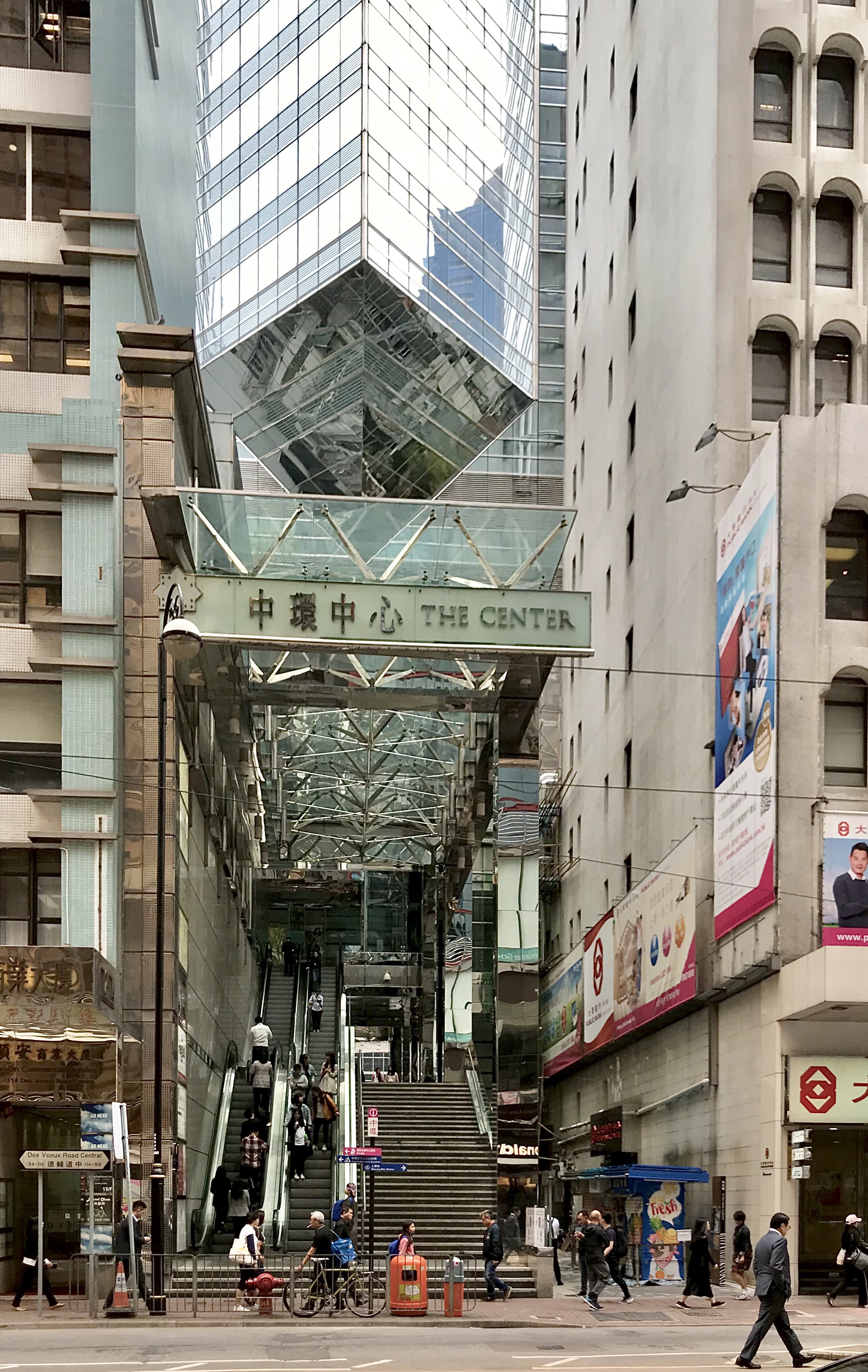
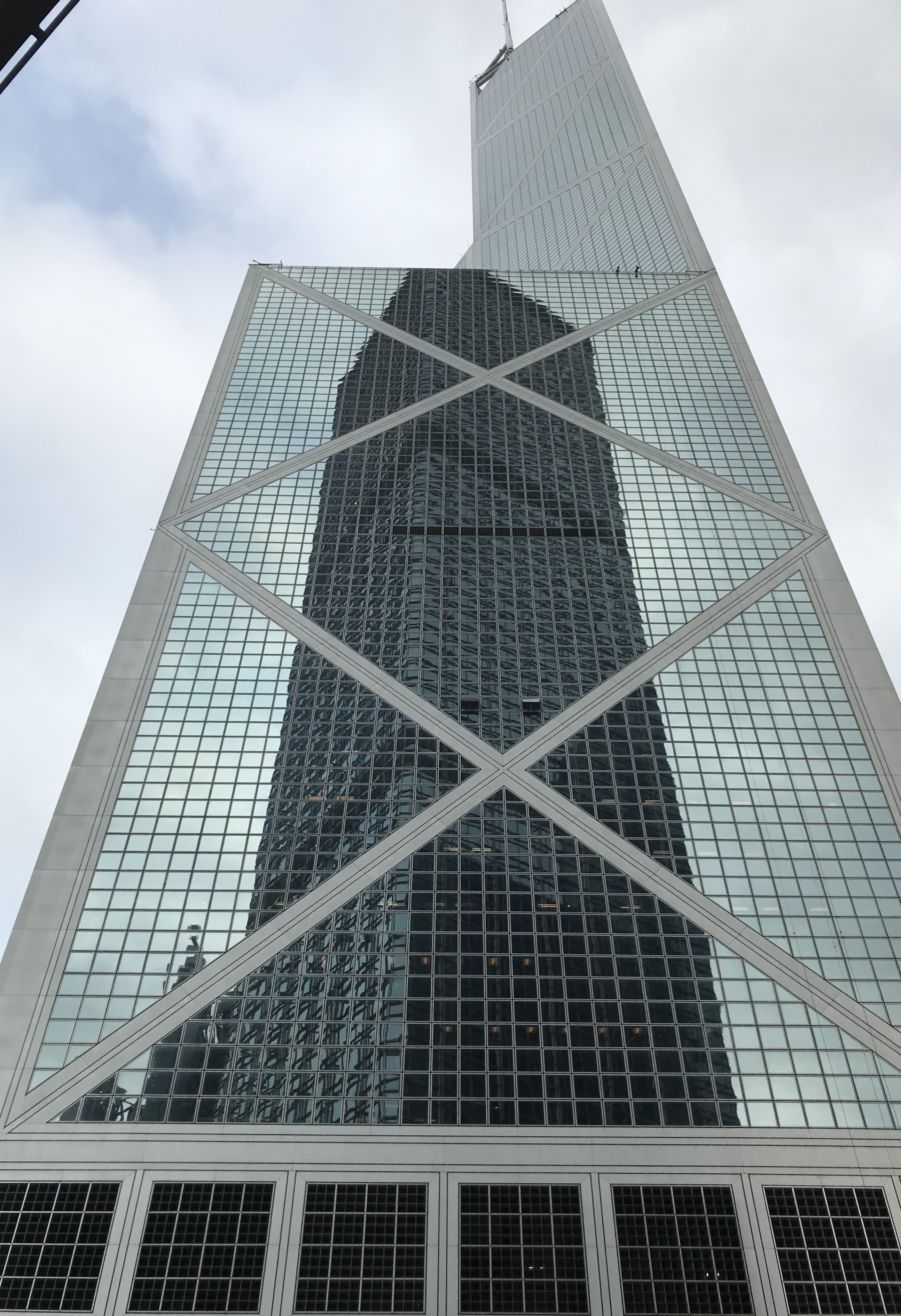
Hong Kong is the most unique city I’ve ever visited. It is an island with a scalloped coastline and many harbors. It juts into the South China Sea; its location and deep harbor beckons global commerce. It is densely populated with 6300 people per square km. Business and residential towers have clustered wherever buildable and recent land reclamation created additional housing. The high-rises climb the terrain almost to the top of Victoria Peak, 1312 ft in elevation.

“Central” Hong Kong is the main downtown district and borders Western, Eastern, Southern and Wan Chai districts. We covered quite a bit of territory in our 4 day sojourn and traversing the topography is sincere exercise. One walks on sidewalks that are occasionally interrupted by a couple of steps to accommodate the pitch. An ancient street may bisect a hill and angle off uphill with 50 steep and narrow stone steps lined with street food stalls, houseware vendors and Buddhist altars.
And if I look up, there may be a cement walkway 2 stories up over my head connecting buildings over a roadway. It is dizzying to see so much space occupied and in motion. Color, movement, angles, spirals, multi levels, even escalators that help you navigate the hilly terrain. I feel like I’m climbing endlessly in place in an M.C. Escher print. It is fabulously alive and astonishing.


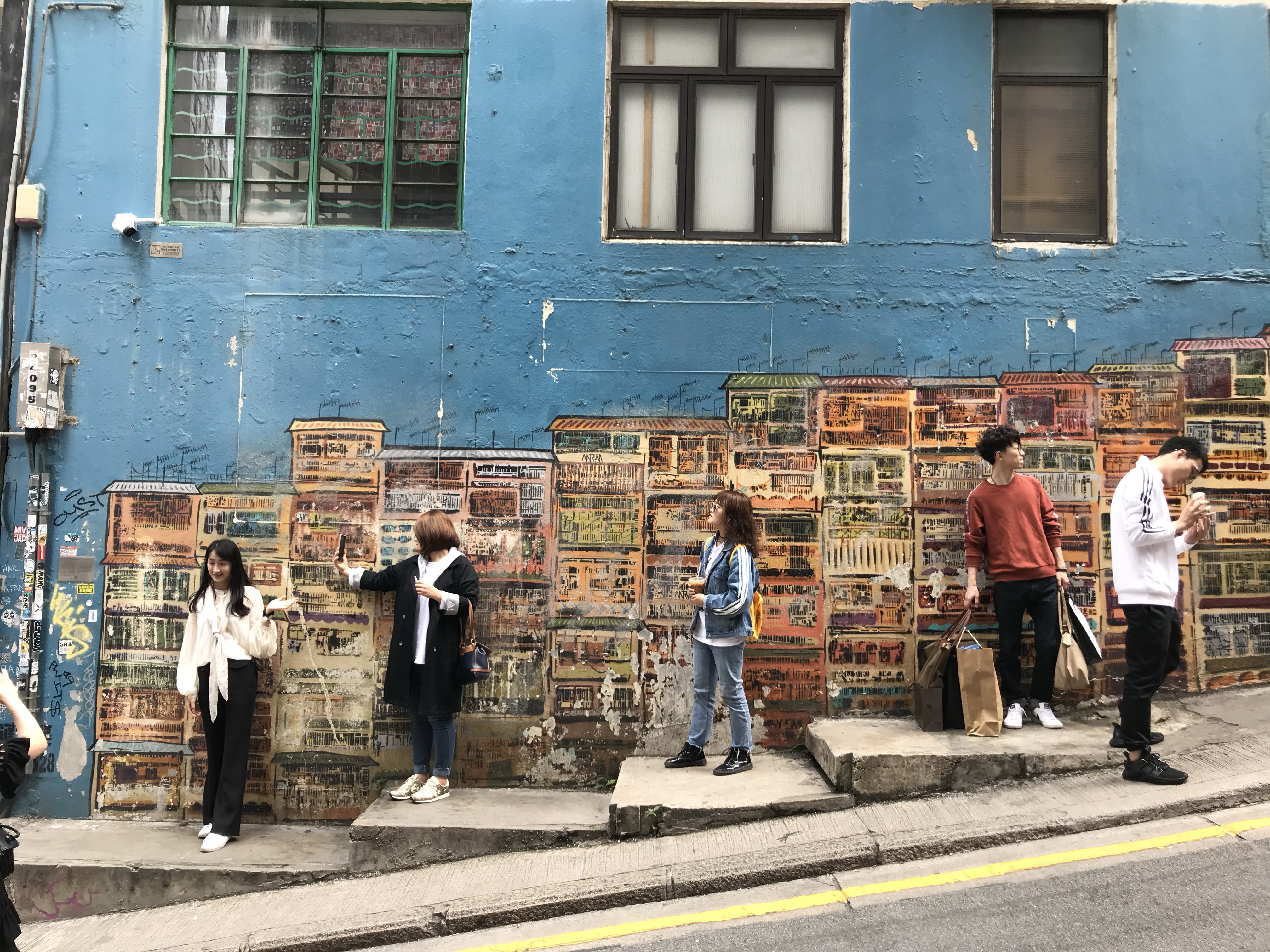
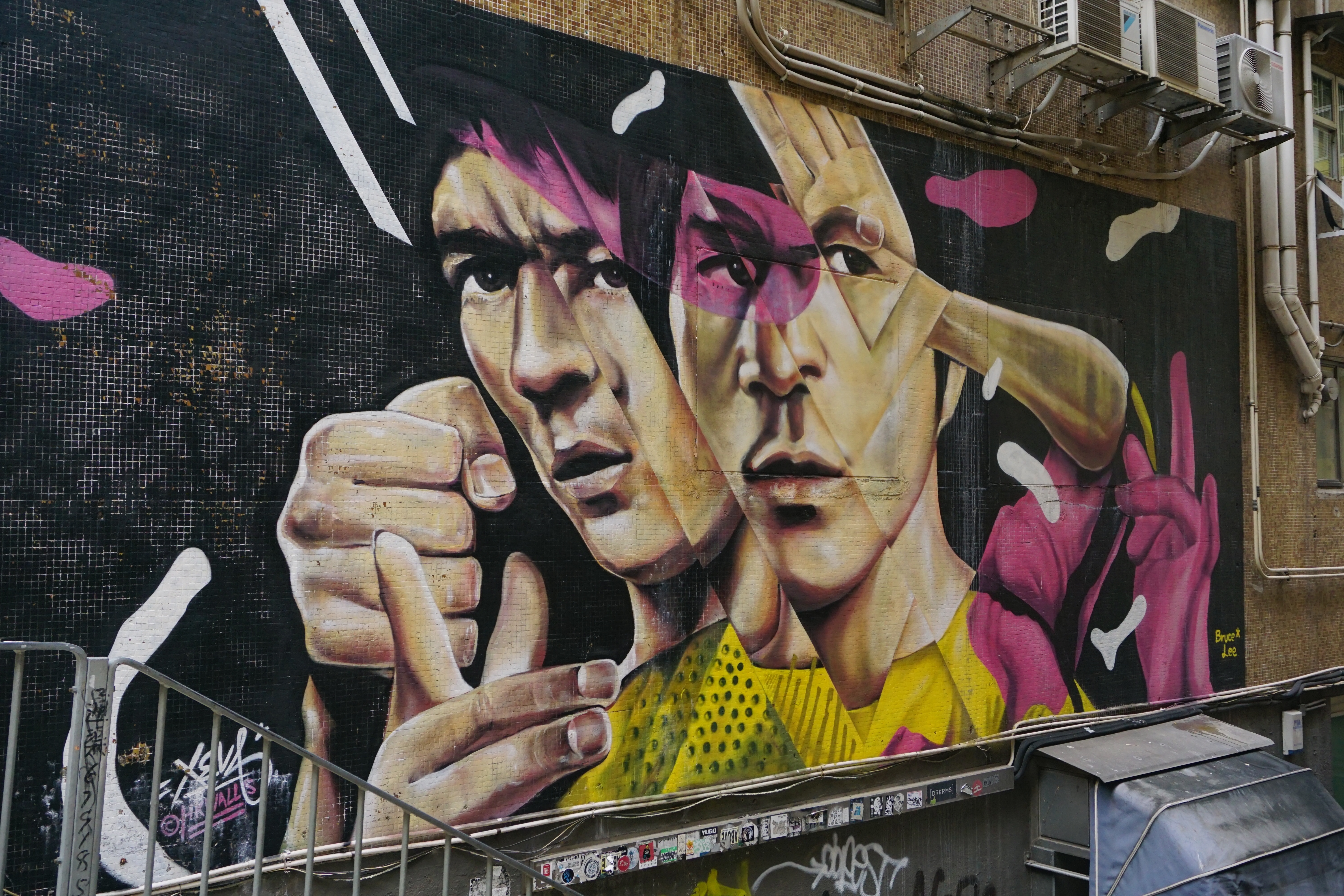
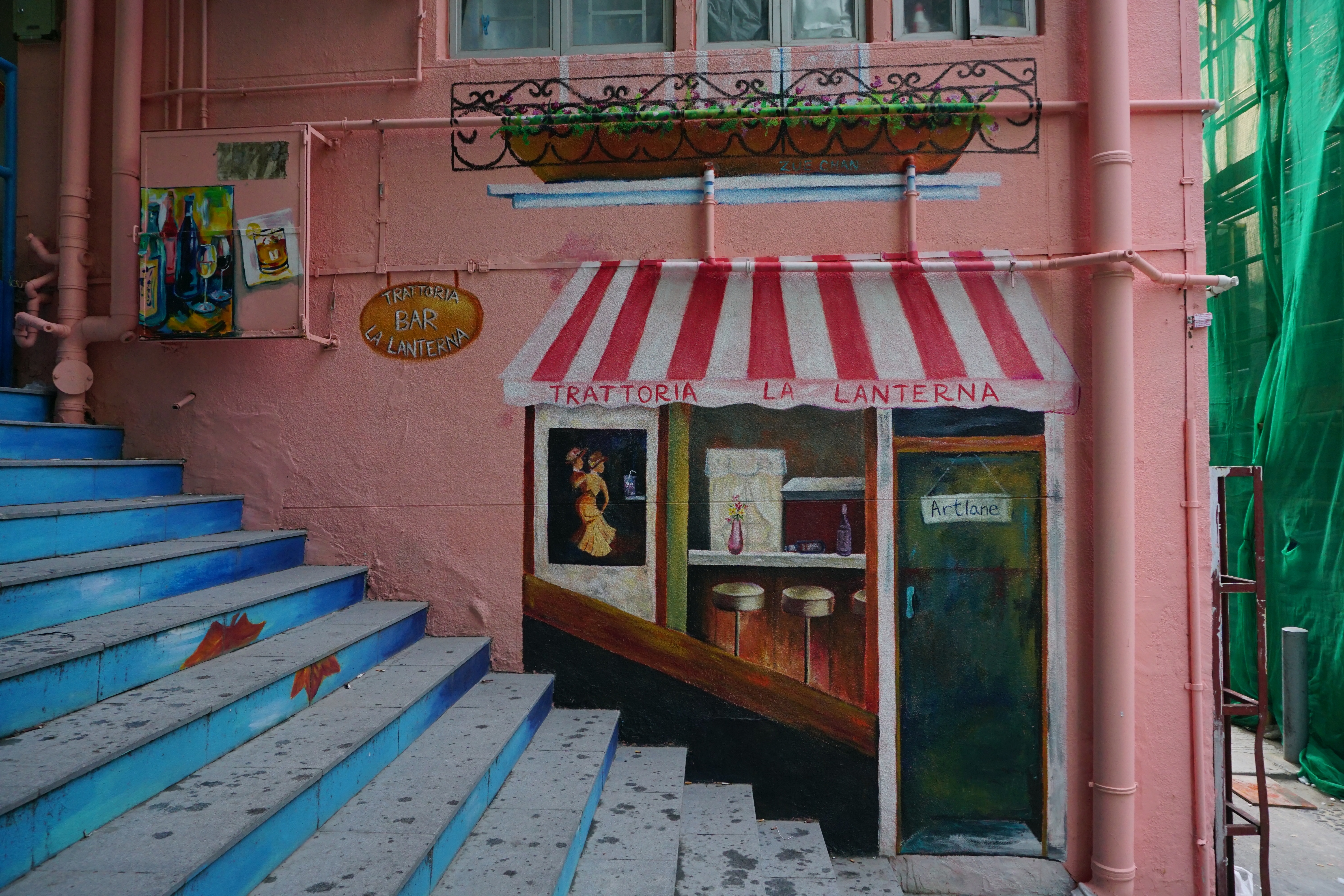
 We have no agenda so everything is an exploration. We decide to find as much street art as we can. It takes us all over Central. Painting on sides of buildings in plain view; alleyways large and small covered in brilliantly colored artwork, intriguing and curious, some secretive and hard to find. Almost all on a slant.



We walk everywhere in the different districts, seemingly for miles. In Central, the commercial downtown, there are metal railings at corners that insure no jaywalking.I “LOOK RIGHT” painted on the road, as you step off the curb alerting you that oncoming traffic comes from the left. There are many signs; where to cross, how to queue, how to drink safely from a public water fountain, sneeze etiquette, wearing a mask, etc. Helpful directions in a busy city and not so subtle guidance for appropriate behavior.
Hong Kong is mainland China’s most prosperous economic link to the rest of the world. There are rumblings that threaten Hong Kong’s relative autonomy and we have spoken with people who fear China exerting more control. The Brits held Hong Kong for 160 years. It has been 22 years since China regained Hong Kong and the people are strongly attached to their freedom of expression in both commerce and attitude. It will be interesting to see what develops. For now, I just paid $50 for a manicure, ten times more than in Cambodia. And we bought milk and cereal for 237HKD or $35. Shockingly expensive.
Underneath the apparent wealth and cosmopolitan vibe, Hong Kong looks and feels like a very big “Chinatown” beating with the deep heart of traditional Chinese life.


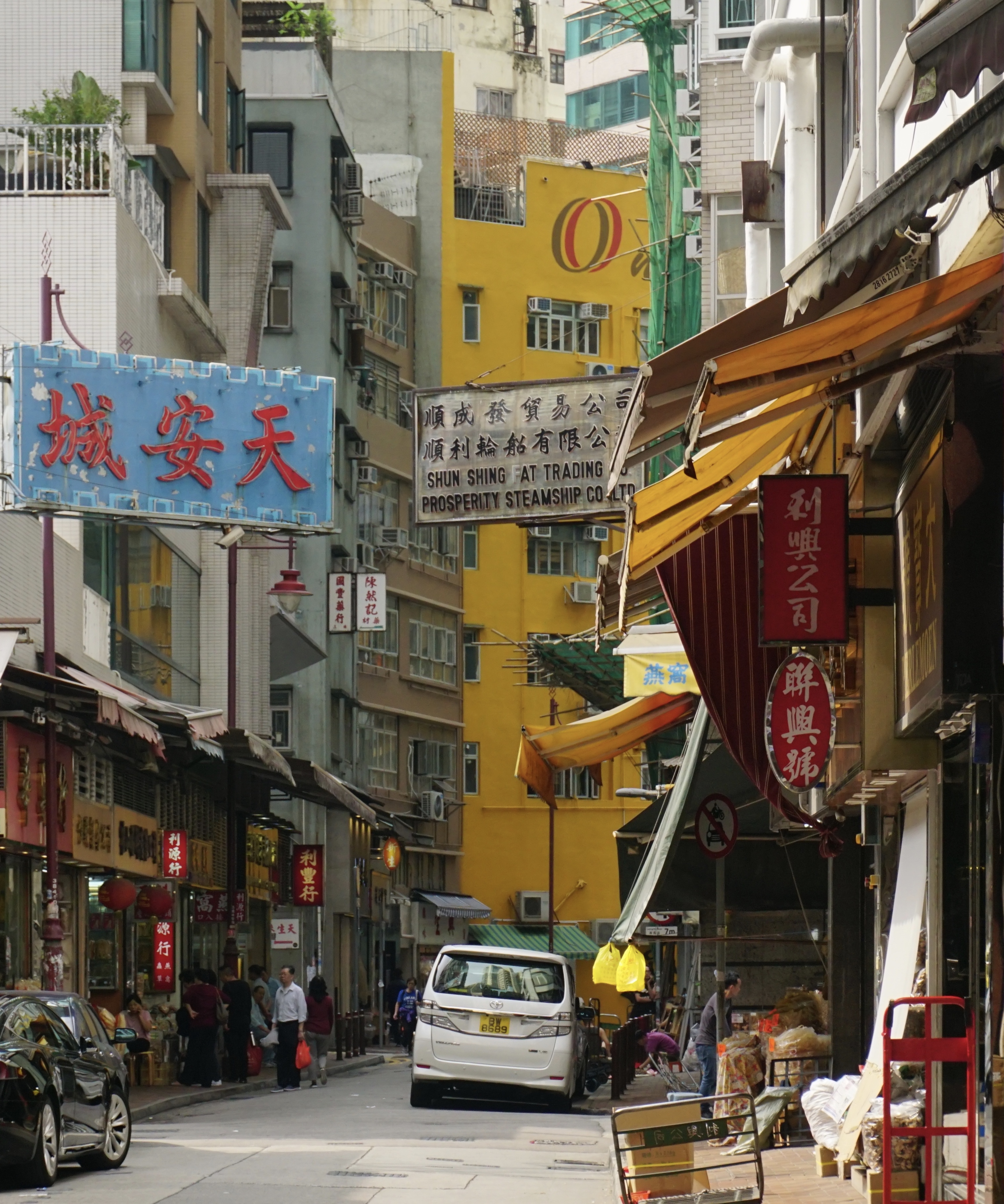

 Dryng seafood
I voted for checking out antiques on Hollywood Street, but Steve was very persuasive about visiting Kowloon via the Star Ferry. It has been over 30 years since his last visit to HK when he stayed at the Peninsula Hotel in Kowloon. Once, one of the poshest hotels in the world and where Steve actually stayed a night in the suite reserved for Prince Charles. That’s a story for another time. For now, we get to ride on the iconic Star ferry.

 Fulfilled
The joy was seeing Steve’s fascination and startle at how much the landscape had changed. Literally what was once a hotel on the waterfront was now surrounded by reclaimed land filled with tourist attractions and expensive malls. The Peninsula interior still brought back pleasant memories ; the string quartet playing in the grand lobby, the luxurious dining room and stately palms. I was happy just to appreciate a delicious confection: a tall dark chocolate cup filled with mocha mousse and cafe au lait served from a graceful silver pot.
The real treat was the Star ferry crossing Victoria Harbor at night, seeing a red lit junk, coming into Hong Kong port with the skyline lit up; bright, moving lights, even a classic Chinese painting illuminated in between ads for athletic wear 30 stories tall and a ferris wheel.


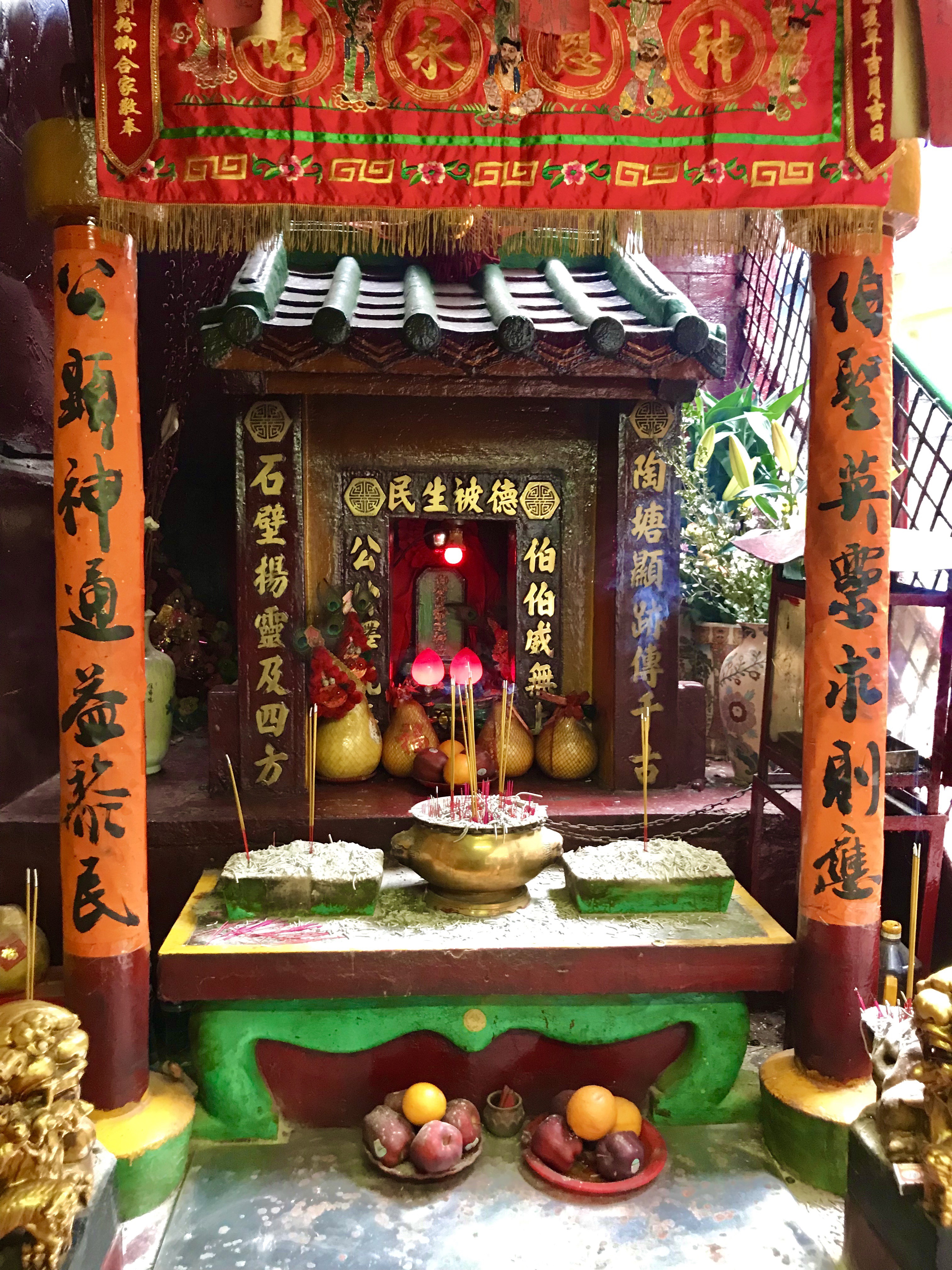
 Density is defined as “the degree of compactness of a substance”. Hong Kong does density well, successfully jamming so many things into a space. Our dark, narrow, little street had several shops, bars, restaurants, a noodle house serving noodles several feet long (try twirling that on chop sticks) on just one side of the short street. Wo On Lane dead ended with a well tended small shrine next to our apartment’s vestibule and next to the shrine was a passageway into a funnel shaped three story amphitheater with bowers of greenery planted in spiraling tiers. A set of steep steps afforded a short cut to the next street several stories above. It was like being inside a very tall layer cake.
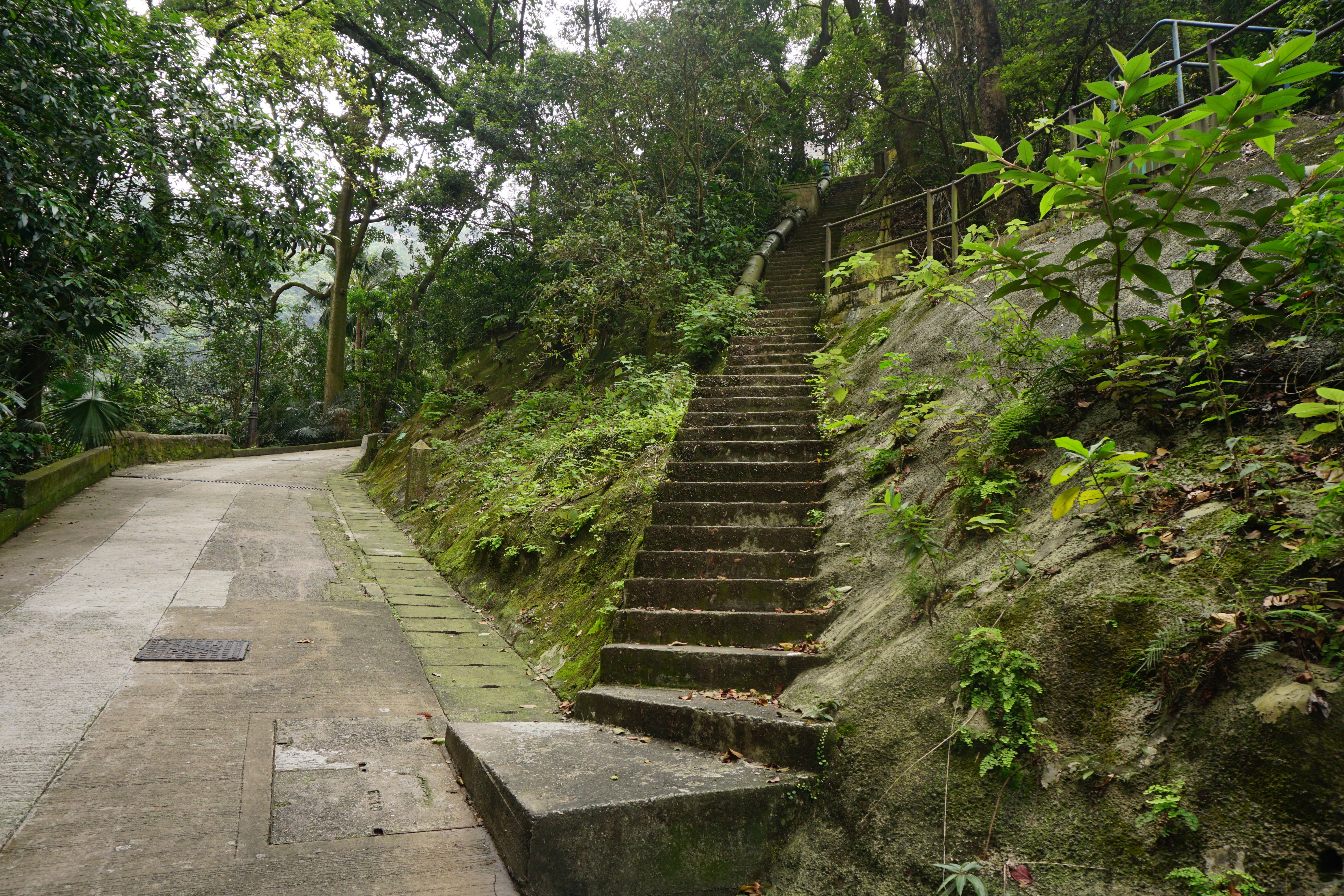
We wanted to view the city from the famed Victoria mountain summit. We thought we’d take the tram up – 8 minutes. We went up through Ice Box Street and started following signs to Peak tram. But then I saw a hillside with zig zag fence railings interspersed with lush foliage and wondered if it was a botanical garden. I was intrigued; Steve was not; insisting we take the tram. I implored, cajoled, til finally, “I’ll meet you up top. Take the tram. I’m going this way”. He fumed and reluctantly followed me up this switchbacked jungle trail in the city staying 25 paces behind. His frustration was palpable but adventure overruled. We took Lower Albert Street to Upper Albert, cutting through the vertical gardens filled with palms and giant fern fronds which surprisingly led to a zoo with monkeys and birds. After that my directions were sketchy but we met an Aussie who enthusiastically recommended going up Peak Road. “You may be old but look like you’re in decent shape, you could do it, it’s worth it”. It was enough for Steve to succomb though he was still pissed and never walked beside me the entire climb. And climb it was. So steep. I could hear him huffing behind me. We passed a heart hospital and I thought if he had a heart attack I could just roll him downhill into the emergency entrance.


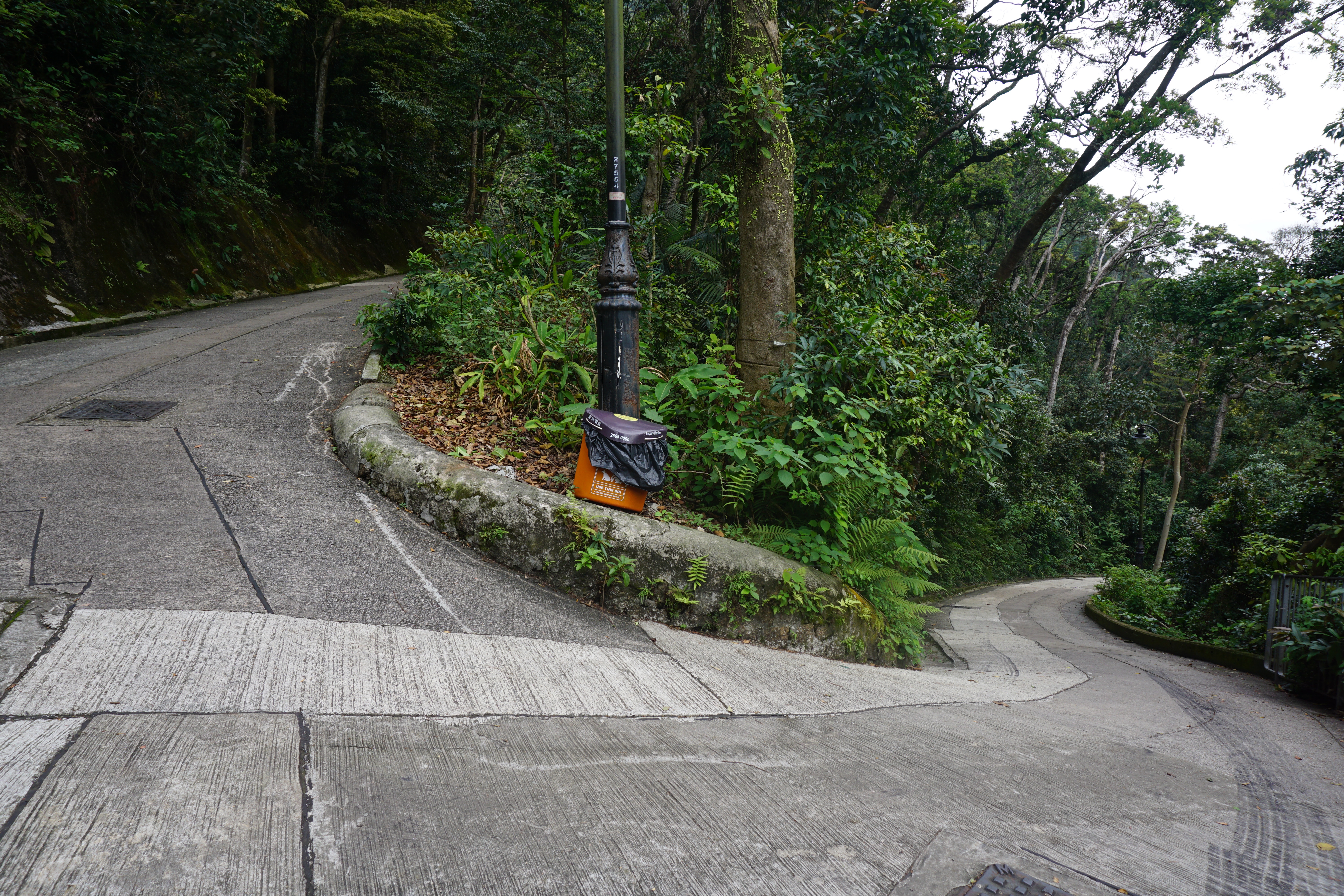 We kept climbing. The view was worth every sweaty second. The summit was covered with typical tourist merchandising and a mega tower that also housed the tram. Our Aussie angel advised taking the less traveled Harlich to Lugard Rd perimeter walk around the summit. We sauntered past mansions, rainforest vegetation and stone benches from the colonial era still inviting repose. Finished our stroll with a choice meal at the Peak Mountain Restaurant celebrating an absolutely splendid amble.
 We took the tram down. My knees would never have tolerated the downhill. 8 minutes as advertised; the green forest rushed apace from a crowded car, the luxury apartment towers passed in a blink, the tram decelerated and back we were into the Hong Kong hubbub. Eventually Steve thanked me…

It was time to go home. A marvel of a three month adventure at its close…
 I am hoping for a 5 day respite in Hoi An without any agenda. Our most ambitious plan involves having 2 custom shirts made for Steve and a lantern to take home. We have a comfortable hotel, great room with a balcony, full buffet breakfast and bicycles. We’ve gotten acquainted with the hotel’s happy hour and their Pina Colada is the best I’ve ever had which probably has something to do with using a whole fresh pineapple and fresh squeezed coconut milk. A liquid step in the right direction.
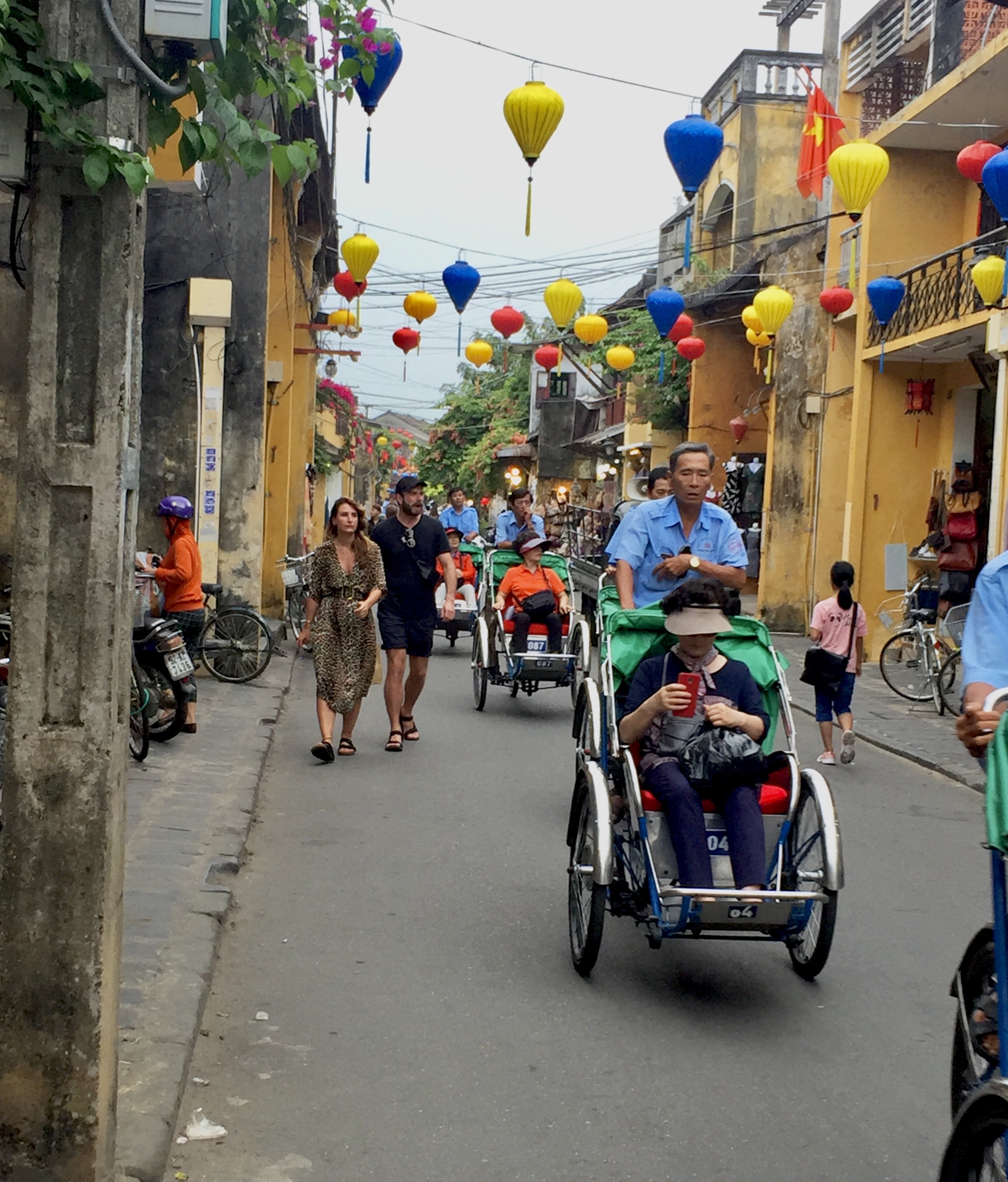 A twenty two person caravan – no kidding
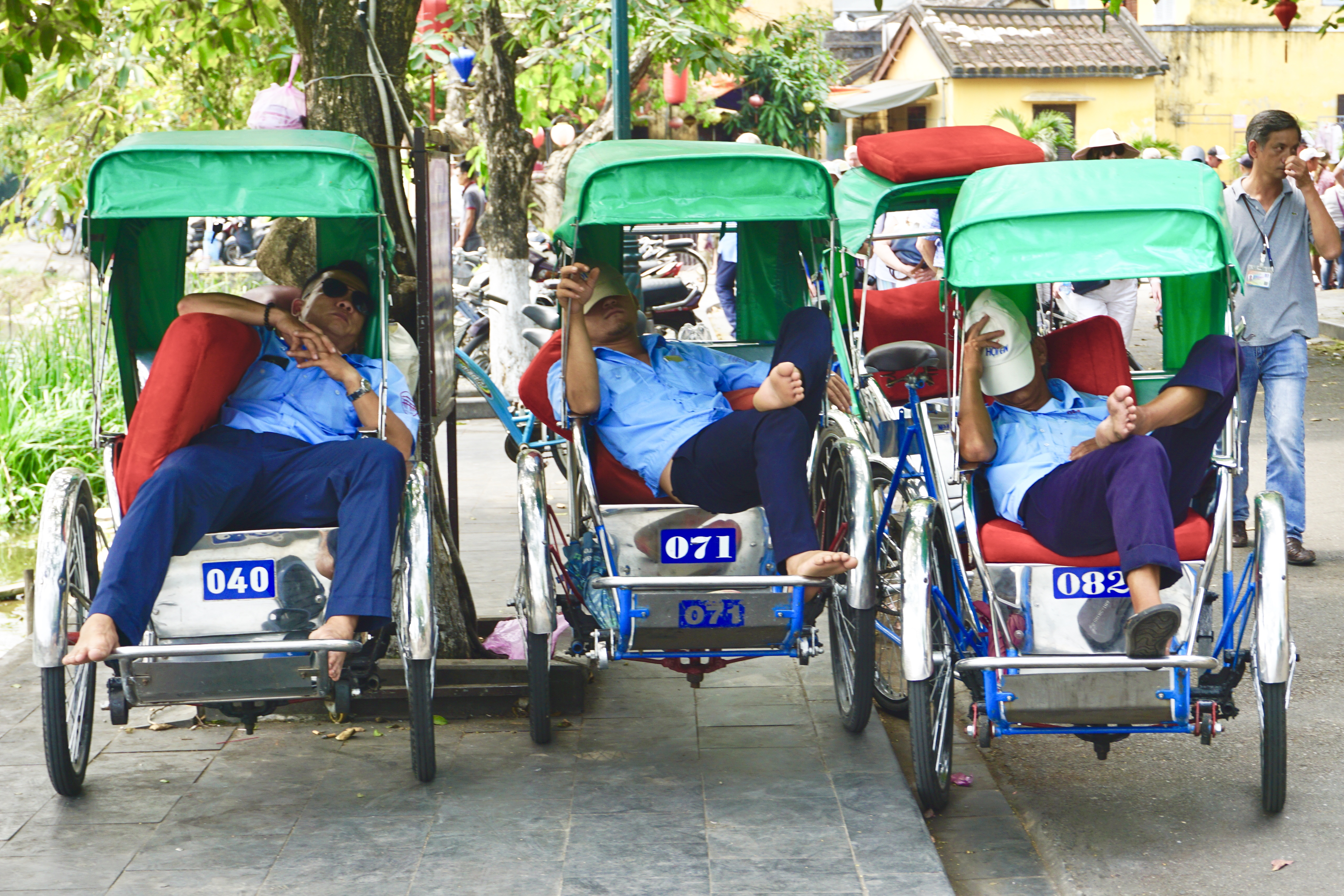 Worn out

 Rice noodles drying in the sun
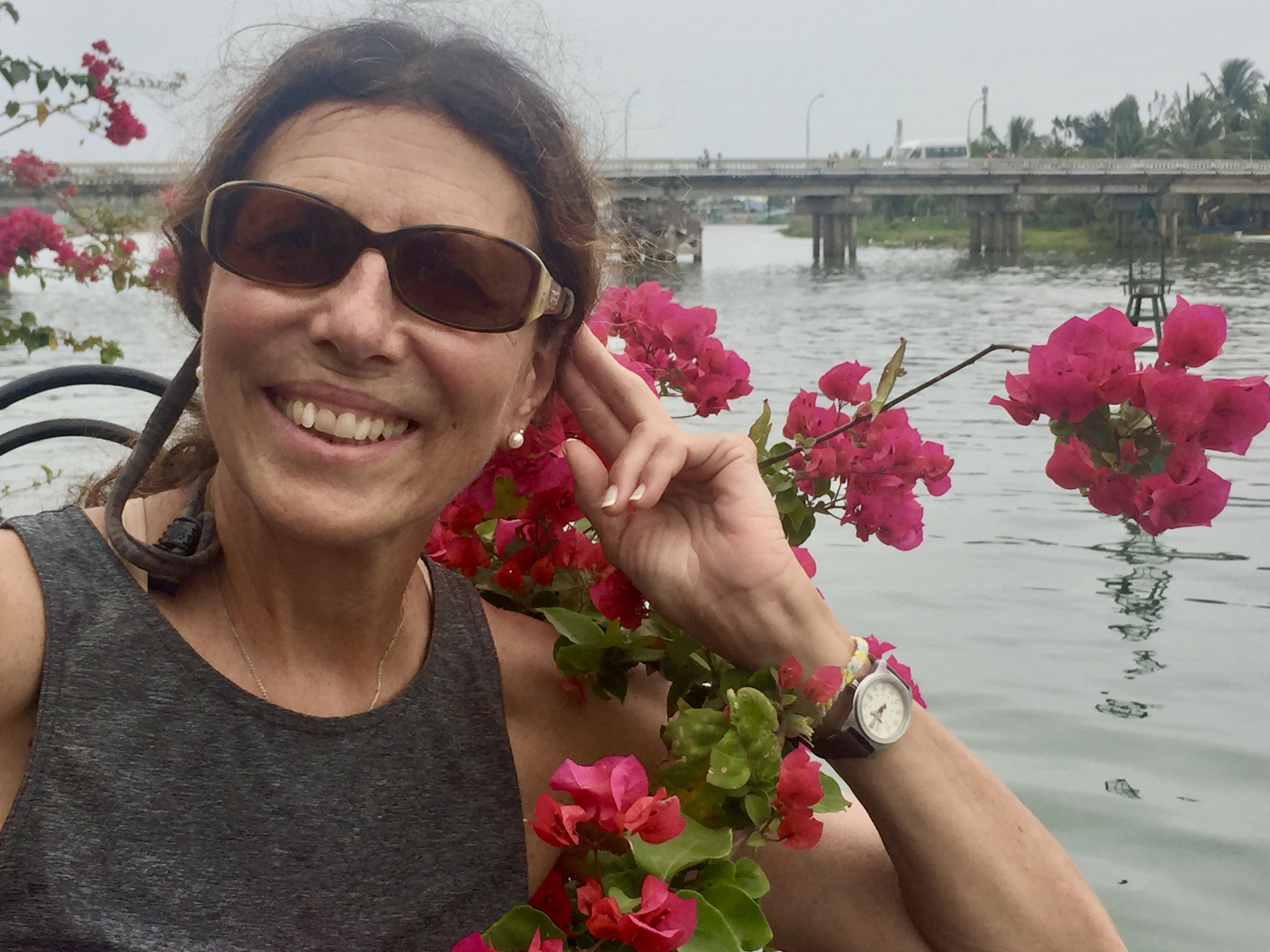 We take the bikes for a ride out of town. Friends we met on the Dragon Pearl told us to go to “hidden beach” which of course has no signs or directions. They also told us to do a sunrise kayak trip. Both ideas capture our spirit. So we ride toward the beaches on the East Vietnam Sea. An Bang is the most popular so we avoid it. We pedal on a rough concrete trail through sand and grass for quite a while and see several tiny openings coming off our path. I check some out. No hidden beach. We ride some more and take a fork at some point and come to a sign: “Mrs. Trinh beach- Viet food. Free park”. We leave the bikes in the pine forest and head towards the water. We discover our “hidden beach” and are overjoyed. For 110k dongs ($4.70 usd) we get a fresh mango-pineapple smoothie, empty beach, great surf, two weatherbeaten yet fully serviceable palapas with cushioned chaises, and great fresh food. Us alone, sunshine, hot, quenched, sated, happy. Ahhh. Finally relaxed…
 We ride out of town where small villages are next to marsh lands. Sadly, the typhoon has destroyed many such villages over the years. We are trying to locate the kayak rental place but without street signs, GPS, current address, or a detailed street map it is proving elusive. I notice a beat up and faded sign saying kayak rentals on a pole next to a chewed up sidewalk along an inlet and since we had been circling the area for 20 minutes I decide to explore. Past trash, a junk yard and nondescript huts I pedal on. I am shocked when a quick right turn at the water produces a shack that is the very place we are searching for. Seems the one on the website is gone, hence the old sign and this shop is just getting started. The sunrise tour isn’t yet part of their tours but the guide is willing to accommodate our request. We agree to be ready by 5 am the next day.
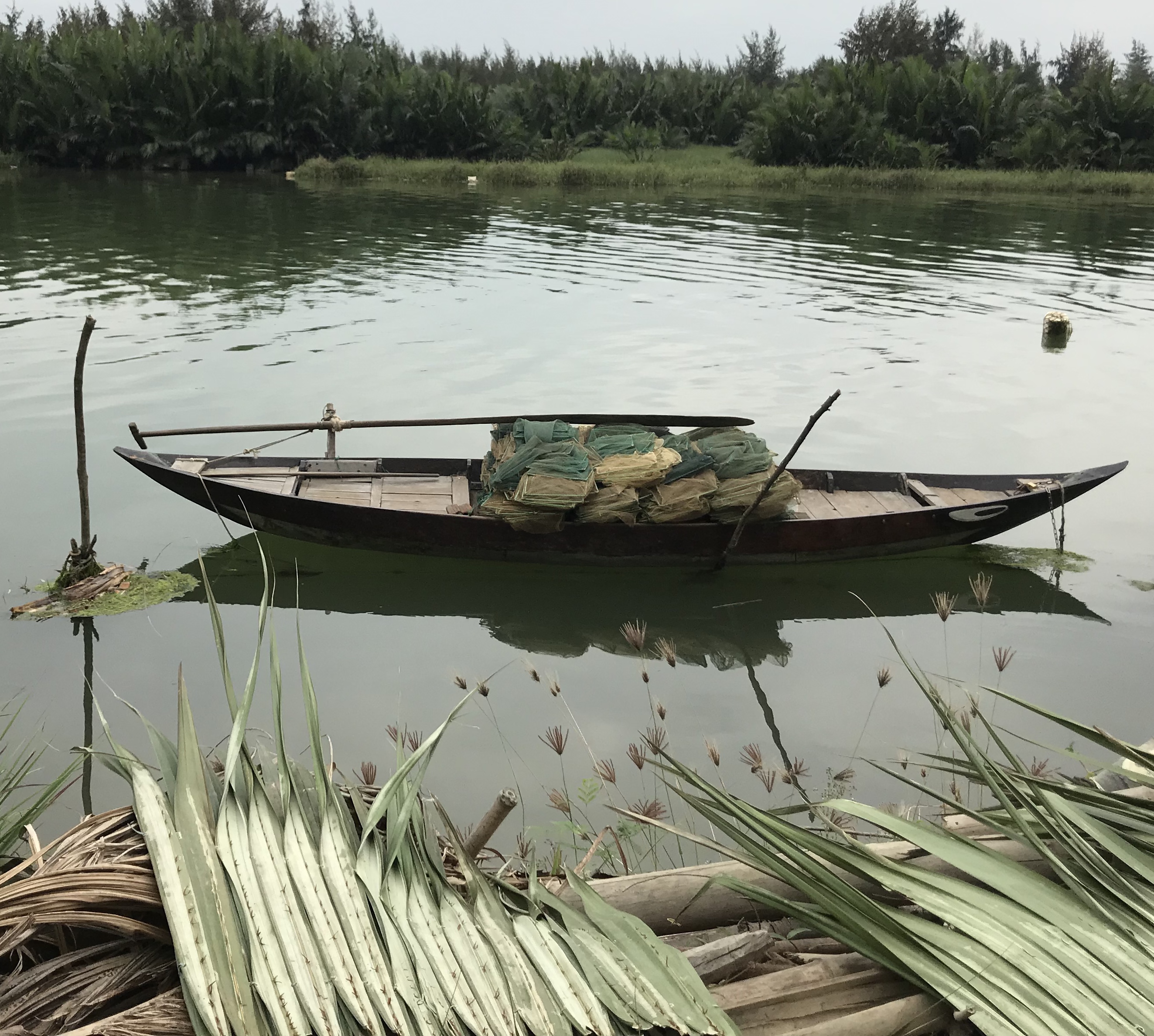 Still fascinated by the small handmade fishing craft and the long carved paddle
 The nets are raised and lowered throughout the day and checked often by the fishermen. Once we head into the broad river, it is windy, the water is rough and the current is strong making the paddling in these well worn plastic boats difficult. I feel like I’m not moving and I’m getting fatigued. I’ve gotten separated from Steve and Lung, who is shouting instructions at me on how to paddle. I’m pissed and muttering to myself, “I know how to paddle!”, and put extra muscle into my stroke. Later he tells us that the current was surprisingly strong. We head into a small harbor where the fishermen are unloading their night’s catch. It is a madhouse of fish and people coming off the trawlers, middlewomen carrying buckets of fish, crab, squid onto the shore where the haggling takes place. We witness a heated exchange between two women fighting over a tray of fish, it tips, spilling the fish and a physical fight ensues. It is women who buy wholesale off the fishermen and then sell a bit higher to other women who’ll then sell the fresh fish at the market in Hoi An.
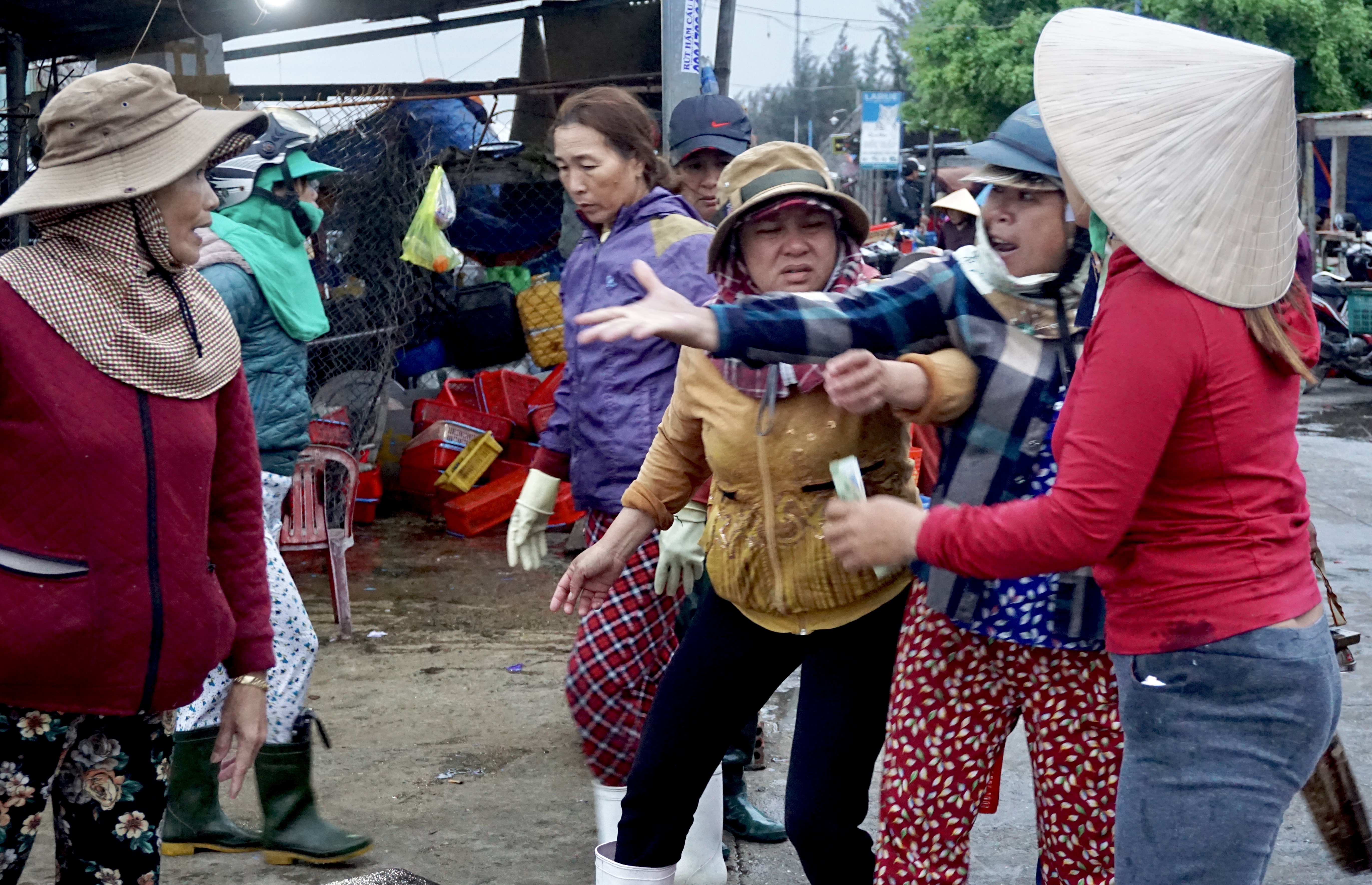 I am totally absorbed in the fish market scene. Women dominated. Local commerce and keeping it fresh, every day…
 A bamboo thung chai or basket boat is rubbed with resin and cow dung for waterproofing
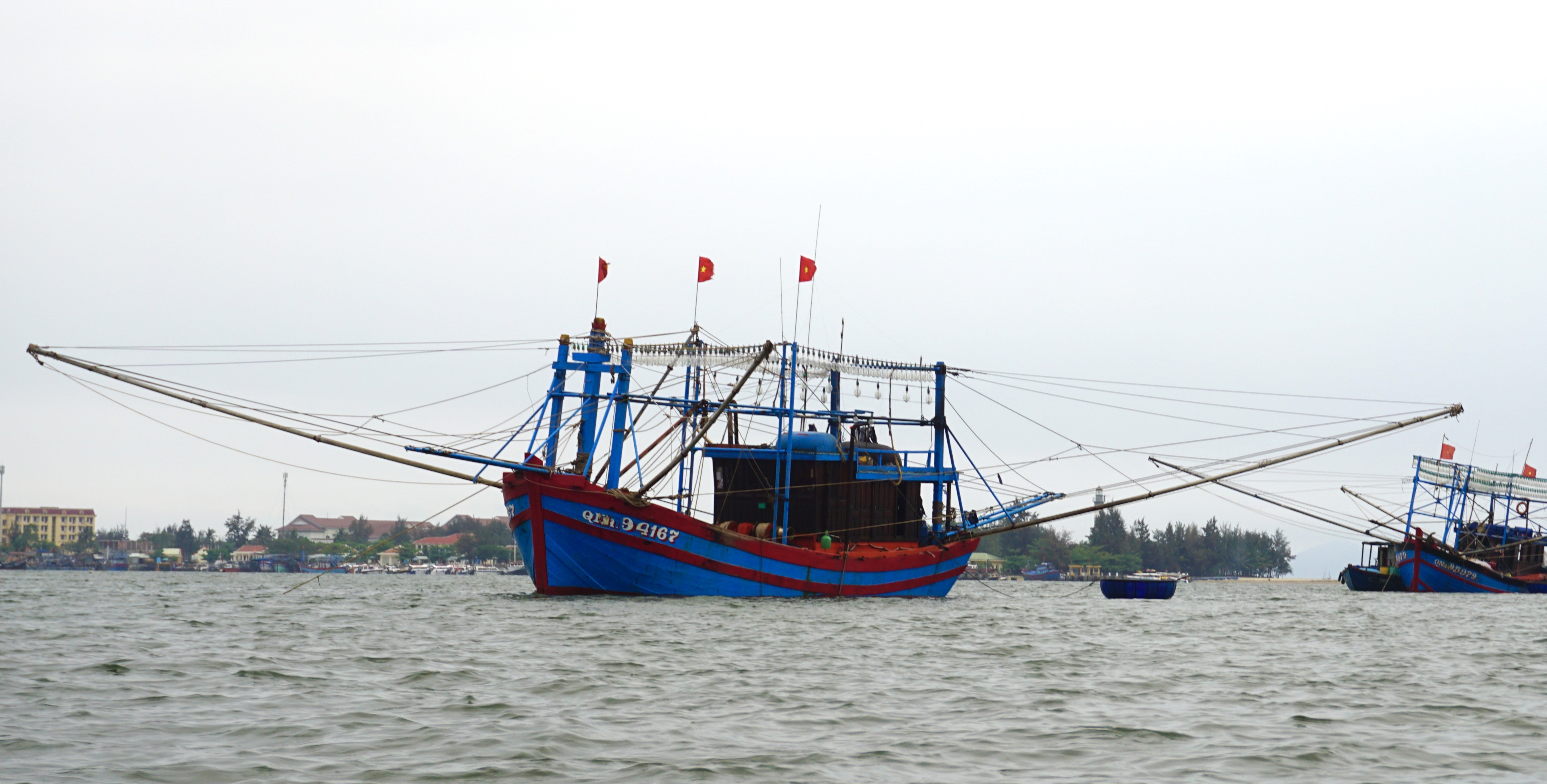 Fishing vessel with array of high intensity lights to catch squid at night – impressive rigging
 Kayaking by the nets in daylight is amazing. The nets are spectacular in size and ingeniously raised and lowered by the fisherman pedaling a crank gizmo from a nearby bamboo platform.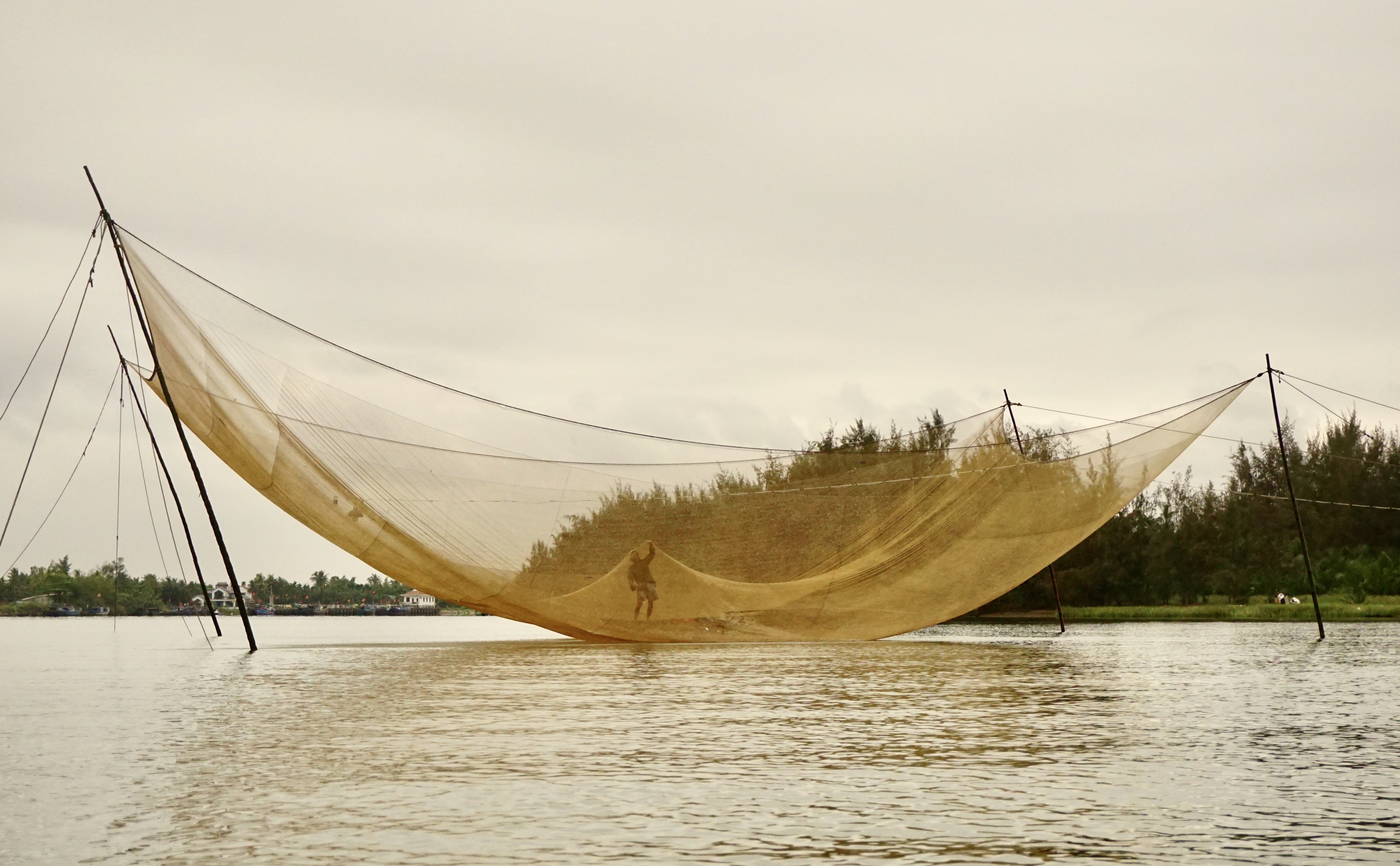
 Lung treats us to coffee at a local bistro that he likes. We have shared more than a tour, our stories have made us friends. We say goodbye and ramble through town, exploring, dodging motor bikes, pedestrians, scoping out a camera battery, being part of the local traffic and feeling free.
 Hoi An is very pretty with some well preserved wooden homes. The main streets are lively. We eat well, go shopping, visit the markets that are selling the fish we saw much earlier and sweat alot, it is really hot. I bike to my manicure which takes us into another non tourist area of Hoi An. We find Heaven and Earth bike tours and sign up for a 21 km ride through paddies and indigenous villages. We’ll get to use true mountain bikes with working gears and we are psyched. Steve is especially looking forward to a bike that finally fits.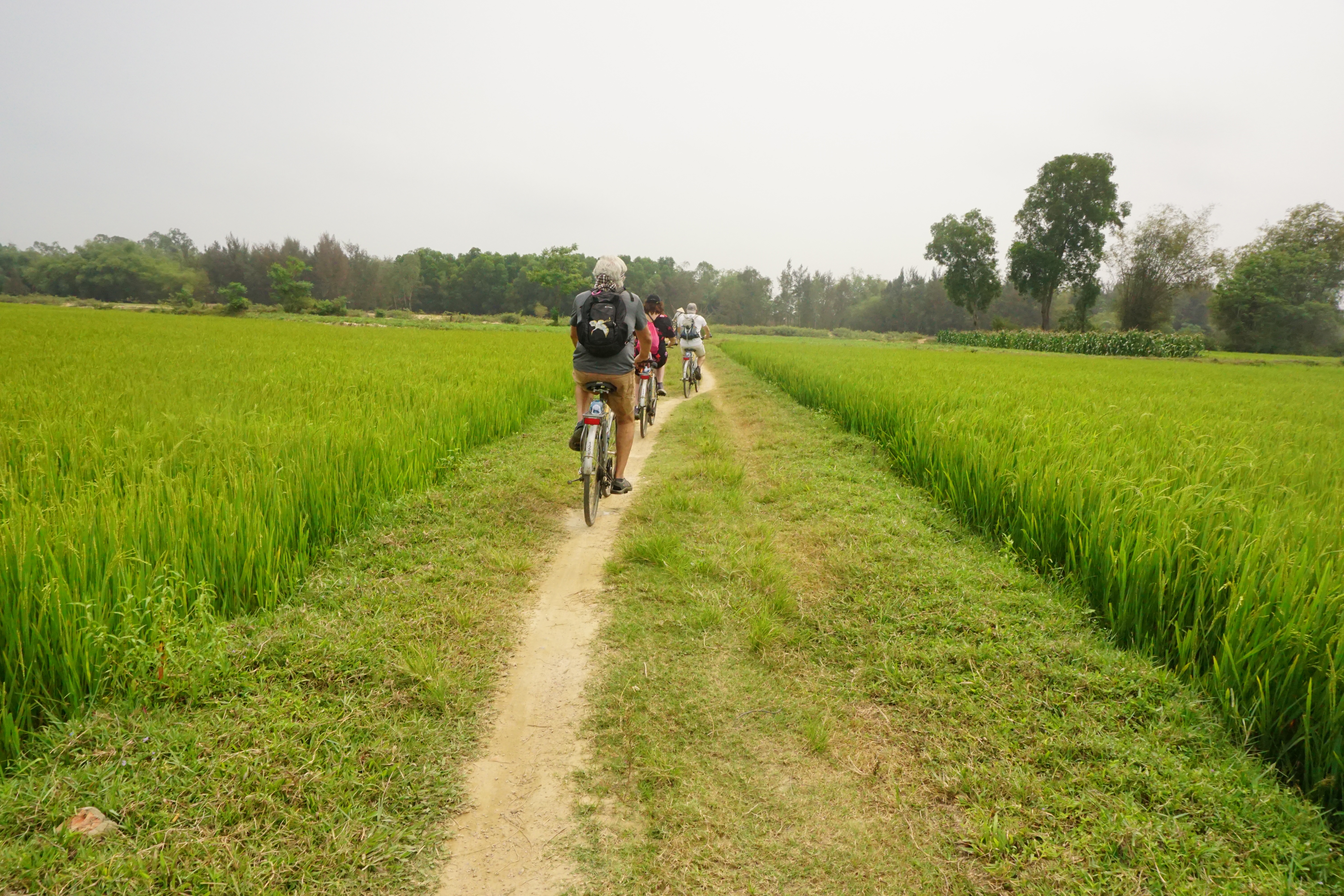

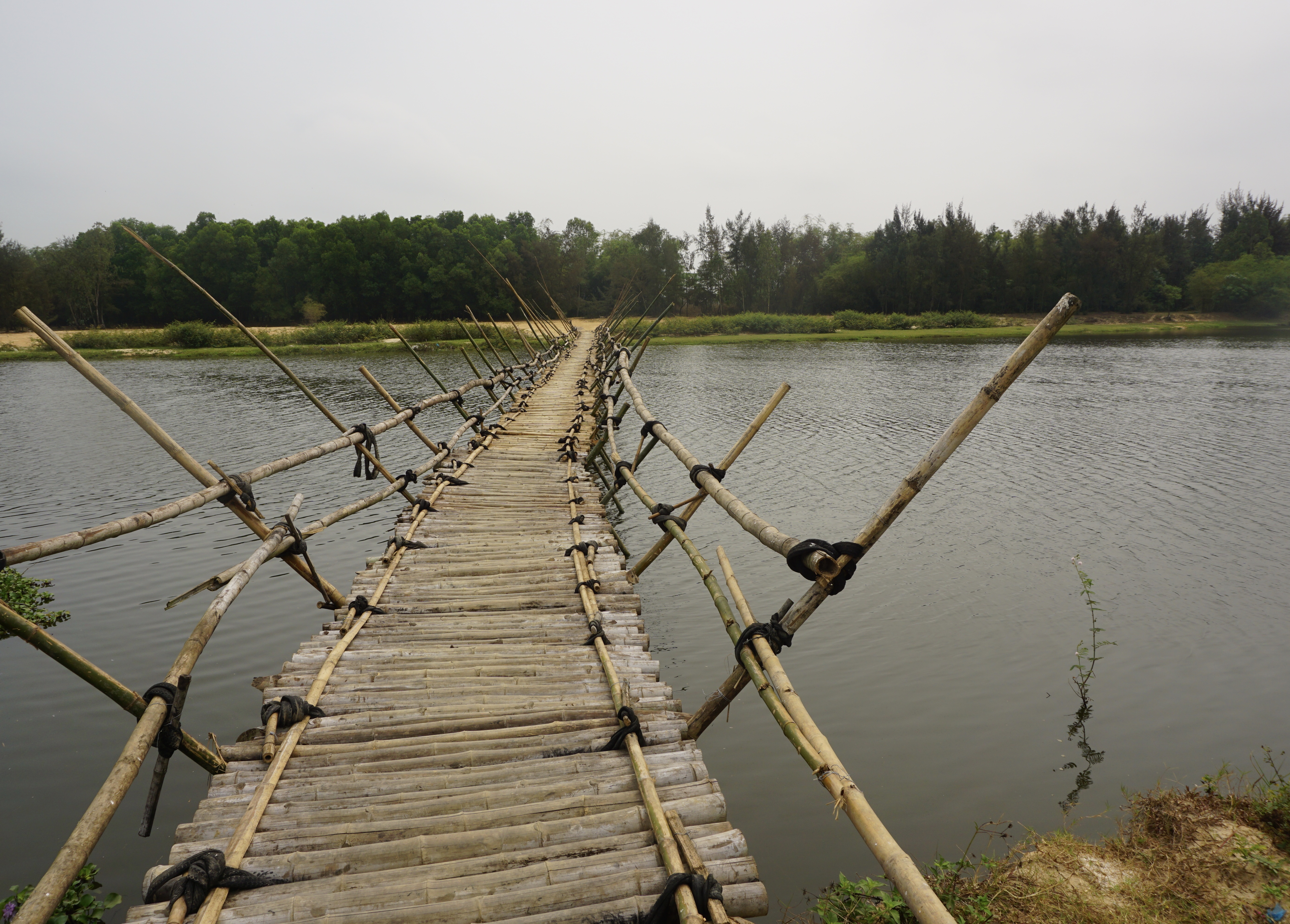
 It is a strenuous ride and so much fun. Standing up to pedal over huge stones, vibrating over several bumpy bamboo bridges, trying to stay upright on a single track through paddies. At one point the woman in front of me stops abruptly on sand and I’m launched onto a water buffalo dung patty. Luckily it isn’t fresh. We go past irrigation locks, huge aerating shrimp lagoons, abandoned brickworks, and a water buffalo with twins. Part of the ride is exposing us to traditional crafts in people’s homes that tourism helps keep alive. We visit a village that for generations has specialized in weaving brilliantly colored mats but struggles to compete with factory made. We bike to a village known for making herb rice crackers. A rice cream batter is ladled crepe-like over a rice husk fire in an already hot home, then dried in the sun. The same women get up at 2 am to make rice noodles as well and we are treated to sandwiches of noodles and crackers sprinkled with black sesame seeds, garlic and chili dipped in homemade fish sauce. These are so delicious that people travel from Saigon for them. Interestingly both our guides, Tram and Loc refer to Ho Chi Minh City as Saigon. We bike on and on, each village devoted to their craft; from inlaid mother of pearl furniture, to paddling the woven basket boats (we literally go in circles with much laughter) to imbibing homemade rice wine with blends fermented with centipede (medicine for chickens) to king cobra, the strongest. No one tastes that one. We visit a traditional 2 story house where an ancestral altar occupies the central space. Sleep areas shift according to age and marital status and everything moves upstairs during wet season. The beds are wooden platforms covered by the very mats we’ve just seen and remind me of our Ha Giang guide Khu’s stories of her sleeping on boards growing up in Sapa. Our young guides show us how people repurpose old armaments from the french colonial era and the “American” war. Again I feel shame. Did Americans really need to interfere with Vietnam’s governance to thwart communism?
 95, now blind, she knows the pattern so well that she continues to feed the correct color to her son-in-law’s loom. Wish i could have taken one home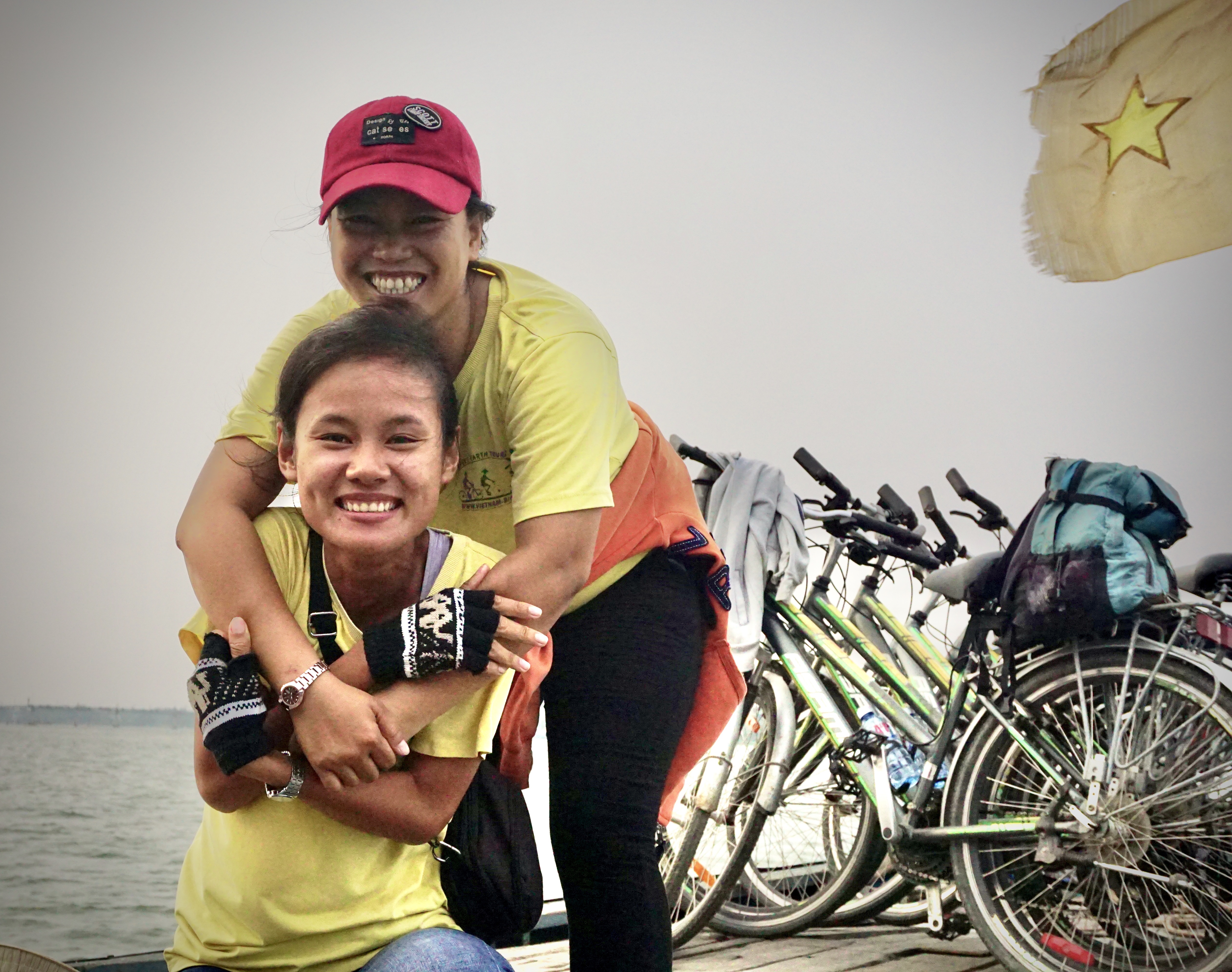


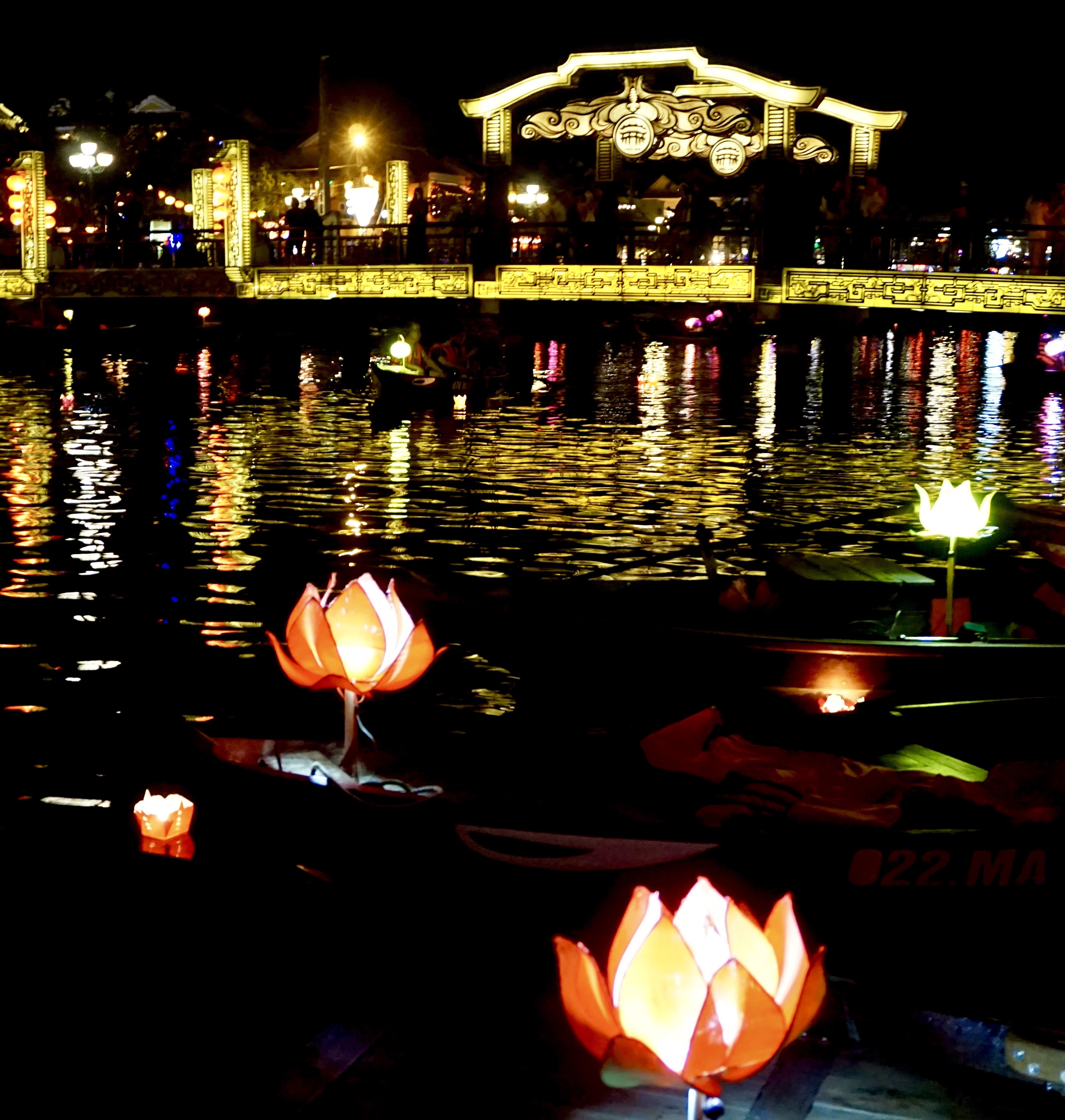
 Incense – a little wood powder, glue, sandalwood or cinnamon rolled into sticks
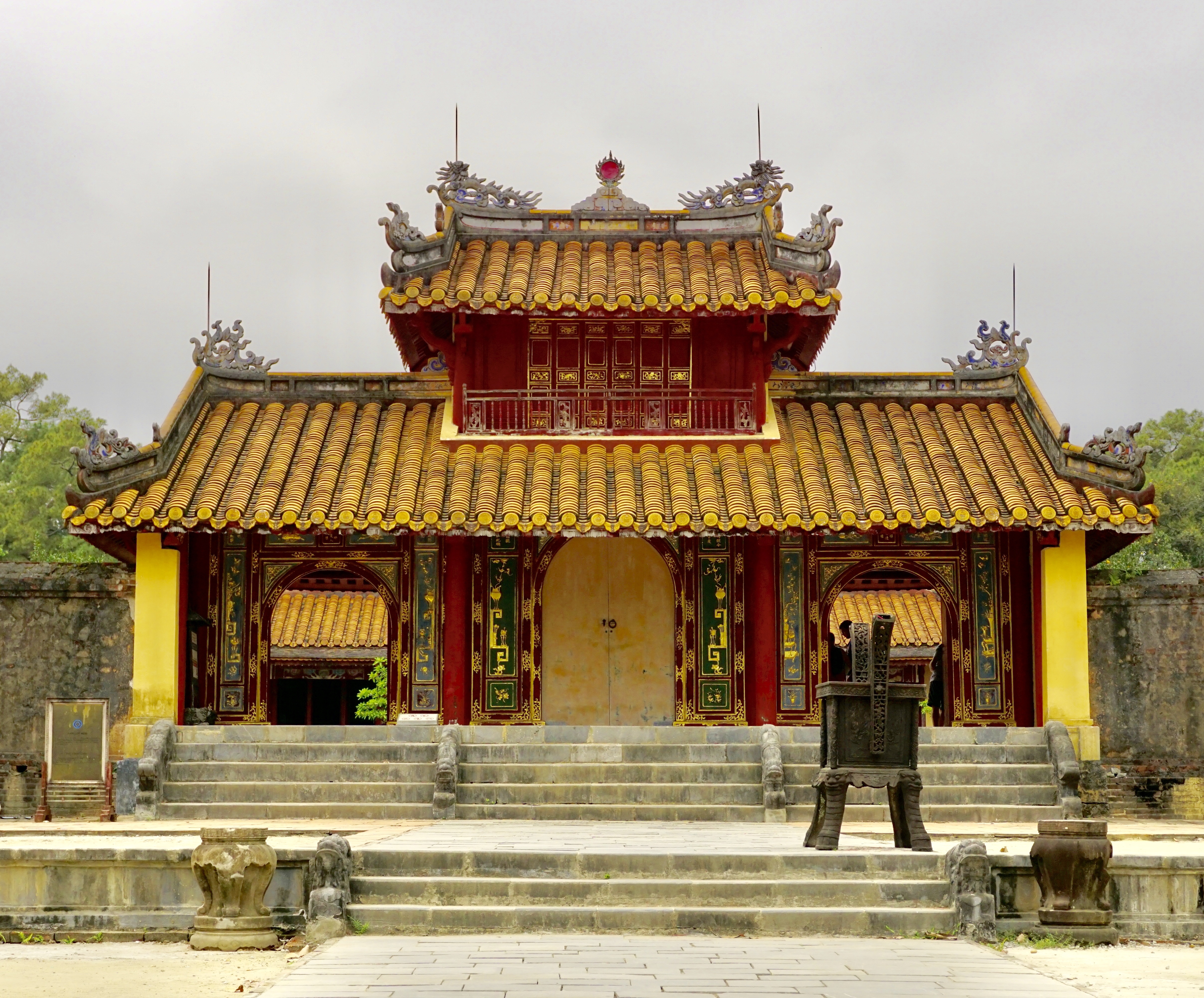 Hien Duc Mon entrance gate
 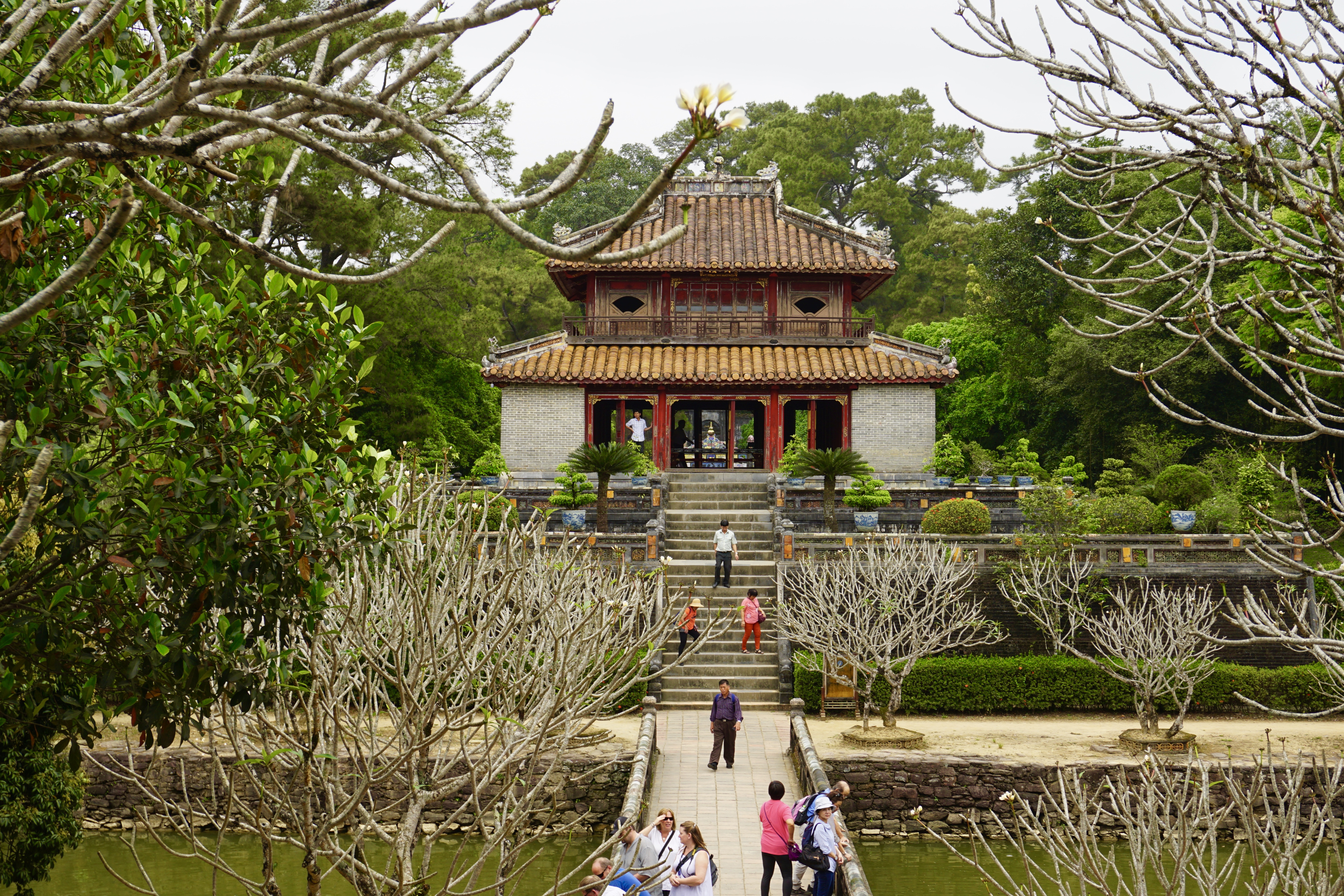 Sung An Dien Temple, a Royal place of worship then, a place of remembrance now
 Plumeria trees frame the Temple
 The garden of Longevity along the Than Dao path
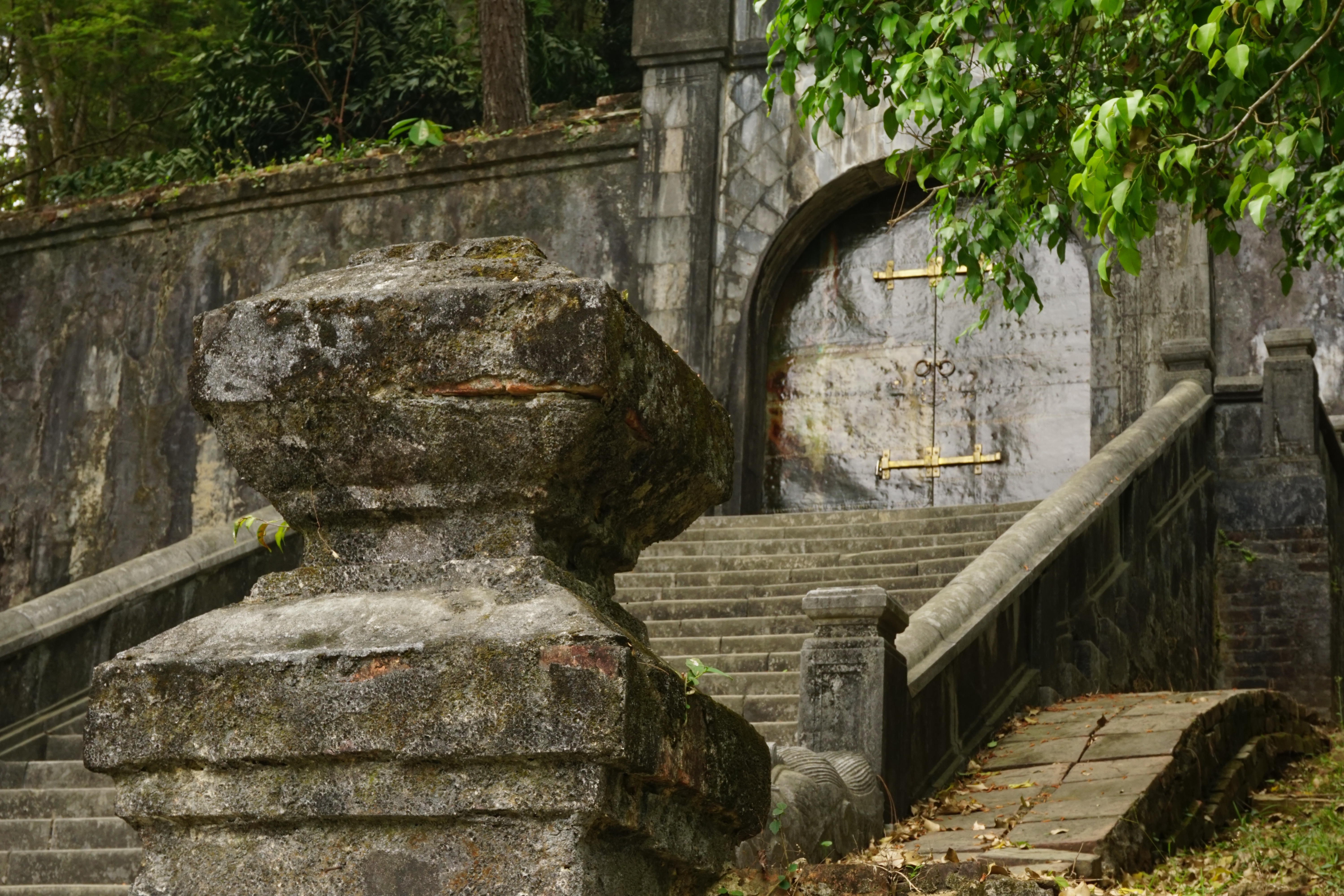 Buu Thanh – Minh Mang’s remains lie deep underground behind iron doors
 Luu Khiem Lake
 The traditional Honor Courtyard of mandarins, military, elephants and war horses
 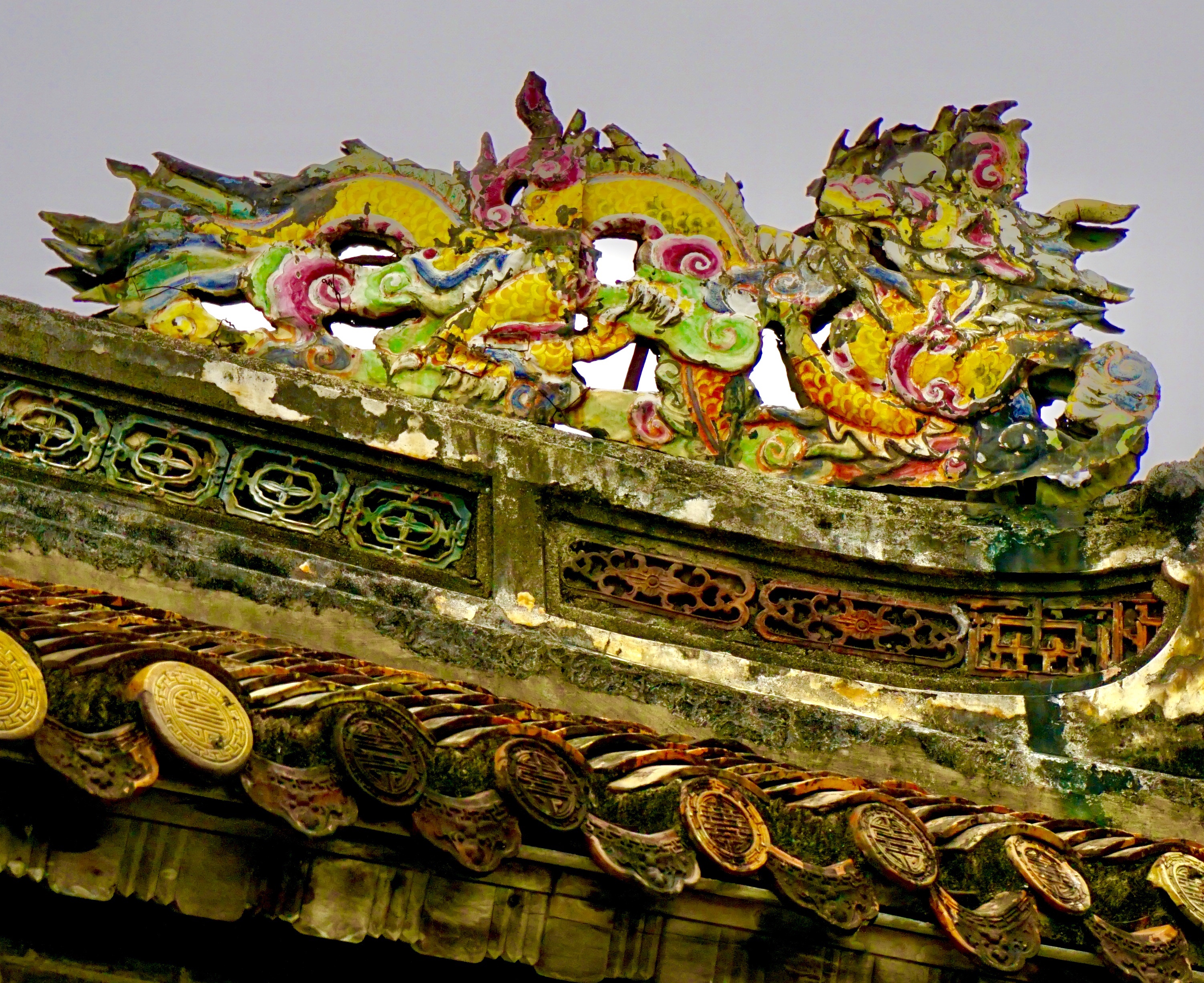 Dragon riding atop the roof of glazed and clay tiles with royal medallions
 Exquisite ceramic mosaic craftsmanship adorns many of the buildings
 Peacock flower – Caesalpinia Pulcherima
 Ceiling mural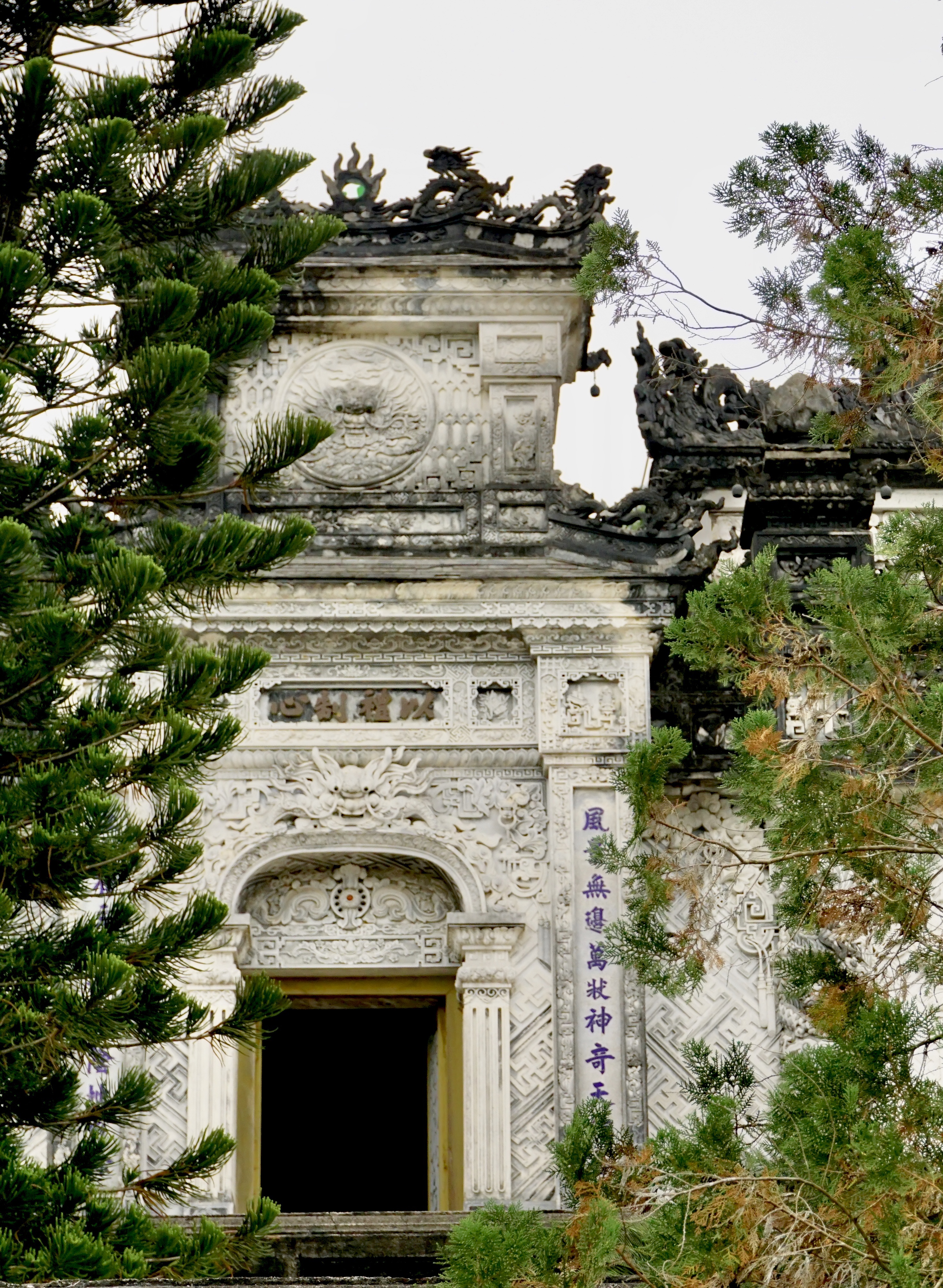

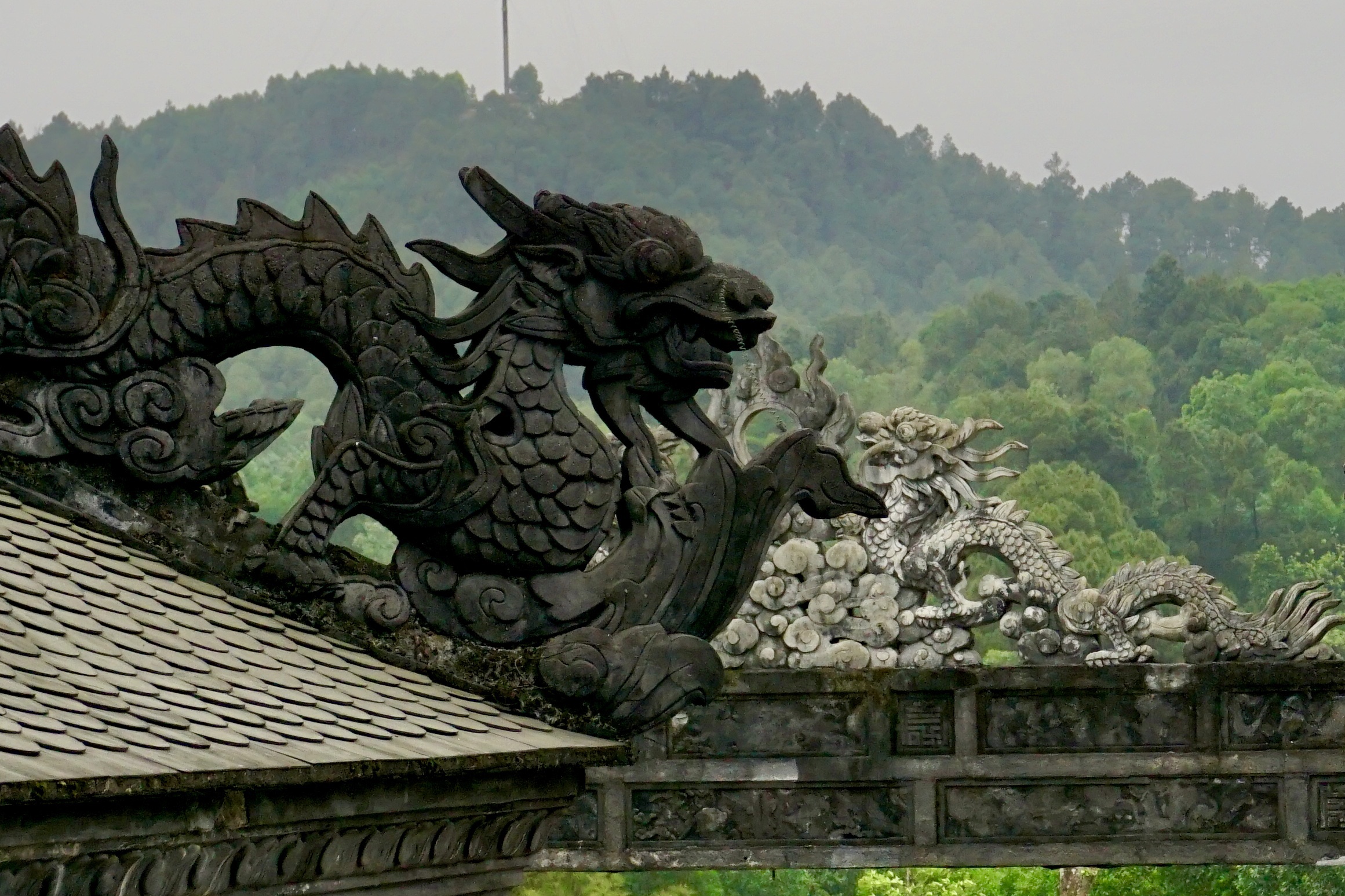 Then we behold the interior.
 The tomb room covered in ceramic with Khai Dinh’s remains buried 9 meters below
 Linh Mu-Pagoda of the Celestial Lady
 Burning incense
  We hire a driver instead of taking the bus which allows us to slow the pace and traverse the scenic and steep Hai Van Pass between Hue and Da Nang with hopes of slipping into Hoi An by evening. We drive, enjoying panoramic views of the South China Sea appreciating why this winding mountain road is called Ocean Cloud Pass.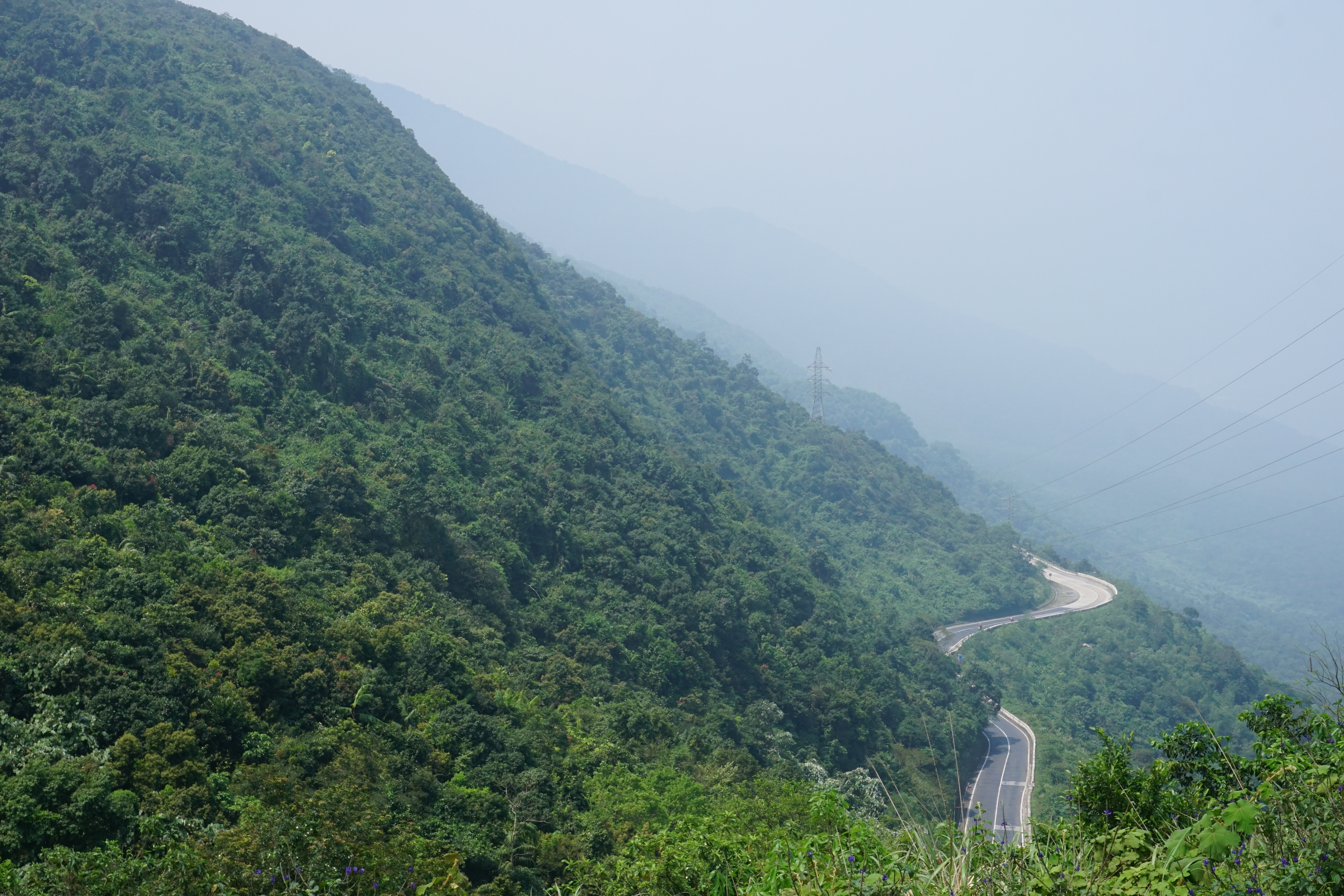
 We follow the water for a ways before the climb and get to enjoy some of the best oysters ever eaten from a nearby lagoon. A local practice is growing oysters on old bicycle tires, then scraped off and sold. Our driver steers us to his favorite place minus the tires. We can only say yes.
 The lagoon
 Heaven
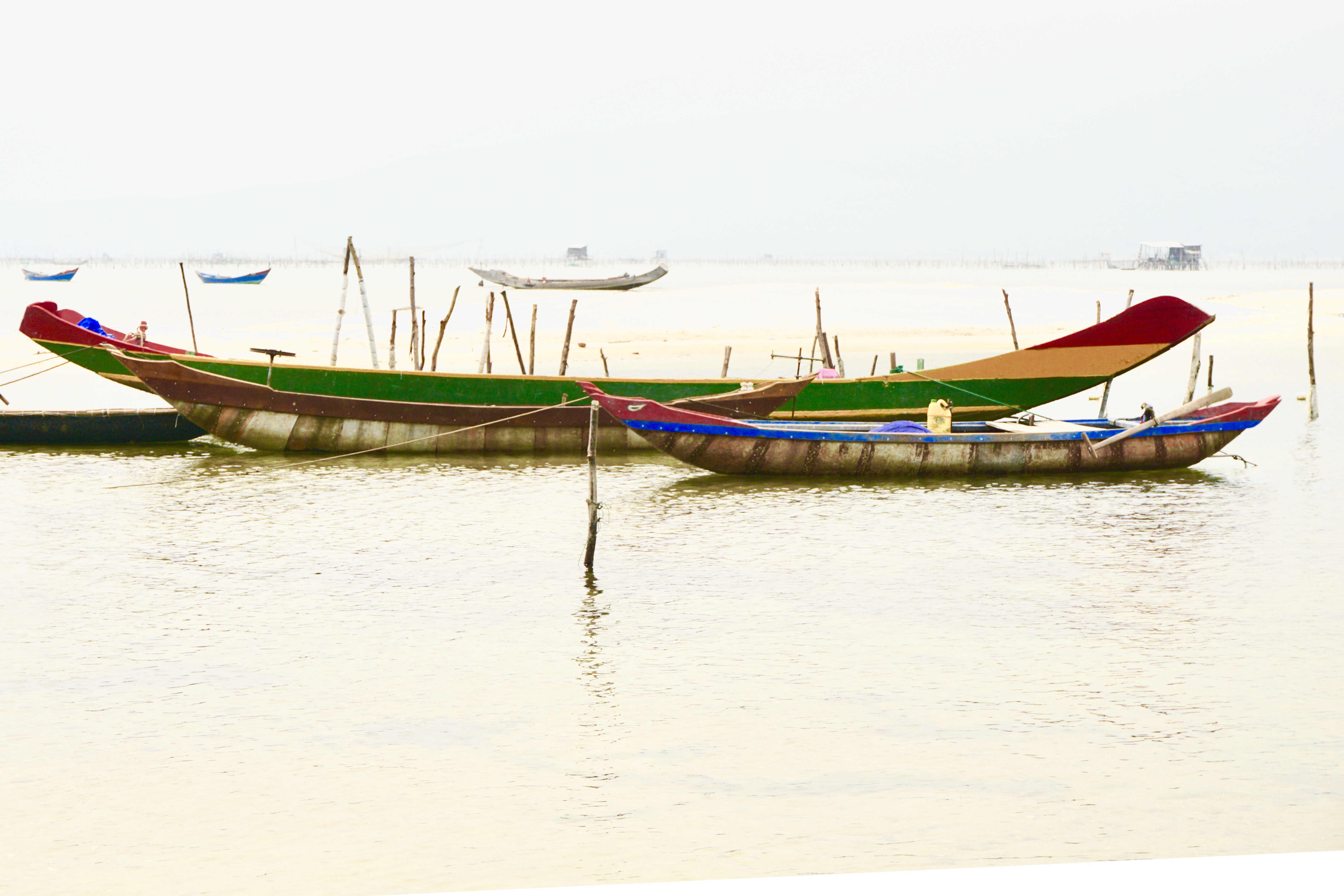 Our driver, Dong, takes us into his home village. Languid and deserted, boats are parked on the street with no one around. I walk onto the beach relishing the sand, checking the boats hiked up against a cement wall or marooned in brush. All are rigged with wrapped reed side pieces called sponsons that extend the hull and help with flotation and stability. I am loving the different kind of boats that are used in Southeast Asia and wondering if these belong to early morning or night fishing folk.
 Boats parked on the street
 “This style of boat originated in the north during the war years and were brought south hence “immigrant” boats. They have a high overarching bow, a high narrow stern and a wooden hoisting barn door rudder operating through a tall slot in the very narrow transom. They are equipped with a pair of bamboo bundle sponsons to widen them just below the sheer line perhaps to deal with tenderness, or possibly just to provide one last chance to bail them out if overwhelmed or swamped.” -Ken Preston
 Hai Van Gate
 I feel strange seeing the mortar shell holes in the bunkers and towers and climbing through them while simultaneously remembering the wars that built them. I am grateful for peace.
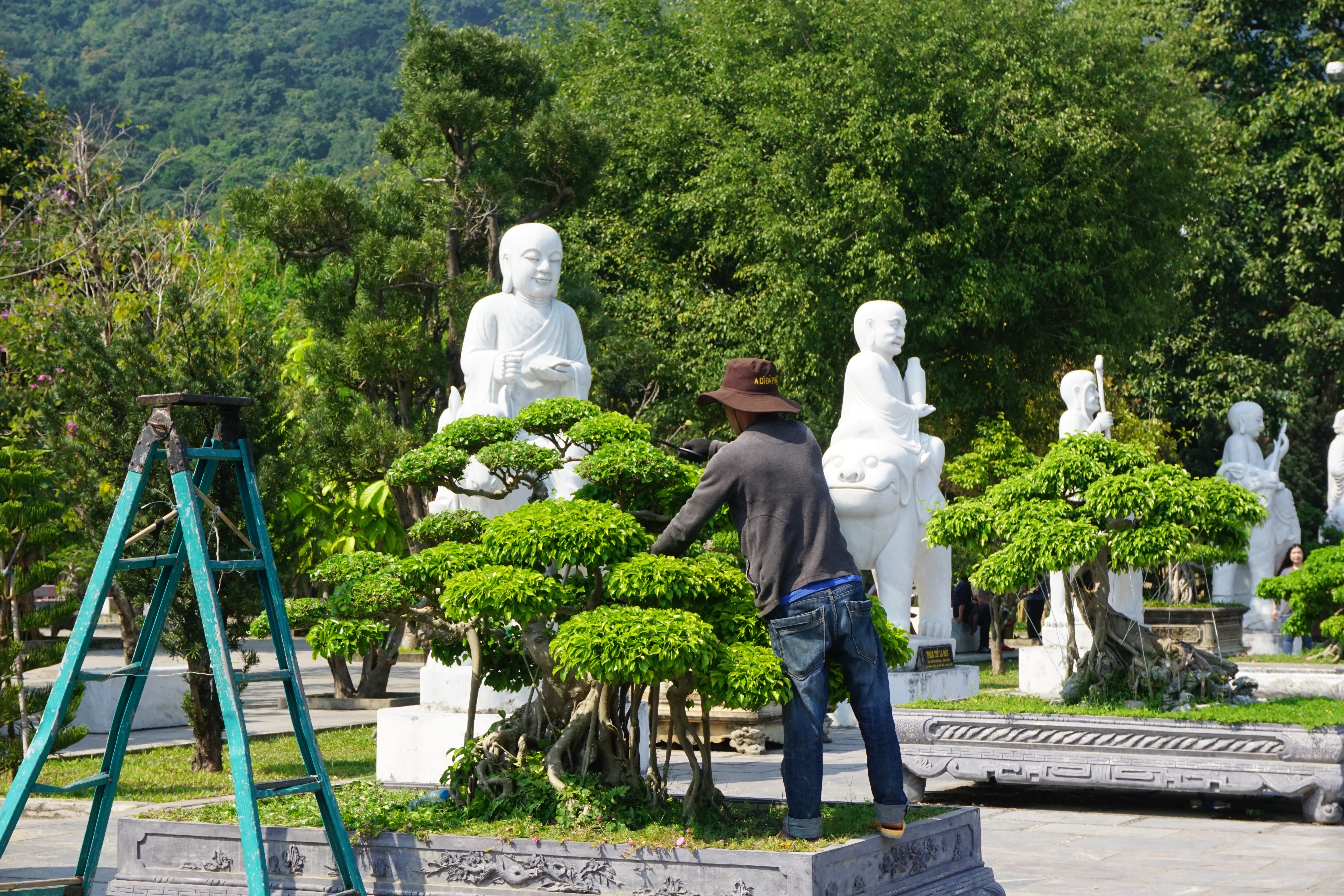 Someone has to trim
 The perimeter of Da Nang seems thriving, crowded with white upon white hotels along its coastline replete with marinas, water sports, palm lined boulevards. Our driver uses one word to describe what we see: “Cronies”. We have heard the term in Hanoi to describe the corruption that allows these mega modern hotels to be built. Luckily we are driving through but the difference of a few miles and development is startling.
 Once inside however, it is dark, steep, slippery with sharp ledges and crowded with two way moving bodies. We skinny up. We take a different way down.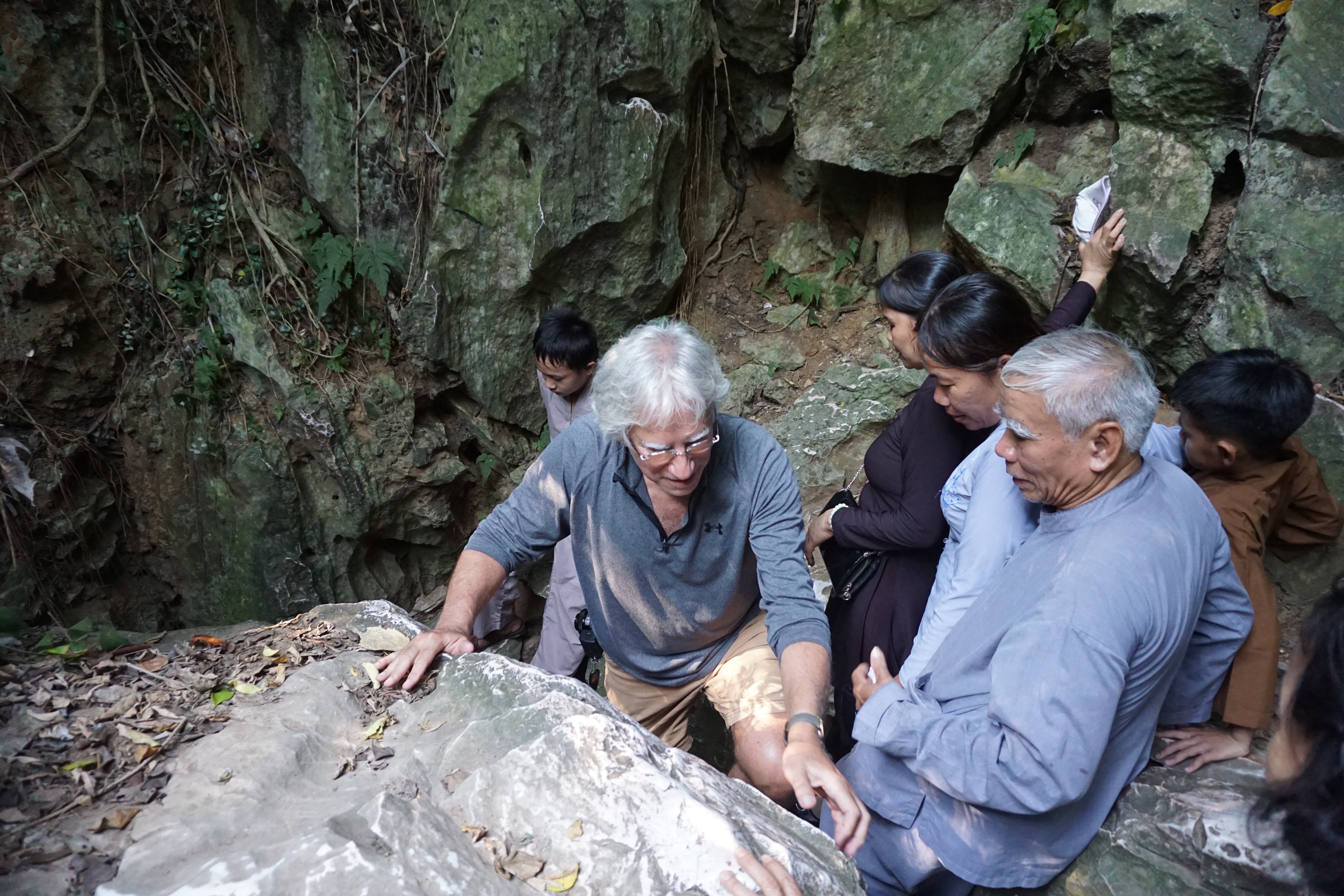
 Dragon boats moored on the Perfume river, Hue


 Purple Forbidden City Gate of Manifest Benevolence – Cua Hien Nhon
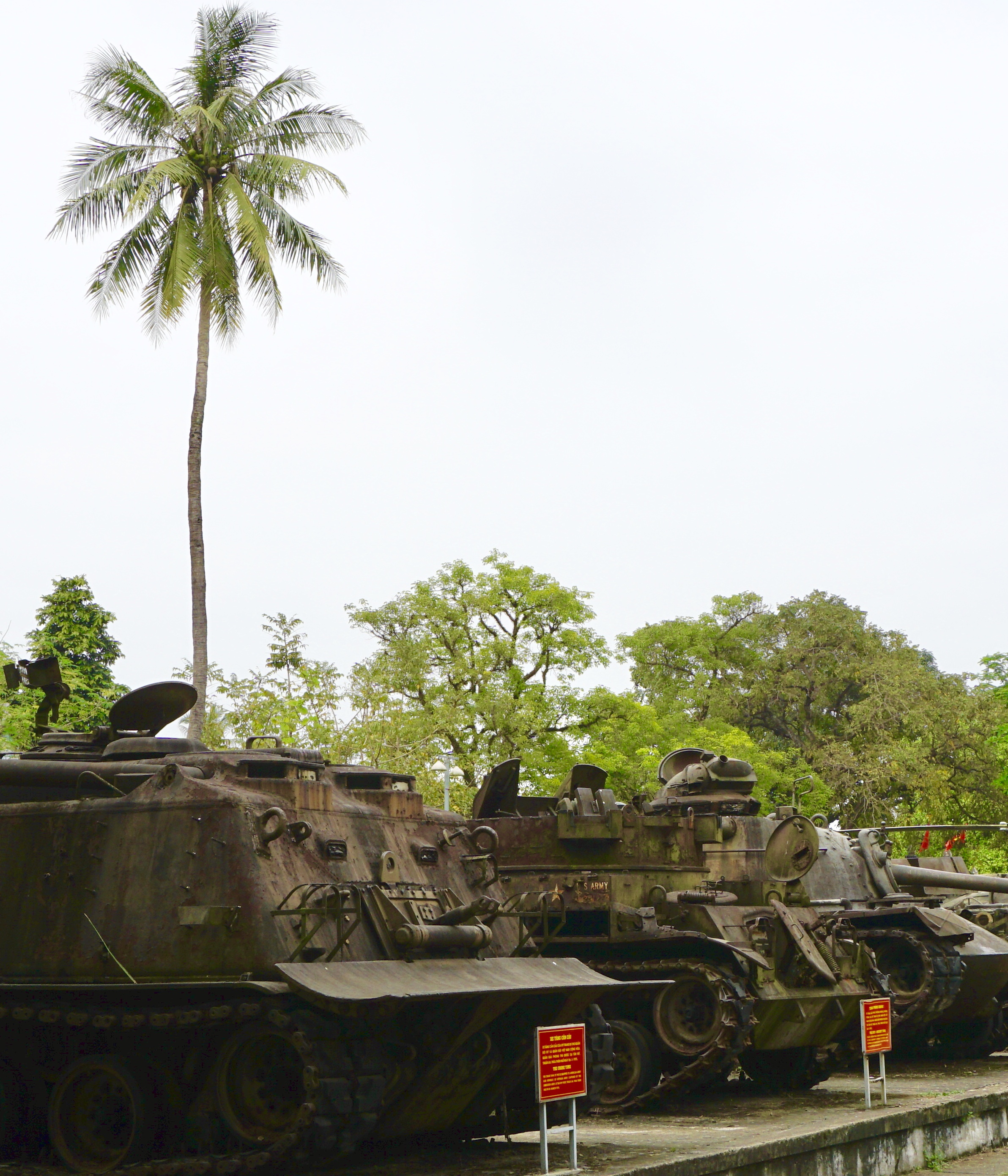
 We are subdued by the beauty of what remains. As we exit we notice a small park enclosure with a display of captured tanks, artillery and a jet from the “American War”. It is a chilling reminder of the war, defeat and that I am on foreign soil.
 We are biking throughout Hue and while there are less motorbikes than Hanoi, it is still very stressful navigating through traffic, pedaling over narrow metal bridges caught behind rickshaws and cars squeezing through non existent lanes, everyone hurrying. What a relief to get off and wander the outskirts into a grassy area where beer is served on tiny round tables alongside the river. We stretch out and watch the dragon boats traverse the brown river in the afternoon. It is one of the best parts of the day; the rhythm we fall into when touring is done and just being happens.
 A restored grand dining room
 We fly to Yangon, our last destination in Myanmar. Once known as Rangoon, capital of British colonial Burma for 100 years, it was reestablished as Yangon in 1989 when the Myanmar military came into power. The capital has since moved to Naypyidaw though Yangon remains the largest city and commercial center of the country.
 Desman is orienting us to this both marvelous and crumbling city: its wide tree lined boulevards and narrow cross streets; the beautiful parks with blooming lotus ponds, the tidal Yangon River, with ports to the sea and its riverside markets, the upscale neighborhoods with gates and alarm systems, art galleries, government housing for civil employees, the colonial buildings struggling to survive their age and disrepair and the huge monastery complexes that are intimately connected to the Shwedagon Pagoda, the most sacred of them all.
 Egg plant decoration on a city street
  Apartment building on electronics row
 Classic colonial buildings repurposed and still standing
 We are fortunate enough to find the Musmeah Yeshua synagogue open, the one and only in all of Myanmar. The original wooden building was built in 1854 and renovated in 1896 for the 2500 member congregation that enjoyed services until they left during WWII. Only 20 families remain. The temple does Shabbat, the high holy days and holidays. Usually closed on Sunday, they opened for a presentation and tour for an Israeli delegation and it seems for the Feldman’s, too.
 Hanna Samuels, of the family that has maintained the temple for generations
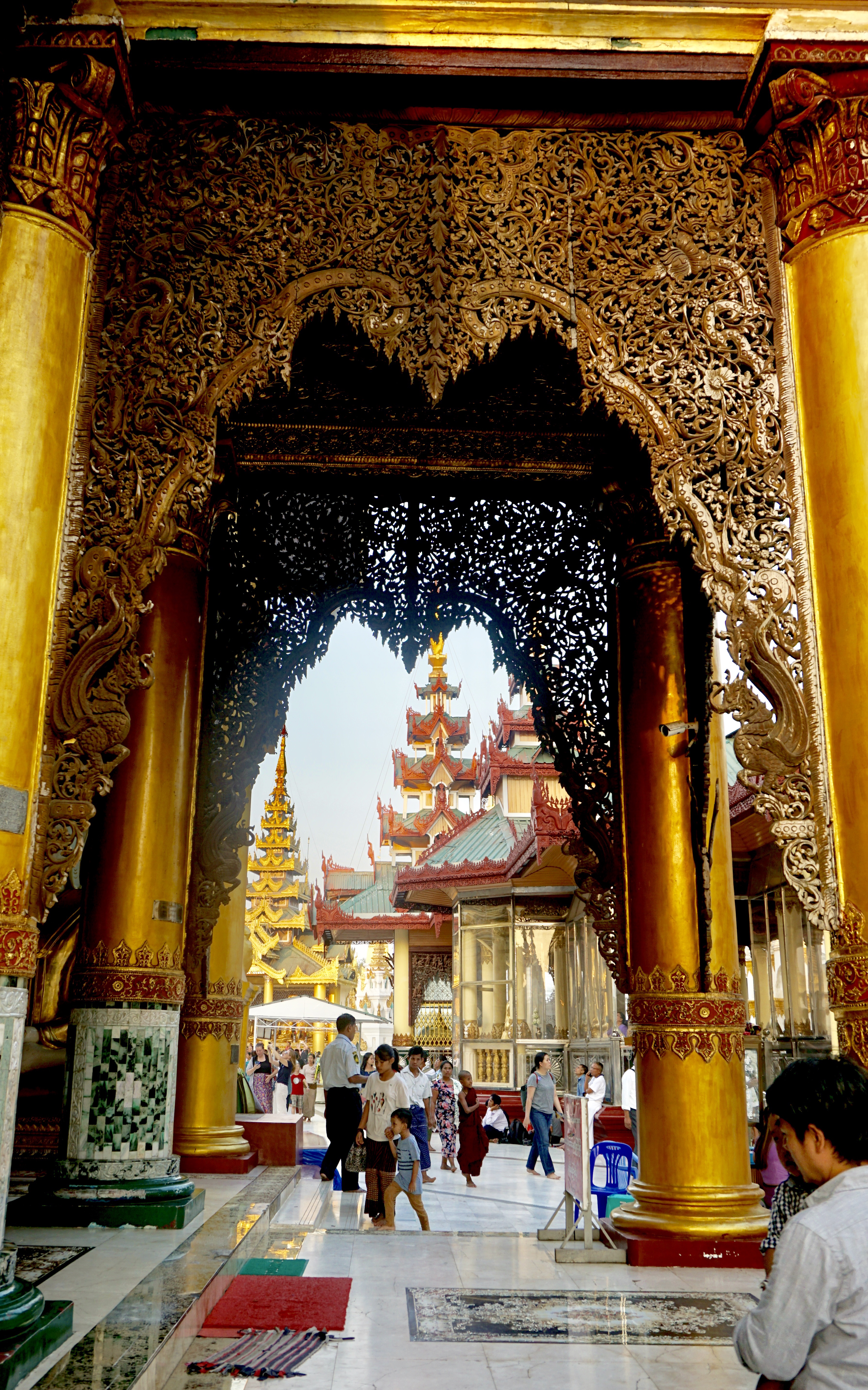
  I am excited to be finally going to Shwedagon Pagoda, the jewel of Burmese Buddhist shrines. It is believed to be 2500 years old, the oldest in the world, completed in the 6th century by the Mon tribe. We climb the ancient steps, pass the giant mythic leoglyphs, leave our sandals at the East gate, and wander in on the cool marble tiles that cover the entire complex. I feel like skating across the polished surface. The atmosphere is immediately one of peace and timelessness and awe of the beauty, the scale and the spiritual.

 A Shan novitiation
 A Mon novitiation procession in traditional red and white
 His novitiation is several years from now
 We leave our stuff and hit the beach so quickly the sweat flies off our skin.
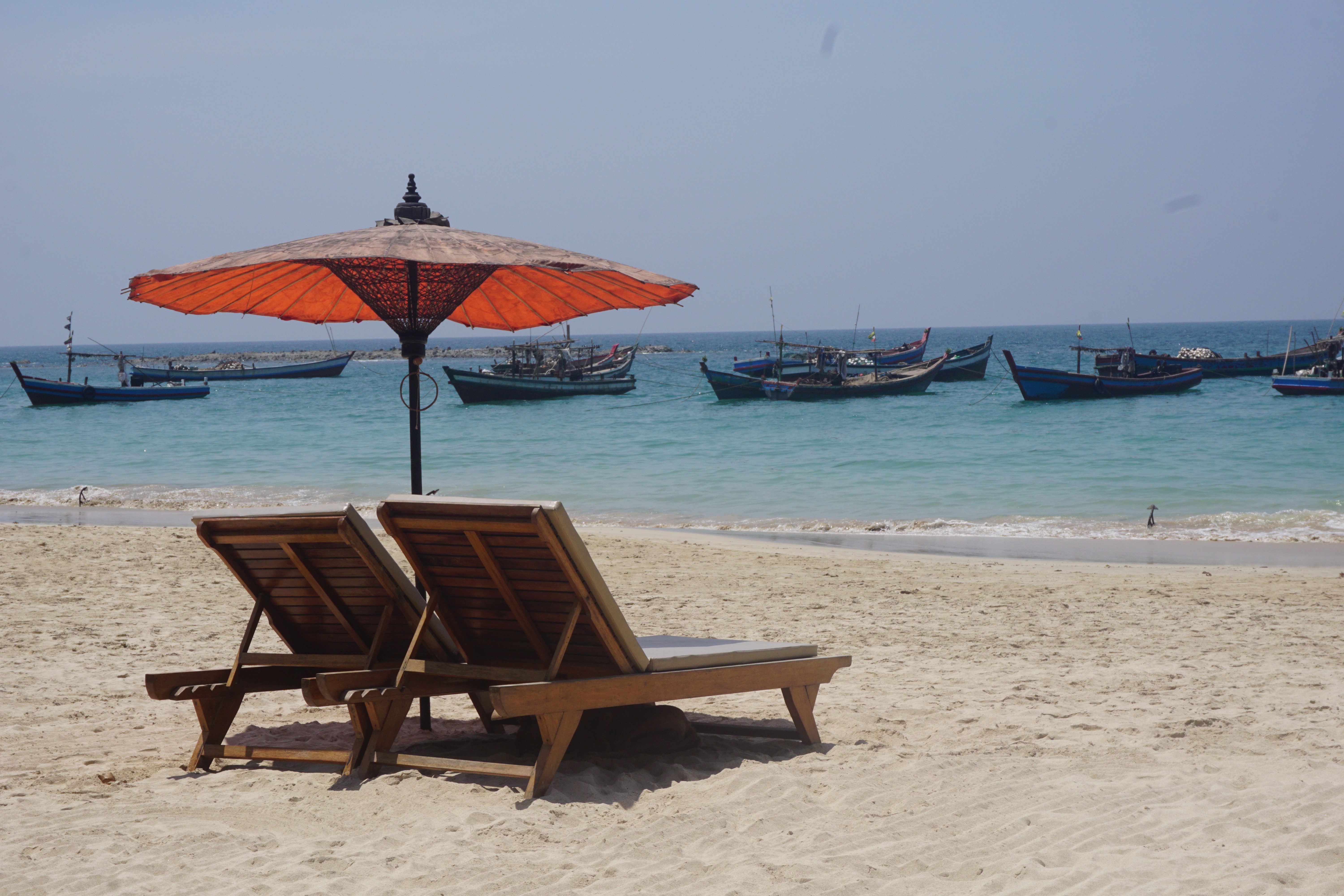 Nice beach. The Yoma Cherry is the only hotel in this cove and the geography provides safe harbor to fishing boats anchored at the shore. We top off our daiquiris, swim in the warm Andaman Sea, cream on the sunscreen, and mellow in the shade of our palm frond palapa.
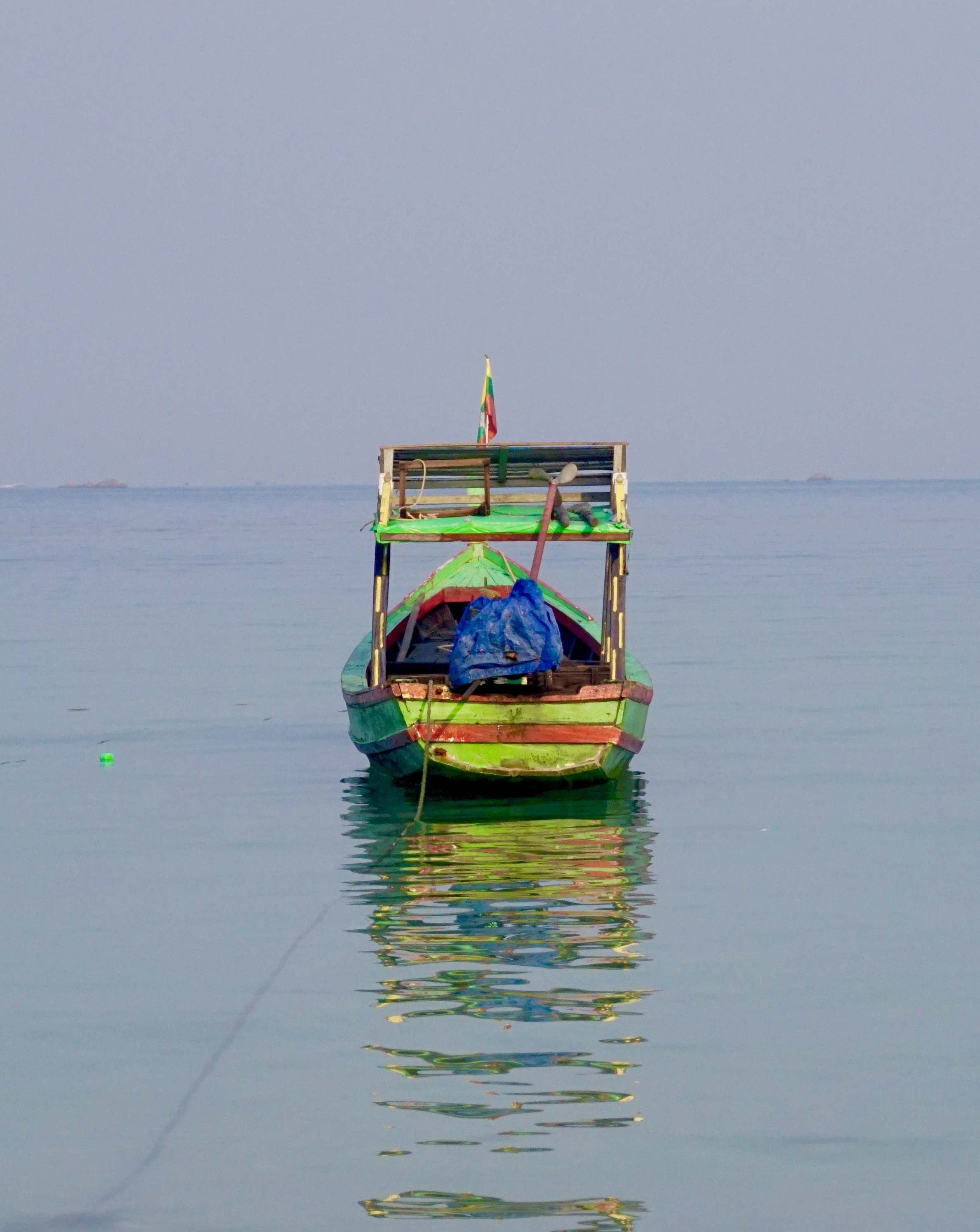
 The fisherman go out around 6 pm and return 12 hours later. We see village men emerge from the jungle carrying their dinner pails and gear slowly walking towards the boats around 5.
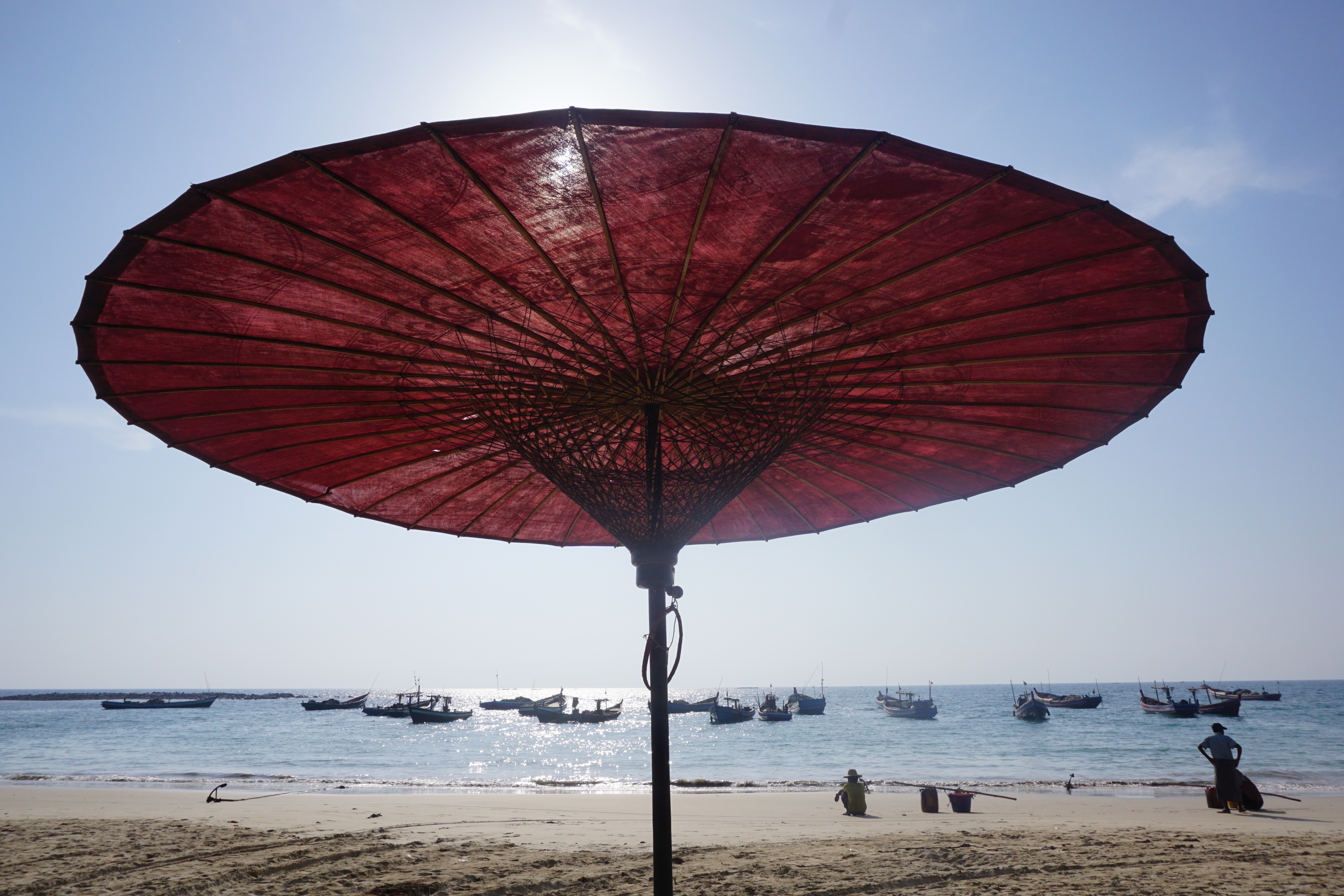 There is a lot of waiting, milling around and then somehow the timing is right and they roll up their longyis, wade out, climb up the sides like ants over the gunwales and take their places. Preparations are made, engines are engaged and one by one the boats launch out to sea for the night of fishing. The boats are strung with high intensity lights that draw the small silver fish into the nets, night after night. It looks like a little city spread out along the horizon. It is also a lovely time to swim.
 We walk barefoot to dinner at Coconut Beach Restaurant about 20 meters from the hotel for freshly caught fish. The first night we have white snapper, the second grouper. We are in heaven. Steve is really expert at separating flesh from bone. The fish is tender, succulent, a gift from the sea. It really doesn’t get any better than this.
 It has a sweet menthol like taste as it sits in my cheek becoming saturated with saliva. I’m told to chew it and besides being crunchy, not much is happening other than my mouth is filled with beteljuice and I have to spit. I don’t know why I am shocked by the volume of bright orange juice hitting the ground. Like any bad habit, you’d have to work at it to want to continue.
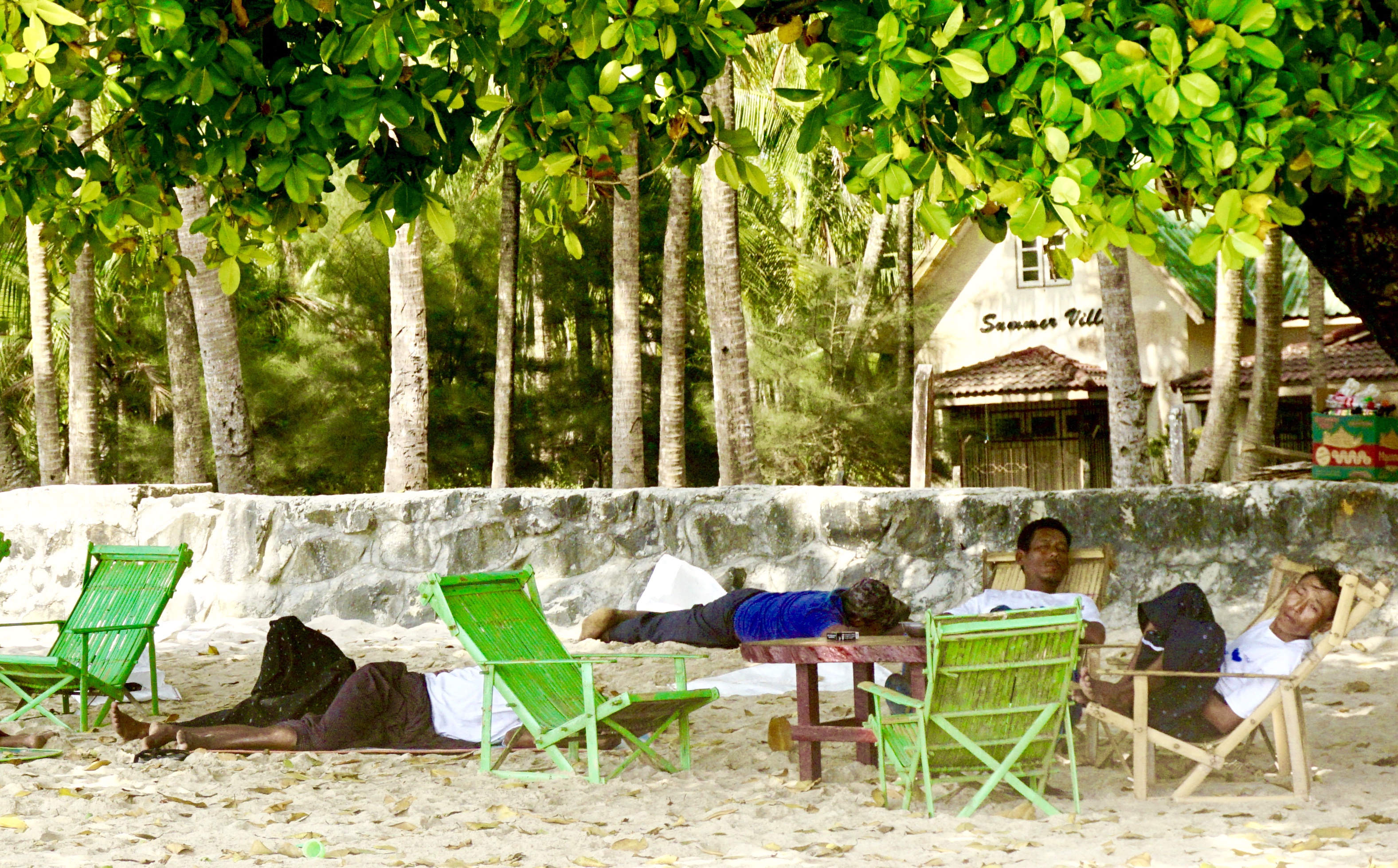
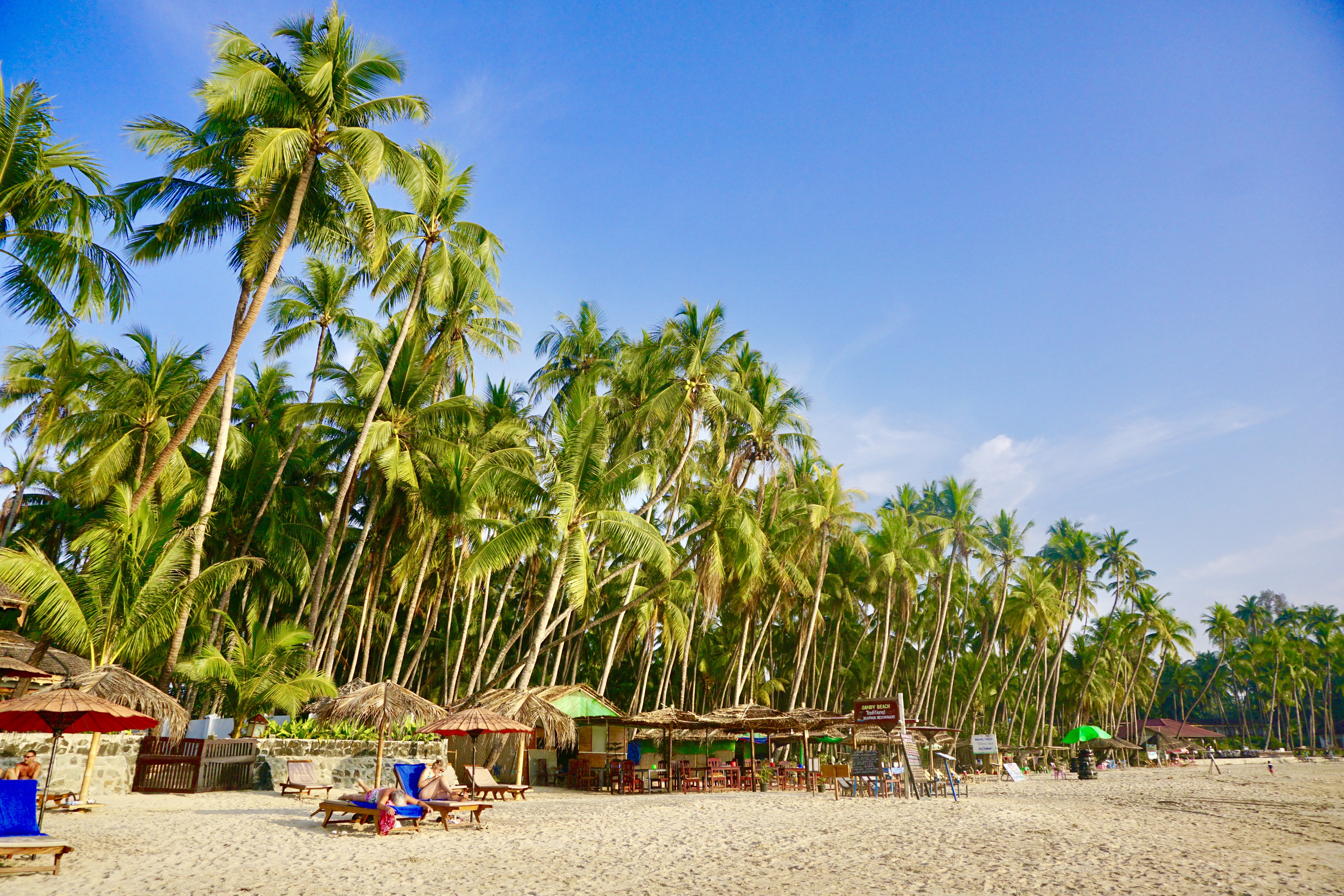
 Our last morning at the beach arrives, breakfast on the veranda, last swim, I buy my fourth and last conical hat across the way. I see a man hike up a coconut palm, and following some serious leaf shaking and rope rigging, he lowers his coconut booty to the sand. We chat with the hotel manager whose mother, Vera Thompson started the English speaking school next door. We watch the fisherman attempt to move their overladen truck out of the rutted sand using palm fronds to gather some grip. We do pet the dogs against all the rules. And we say goodbye to the beach in Burma.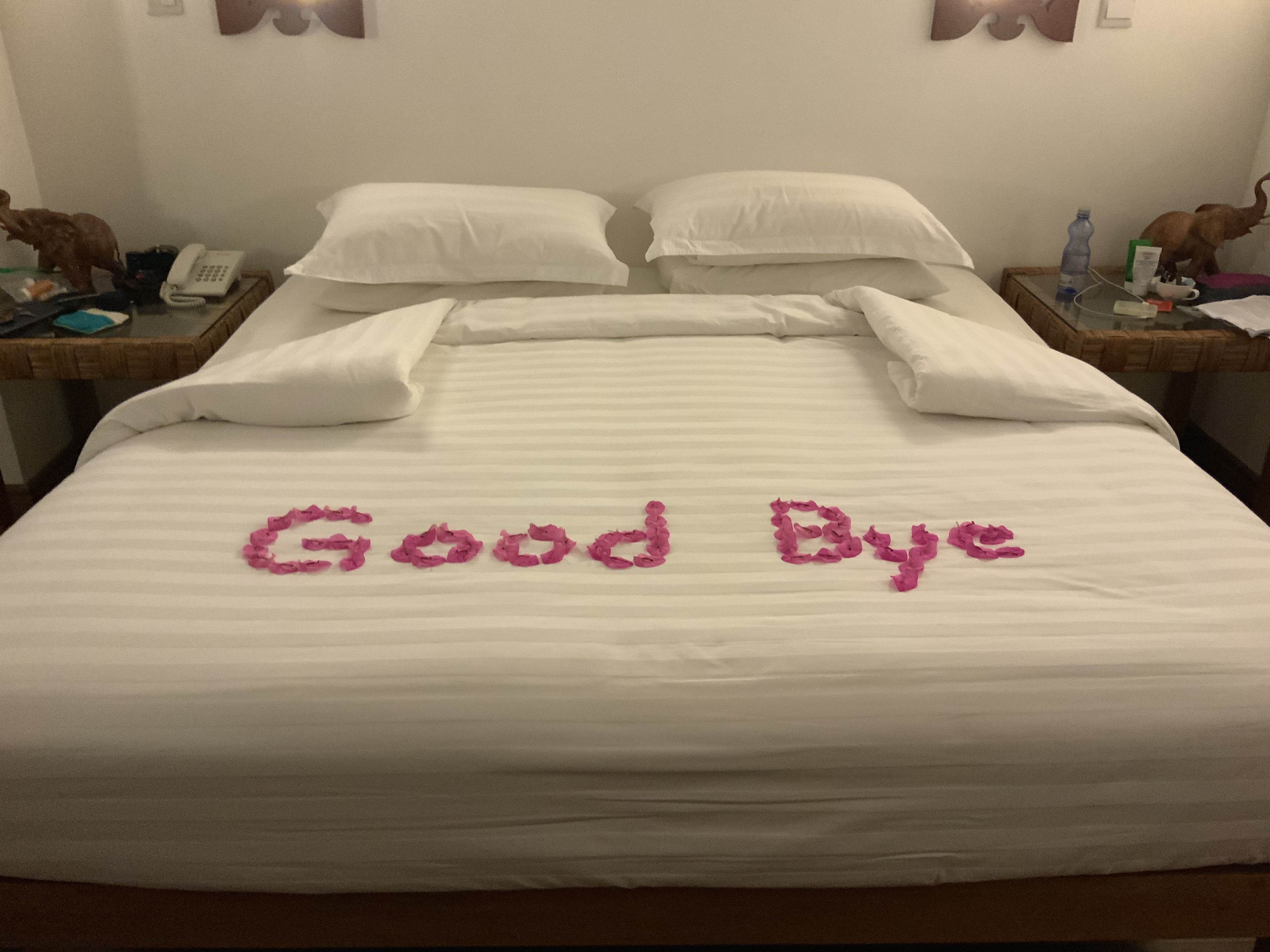
 We spend a great two days in Kalaw before we embark to Ngapali Beach in southern Rakhine state. Kalaw is a town in central Myanmar where not much is happening. It has a pagoda, a cave filled with Buddha images that haven’t achieved relic status according to Soe, a mosque, a market, a meditation center, an Anglican church, an old cinema converted to an event hall and an active railroad. It is another British hill station of the last century and there is not much in this village that makes it tourist famous and we are glad for that. There is a nocturnal howling dog concert that goes on for hours but no other night life we know of. We ask Soe for a non-tour day and decide to bike around the village in the cooler temperatures, slow things down and enjoy that sense of freedom and happenstance when we are on our own. We get a cup of coffee and a sweet and cycle to the market for people watching.
 Alms
Alms
 We ride past the landmark British clock tower and admire the purple jacaranda trees lining the street. We ignore the pagoda and cave and are not even slightly tempted to sight-see. The railroad station however is way cool.
 In the warehouse attached to the station house there are people counting and weighing potatoes, onions and beans in readyness for transport throughout the country and beyond. People are waiting on benches for the twice a day train. We can hear the whistle blow and the tracks rumble. The barrier gates are pulled across the road by one man. And we observe our first fully English sign, an event not seen in a long time.
 Soe and Me
 We are enjoying biking through the small city until we come to a detour for the local construction of a Chinese funded road bridging Chiang Rei, Thailand to Mandalay, Kalaw, Yangon in Myanmar and into India. The presence of Chinese financed infrastructure is powerful. We have seen many Chinese initiatives on our trip from road and casino building in the take over of Sihanoukville in Cambodia, the war zone in Ha Giang, Vietnam and dam building in Laos. We have been told of border areas of northern Myanmar, Thailand and China that harbor prostitution, gambling and narcotics. Border areas of southeastern Myanmar and Thailand are similarly bankrolled by China and our conversations with locals sadly report that area is likened to a cancer that is feared and cannot be treated. It is obvious that the Chinese are meaning to be the dominant world culture and they have a strong anchor hold in Southeast Asia.
 It is late March and fields are idle with manure piles waiting to be furrowed under in May. Avocado plants have woven bamboo hats to protect them from burning. There are cattle and Brahmin cows roaming and I don’t know how they survive in this waiting time before the rains. Humans have a Water Festival, “Thingyan” in mid April when people celebrate the Buddhist New Year and not a moment too soon. Villages, cities bring in a huge network of pipes, valves and hoses and spray a colossal amount of water on the revelers for days, accompanied by loud Asian music, of course.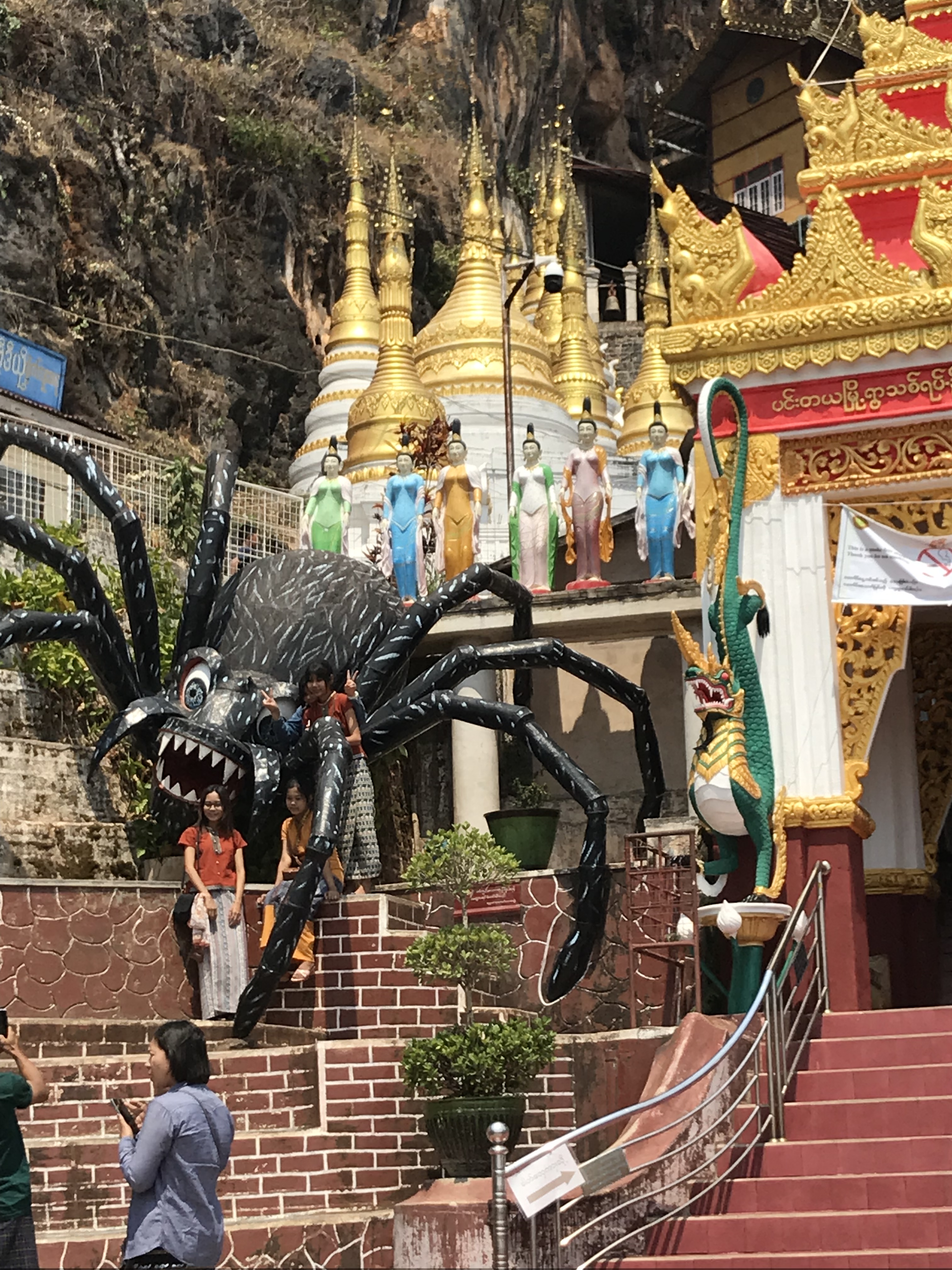
 Thousands of Buddha images go further up into the roof of the cave
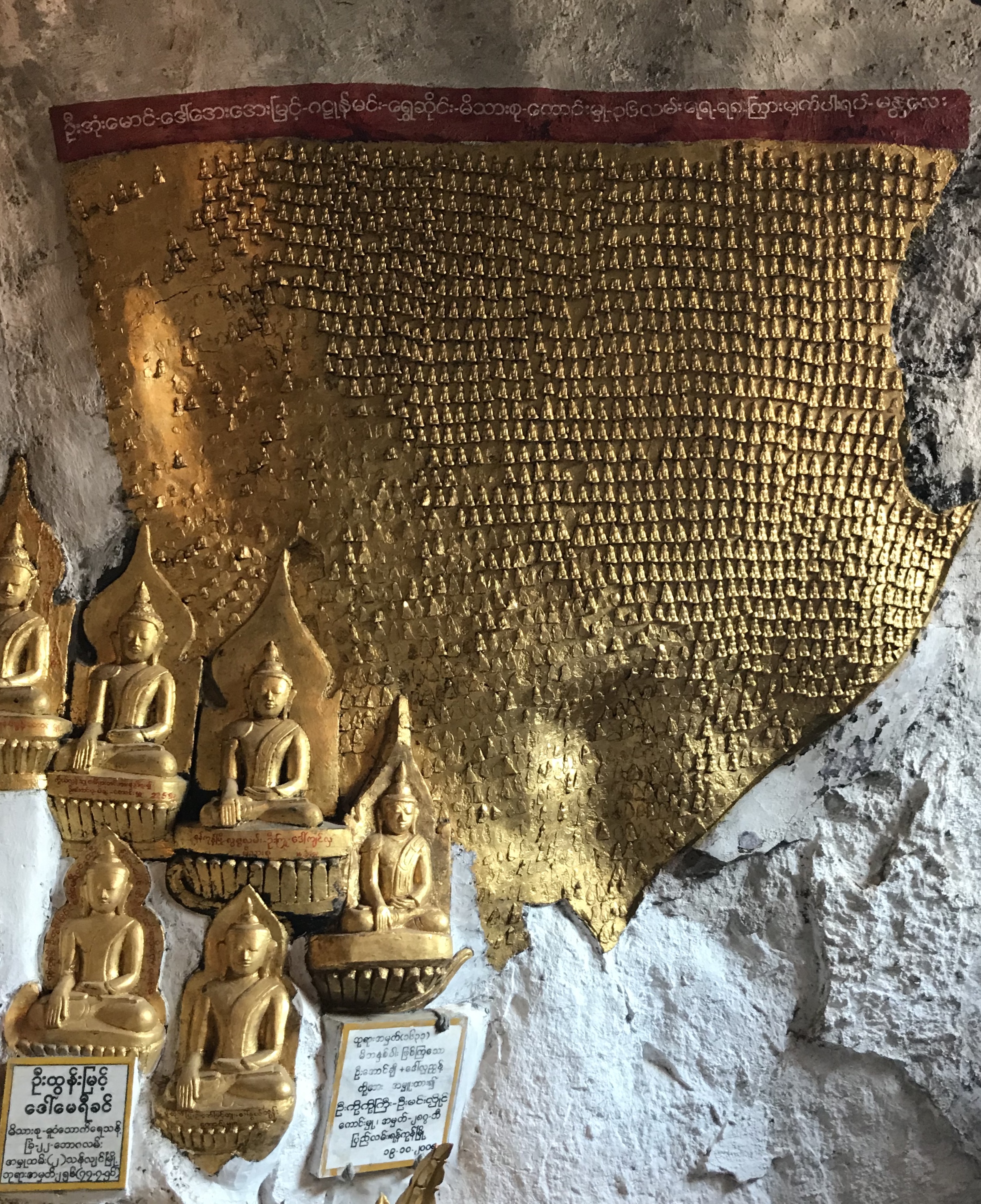 Tiny Buddhas inscribed on a gold panel
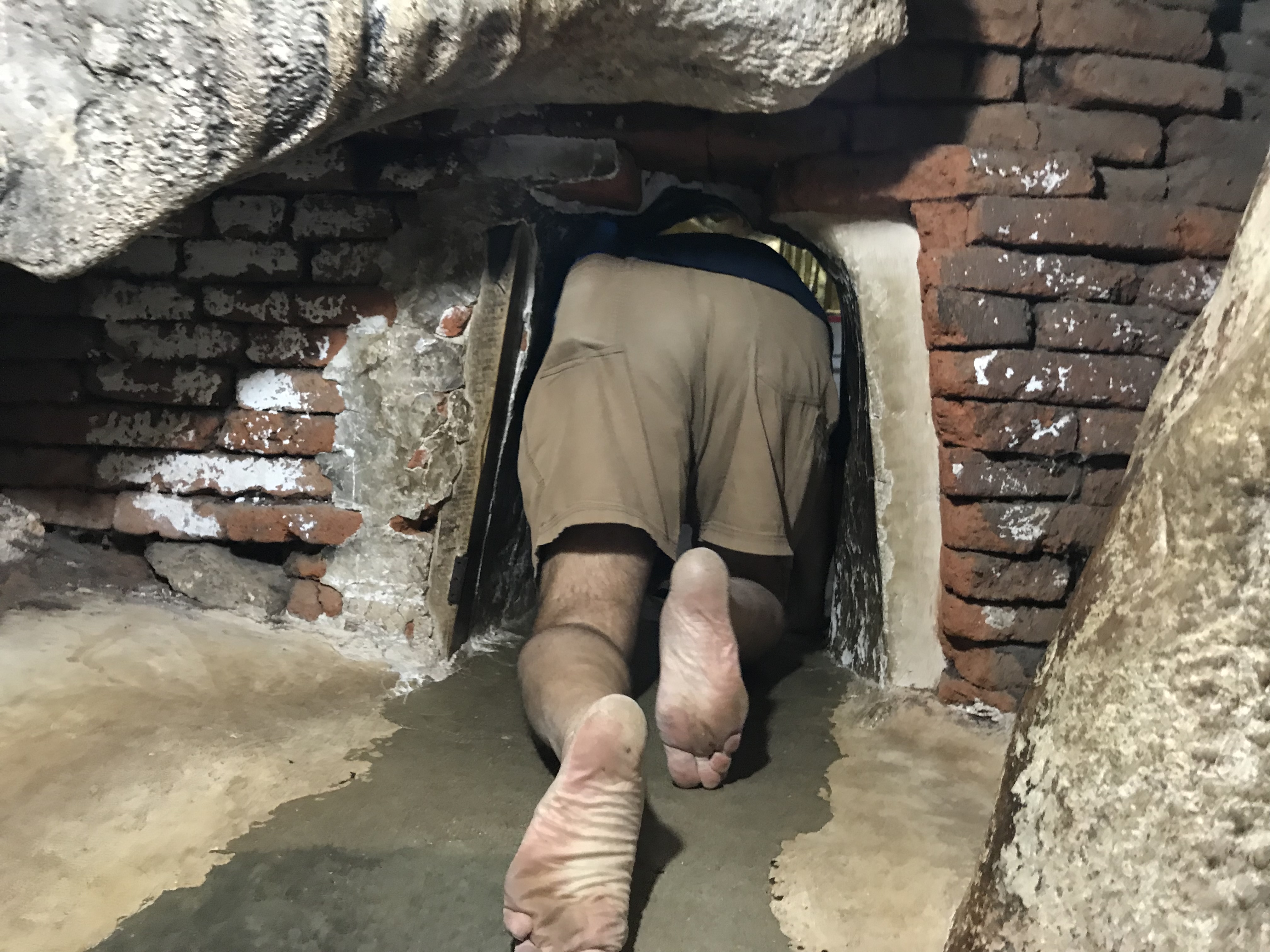 Steve enters a meditation cave
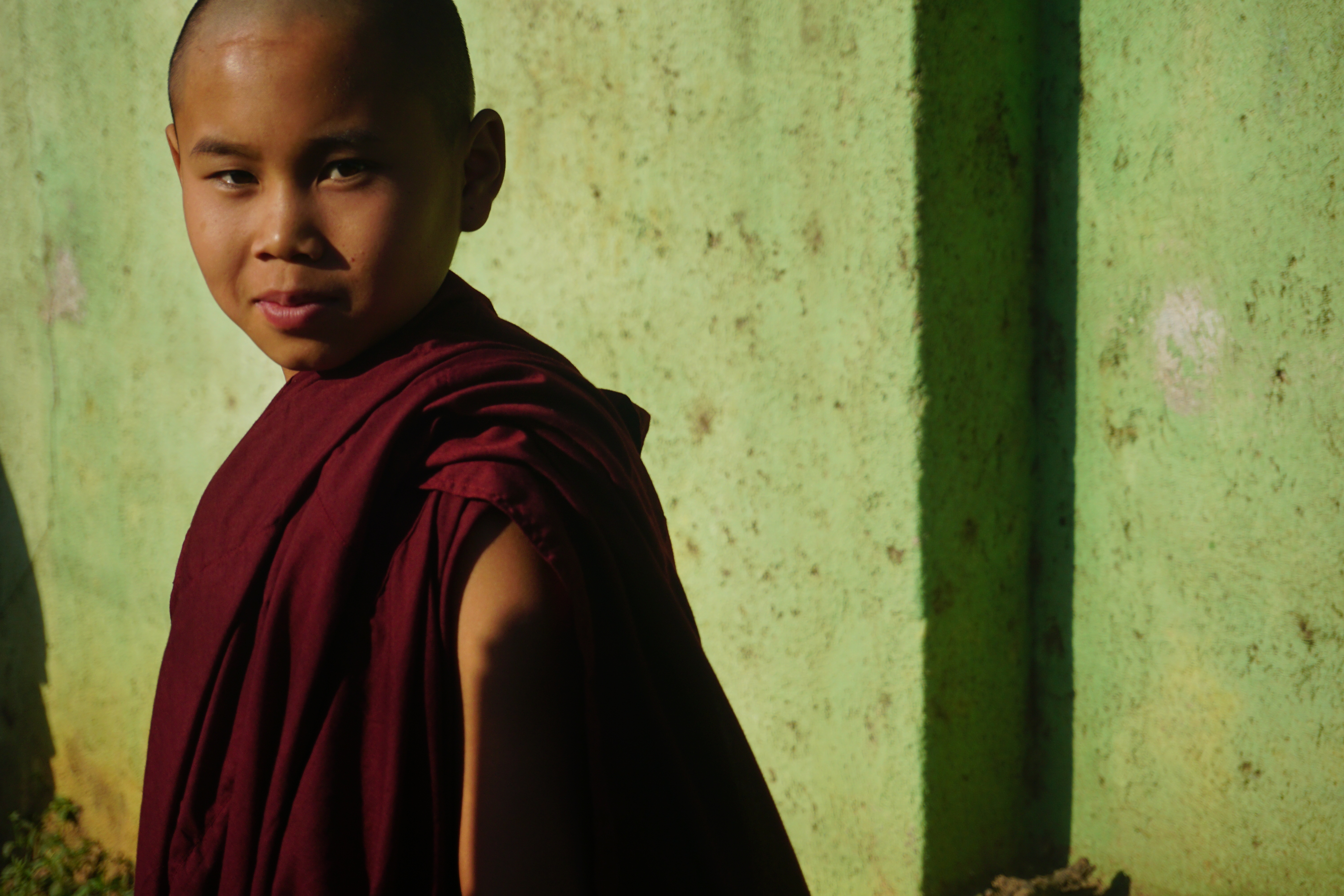
 Mini monk
 We finally reach Nyaung Shwe, the gateway village to Inle Lake, the destination that brings glazed eyes to those who know it. We leave our extraneous stuff and travel by long tail boat to our hotel. We see the tourist version of Inle Lake fishermen from long ago. Their balance is balletic.
 Inle Lake is very large and takes an hour to boat to our hotel. We have never stayed in such a place. We are dropped off at the entrance dock, shown our room and like little kids, explore every space, shrieking with excitement; an outdoor shower, a porch on the lagoon at sunset, a couch, a table, a desk and flowers all over the bed and lots of birds and nature.
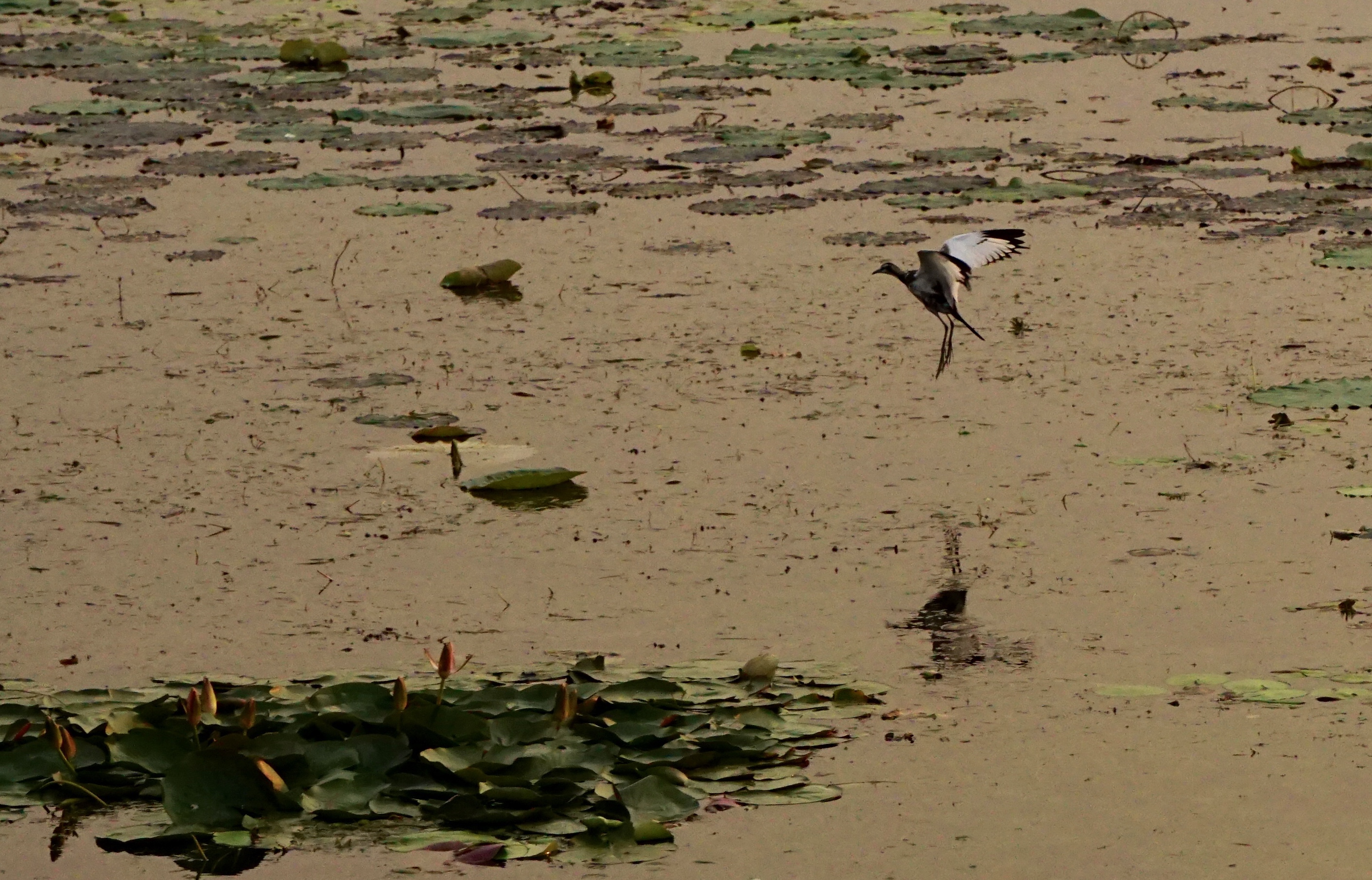 Soe and the boatman pick us up in the morning and we head out to see the unique way of life on the lake. The fishermen of the Intha tribe, are known for their leg rowing technique that allows them to see beyond the floating plants and to fish and move at the same time. It is amazing to watch.
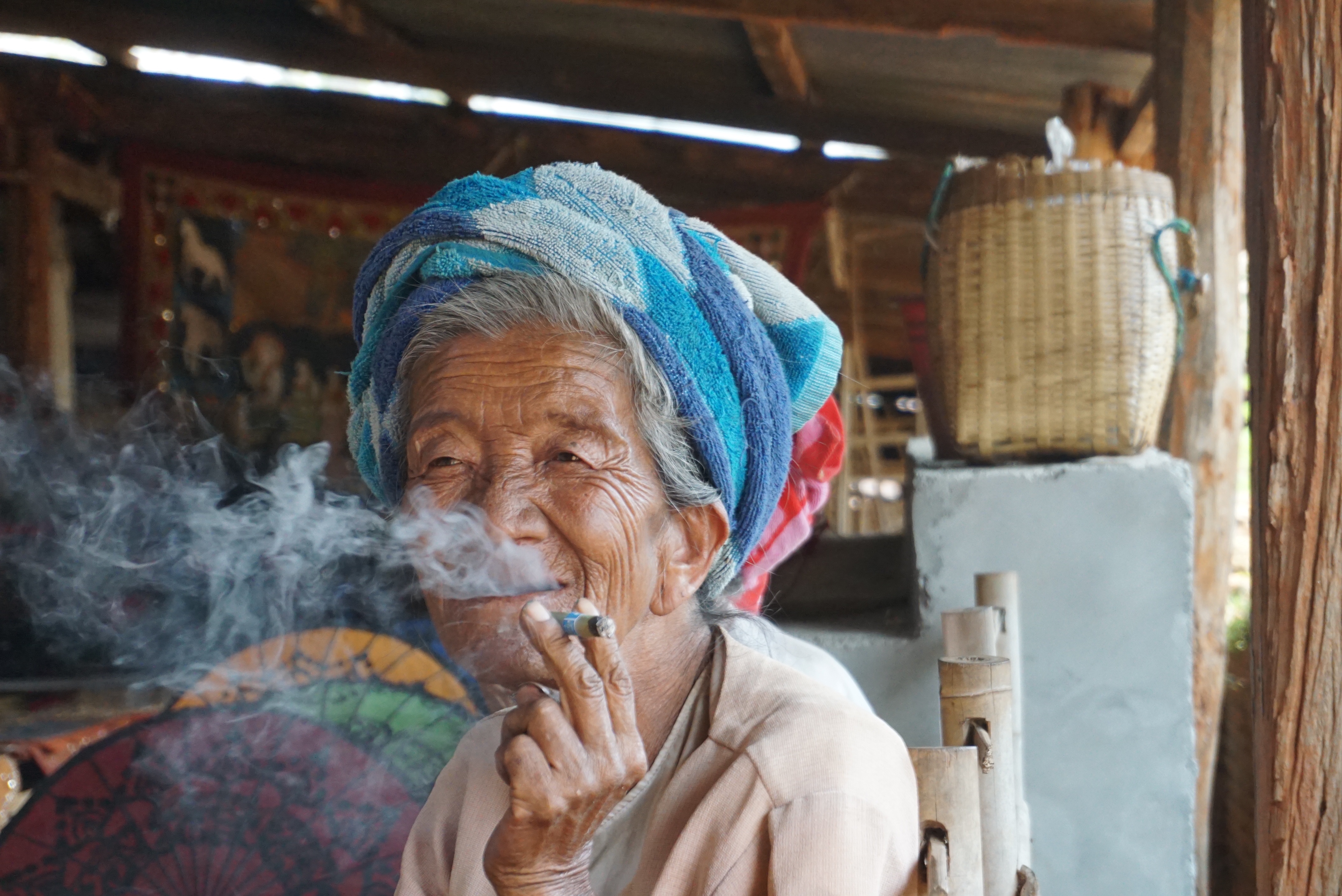
 There are several villages strung along the lake. There are the usual markets where folks gather for produce or the big “5 day” market of Indein which has a dentist, a barber, and all kinds of goods and food and rotates one day in each of 5 villages. The parking area is huge though as the waters recede in dry season the boats must park further away to avoid running aground. There are many Pa-O and Intha people at the big market including a friend of Soe’s. The Pa-O women wrap their hair in scarfs or towels and when in Temple adorn the hair cloths with a pointy ornament to represent a dragon horn. They believe they are descendants from a female dragon centuries ago. As our guide is Pa-O she has a set of horns too. She leaves them at home when she is working.
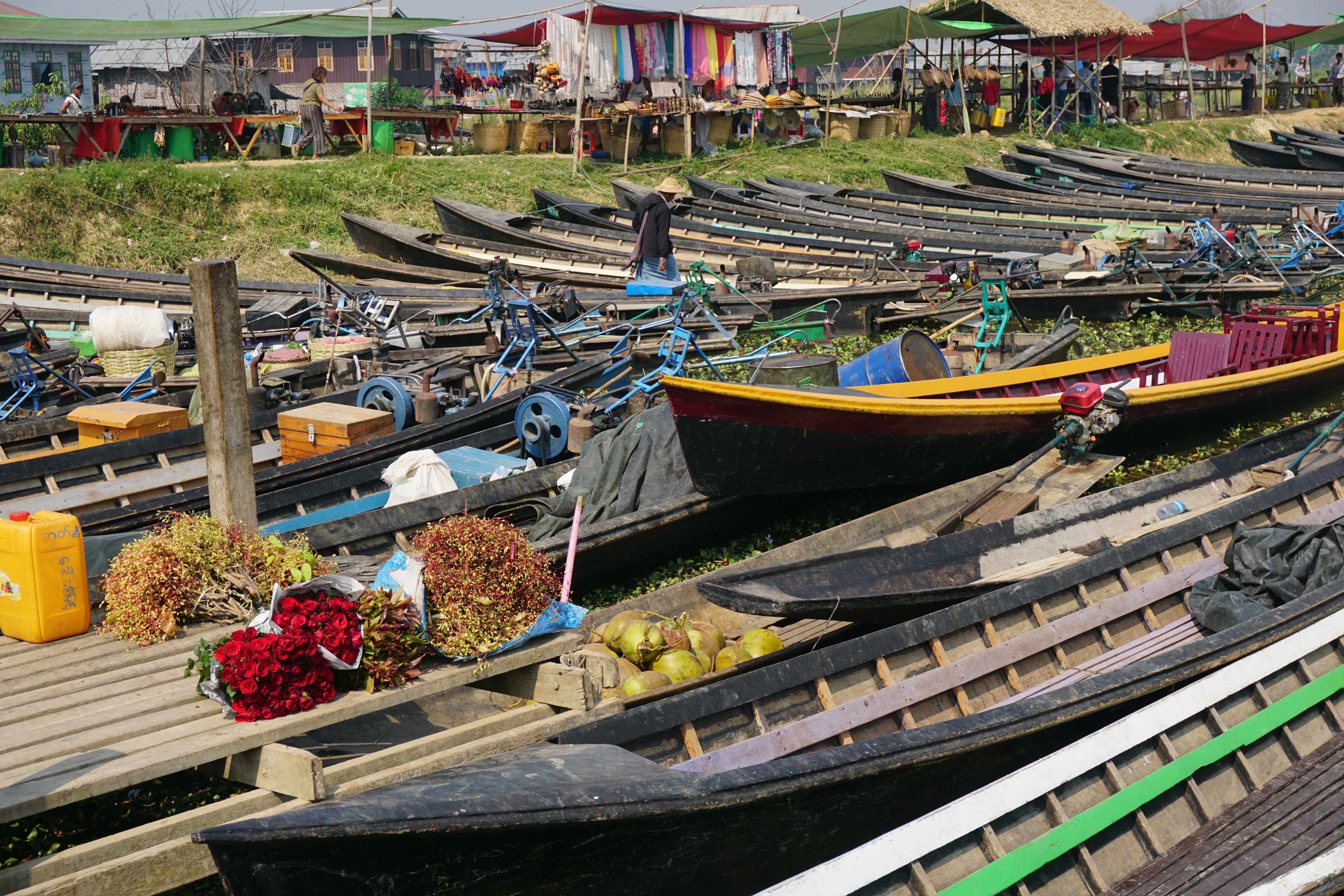 The 5 day market has the biggest draw
 Soe’s friend
 One side of the lake has extensive floating gardens tended by Intha families. From a distance it looks like tall pikes but these poles stake the “ground” and hold the composted seaweed and other fertile matter in place. The men dredge up the milfoil growing near the shoreline, load their boats and bring it back to their garden for tomatoes, peppers, beans and flowers. We watch them strain and struggle hauling this seaweed onto their boats. Shocking to see a much abhorred invasive at home being a necessity in another’s food chain.
 The bounty
 In wet season the water rises to the landing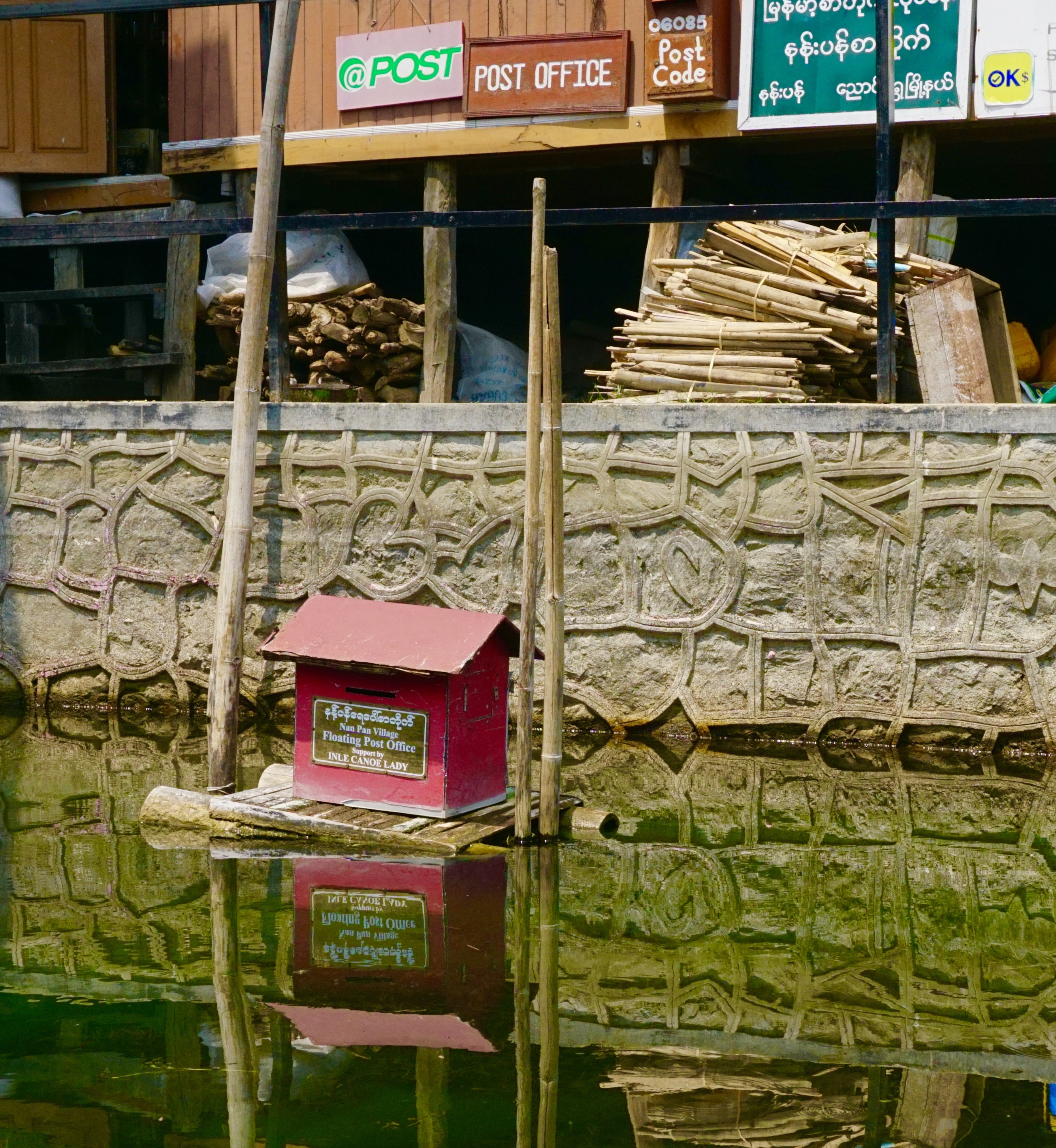

 We motor to the other side of the lake along the numerous waterways and slice through openings in the earth and timber dykes that control the flow of water in dry season. For us, it is an exciting ride with great views of daily life.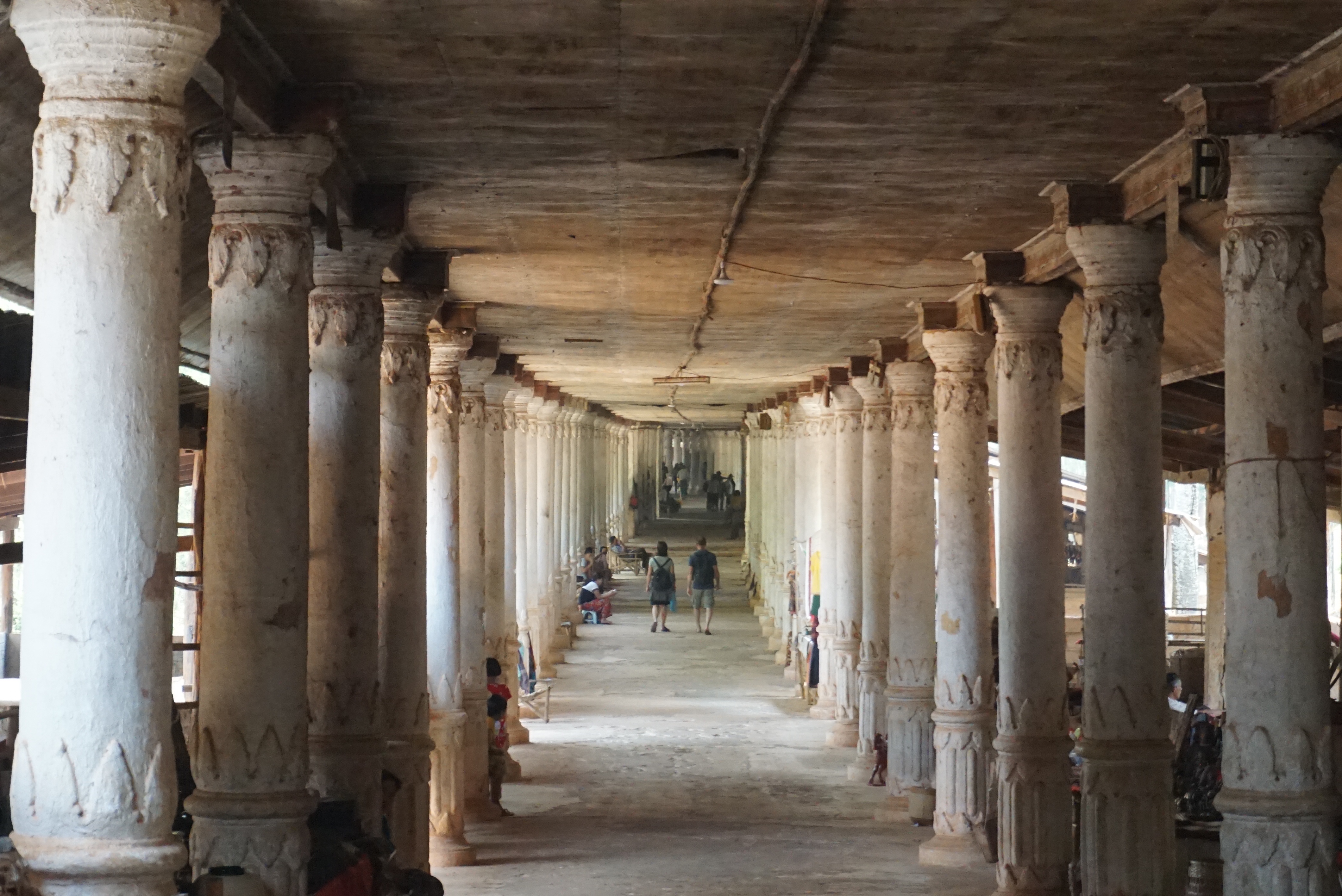
 Land of a thousand stupas
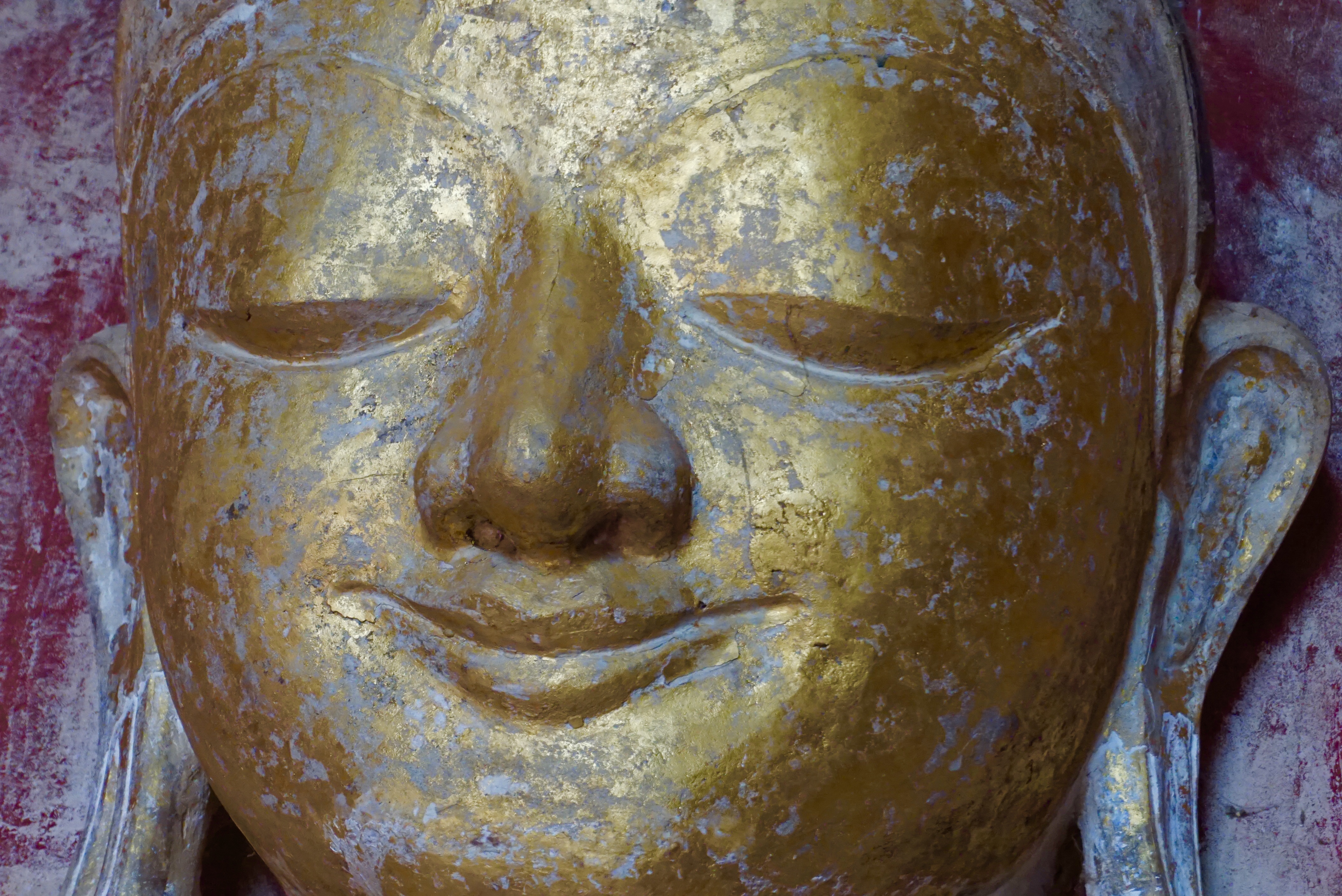 With our new guide Mya Mo and driver Mr. Yazoo, we drive to Bagan about 3.5 hours away. Mya Mo sounds like, “me amo” or I love you and we laugh and he gives us his nickname: “Mo-Jee” and we all laugh again. He is a fountain of knowledge having been born and raised in “Ba-gaaahn”, his speech takes an effort to understand. He speaks softly, and drawn out, accents are in different than expected spots and if we interrupt with a question he retells his story from the beginning in the exact same way as by rote. All that aside he is passionate about his birthplace and very personable. He has the telltale red stains between his teeth that belie his betel nut habit and we talk about it. In fact, at every market he points out the ingredients which are sold everywhere: slake lime ( in green plastic containers that litter the roadsides), the nut itself usually sold in chopped pieces, flavored tobacco, some spices according to your taste wrapped in a betel leaf , sucked, chewed and then spat. It leaves a distinct brick color that is splattered on the ground everywhere. He says he still chews occasionally but can’t really indulge as a tour guide. That kind of personable.
 Dhammayangyi Temple built by King Narathu 1170 A.D.
 A Burmese Buddha gazes down at Steve and our guide Mya Mo
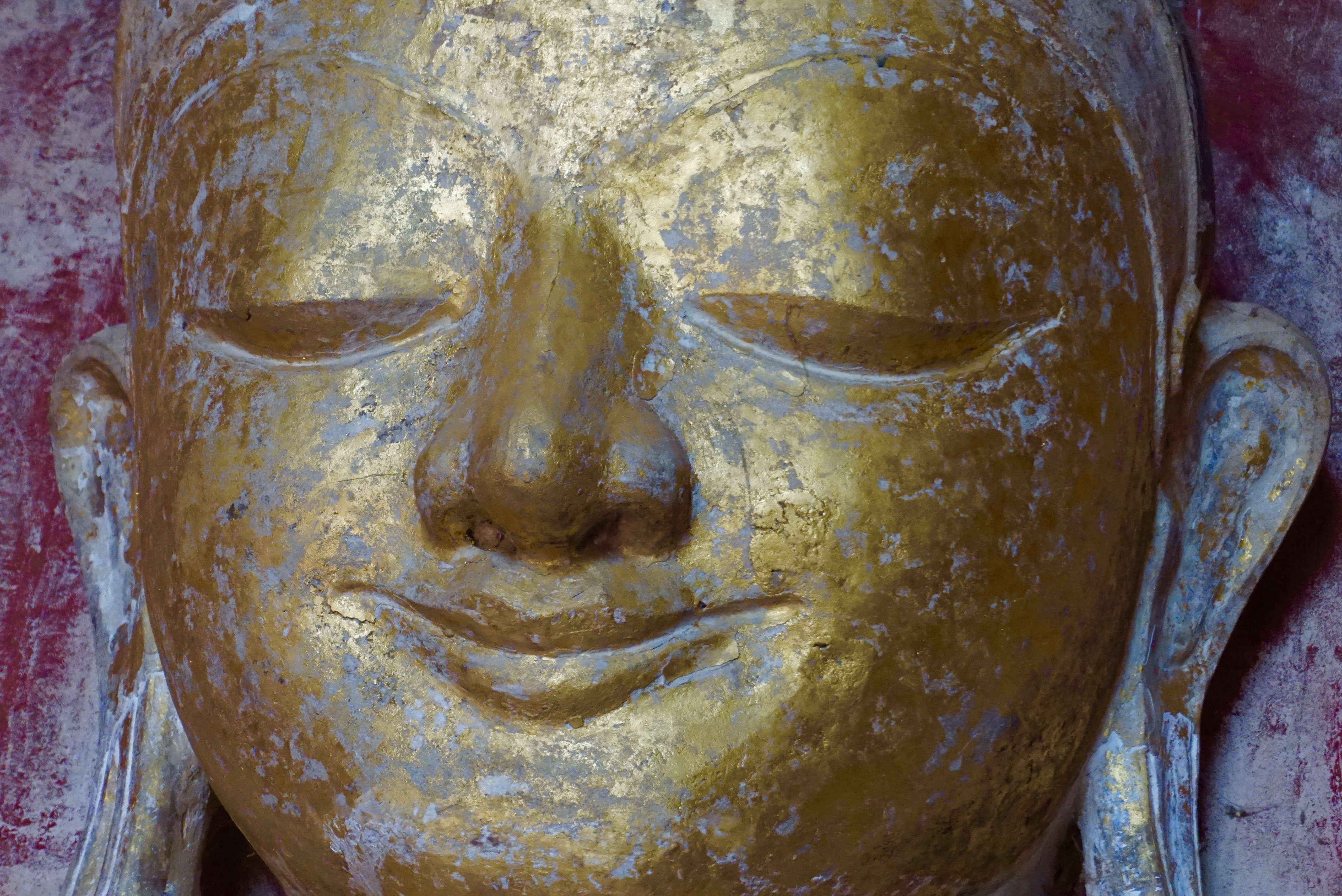
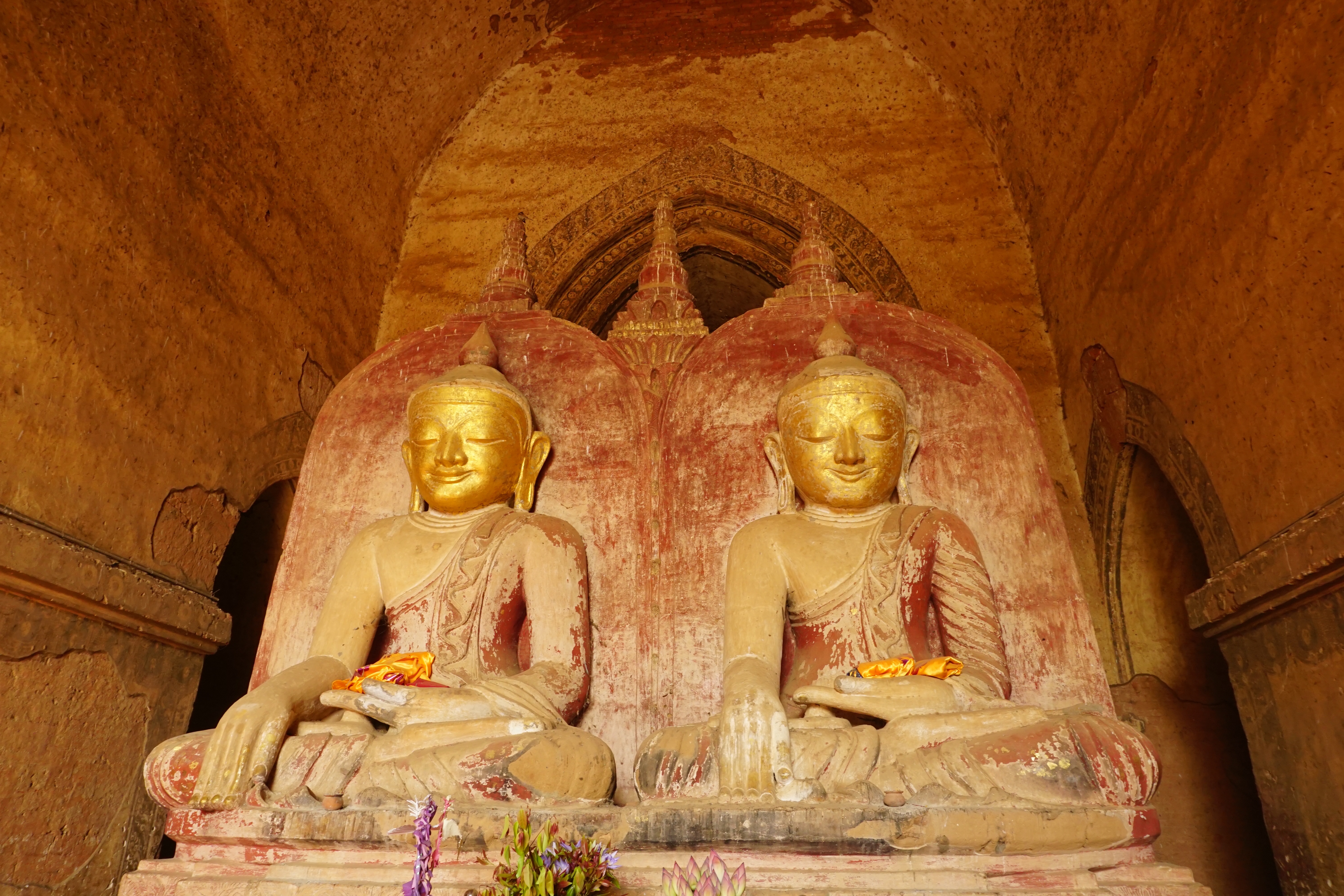 The Buddha, Guatama and future Buddha, Maitreya built 900 years ago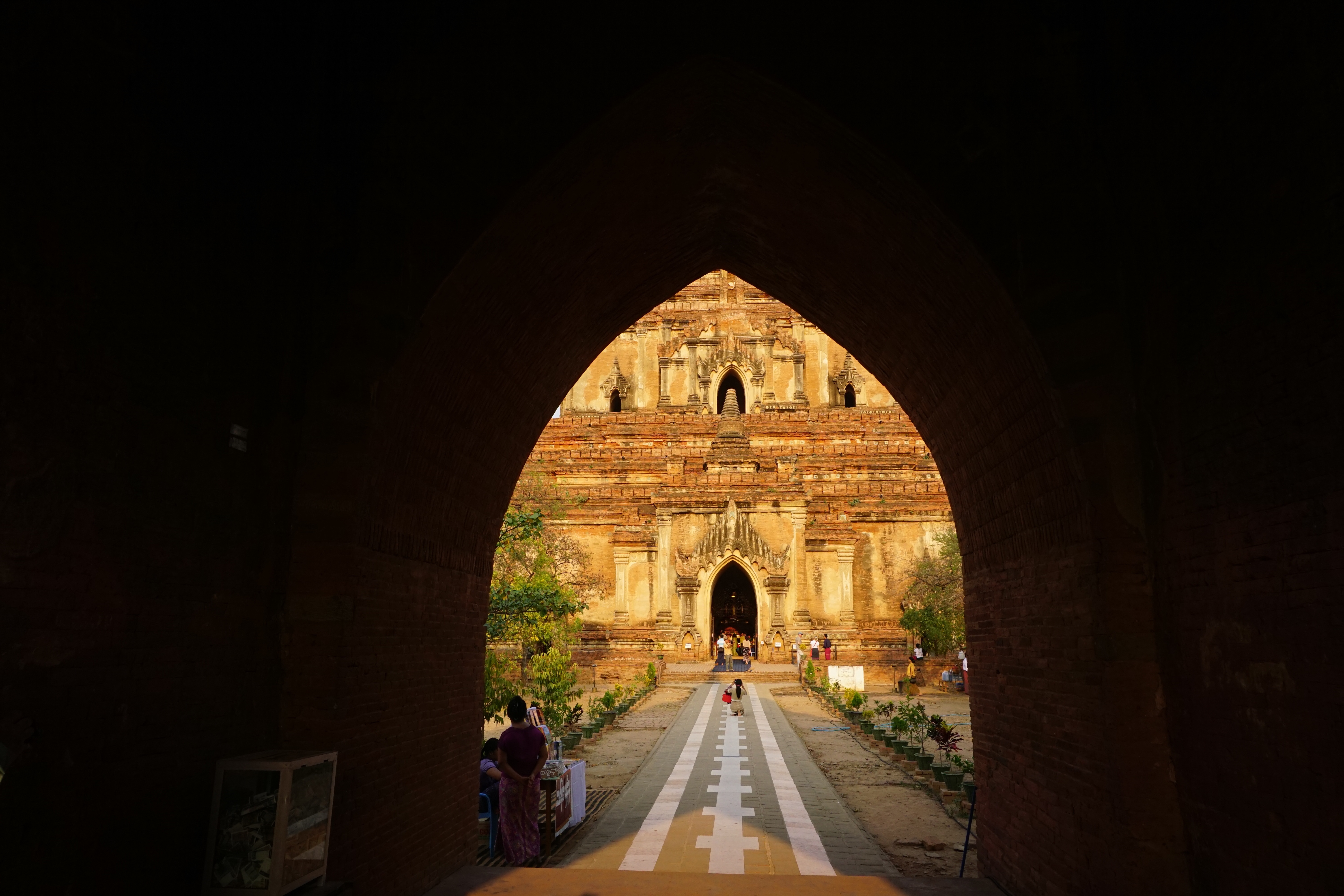
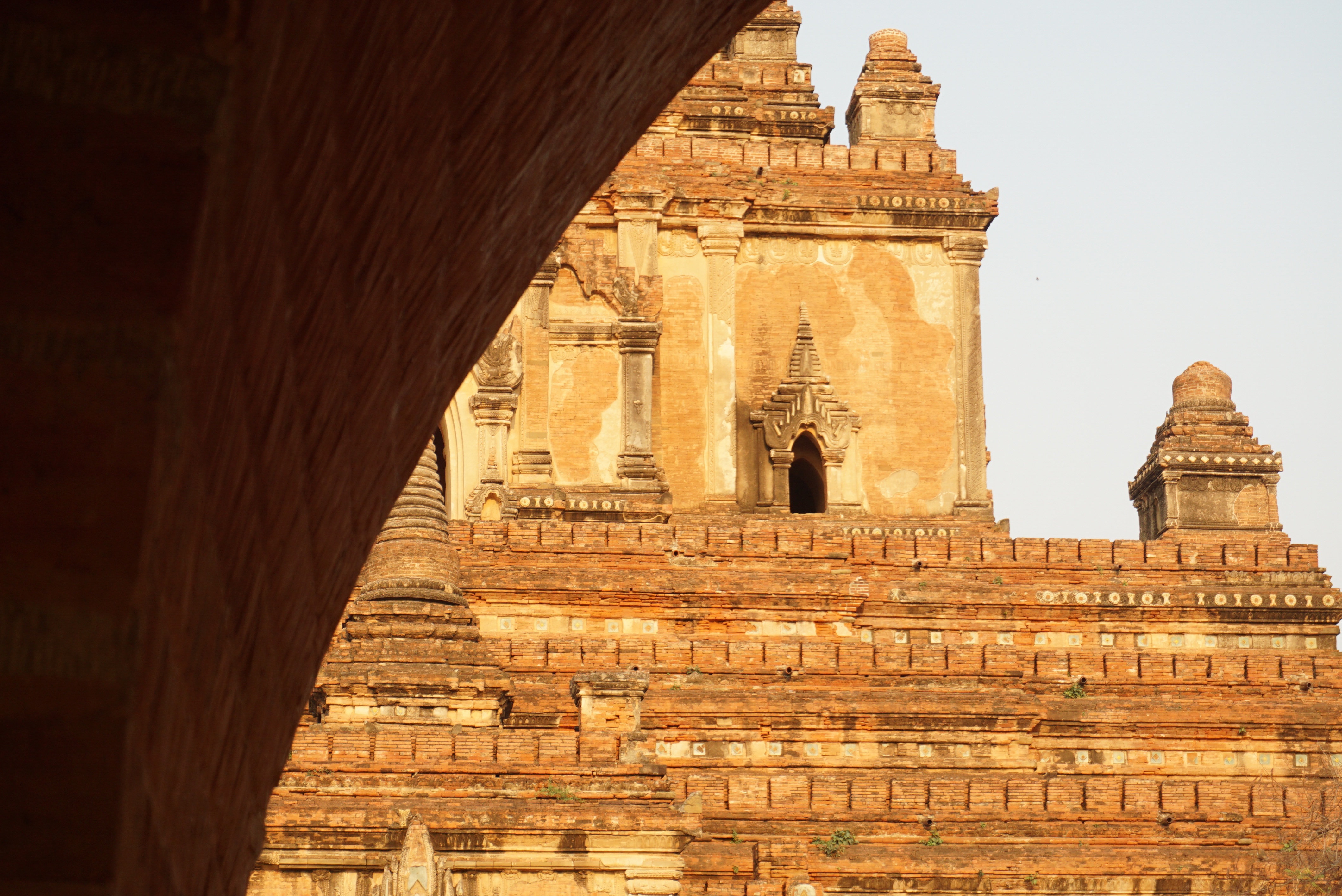
 The corners have ogres as guardians
 Ancient frescoes line the temple walls
 A Buddha image once occupied this niche, my turn
 Ananda Temple built in 1105 and is one of four surviving temples in all of Bagan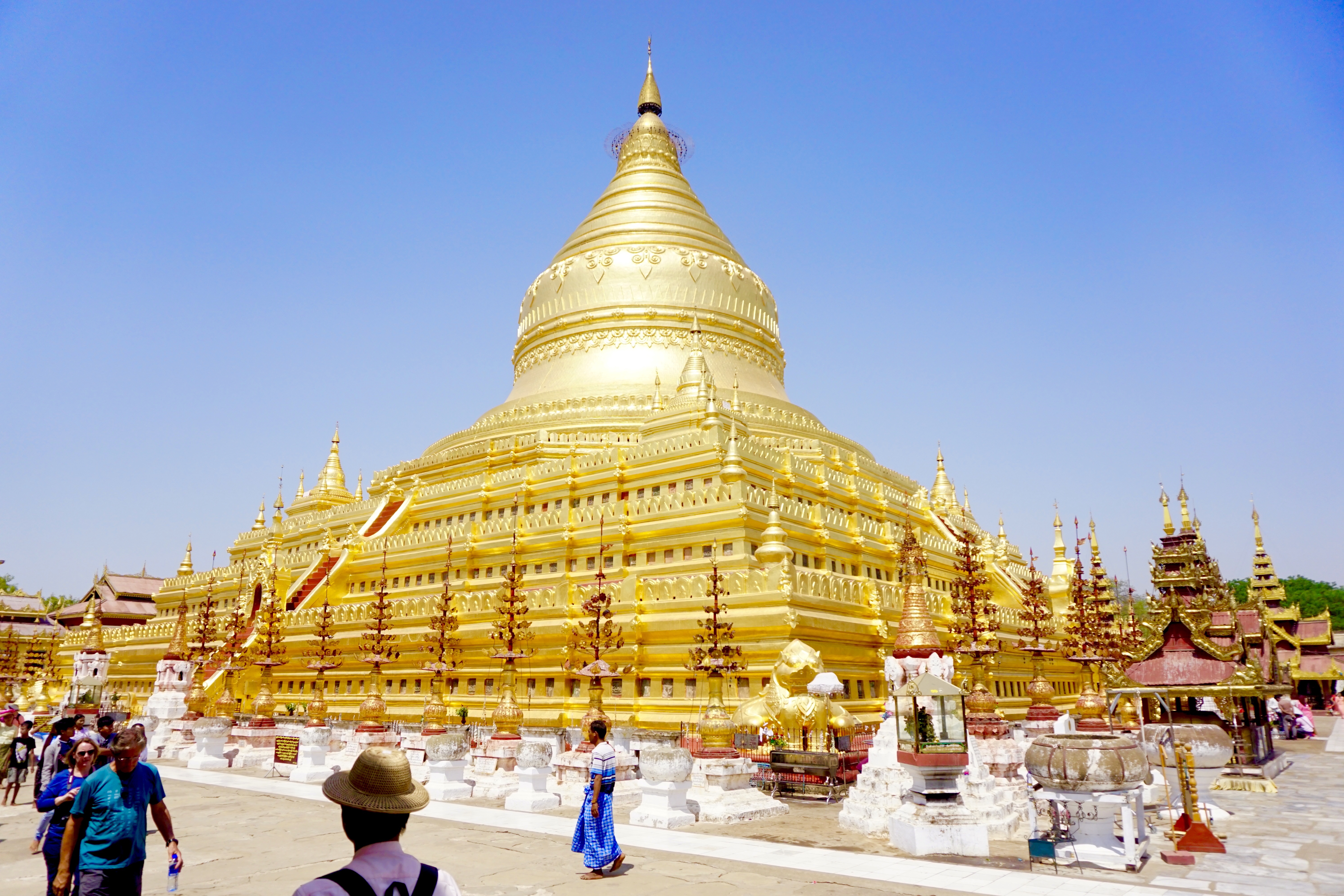

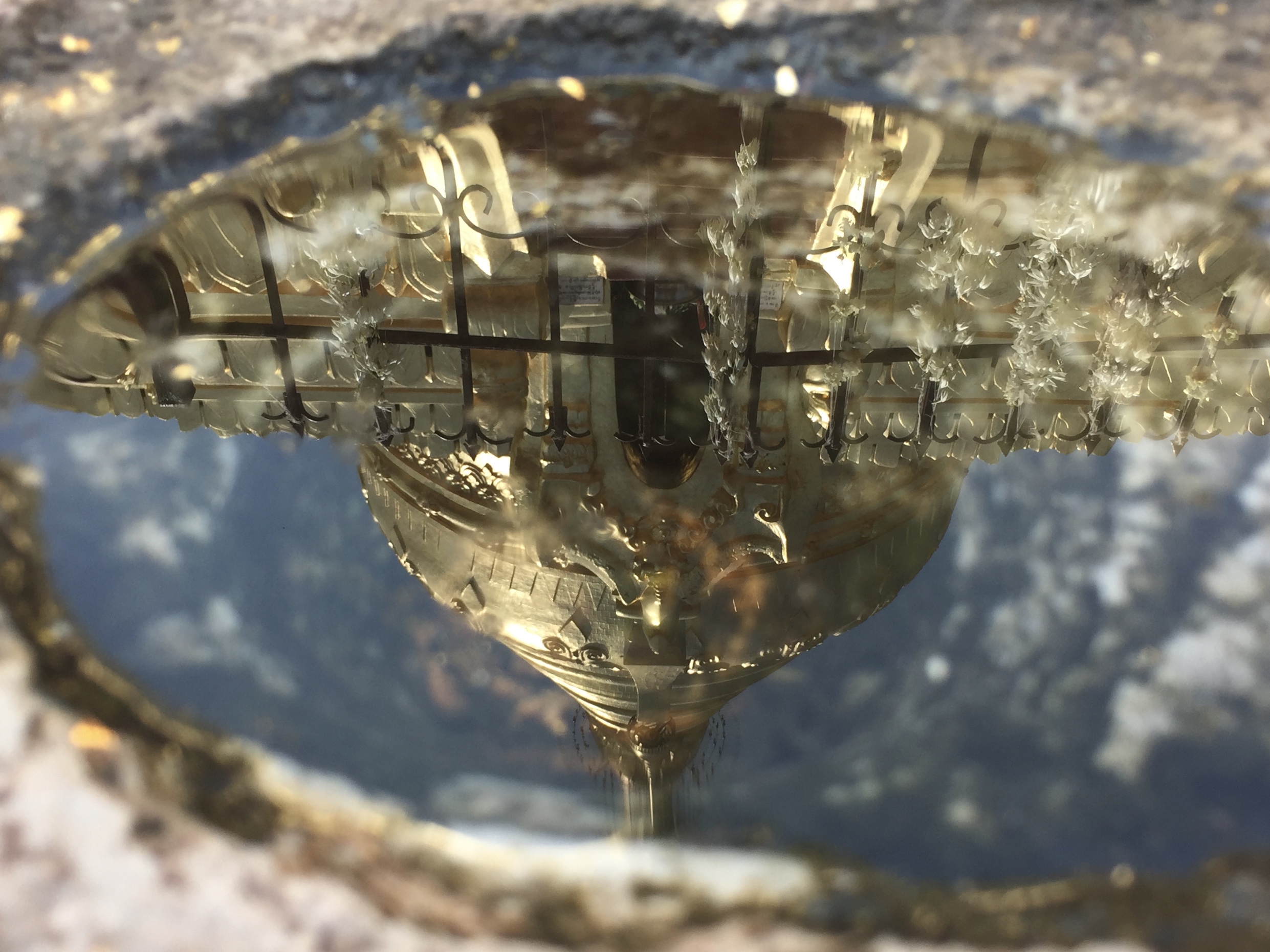

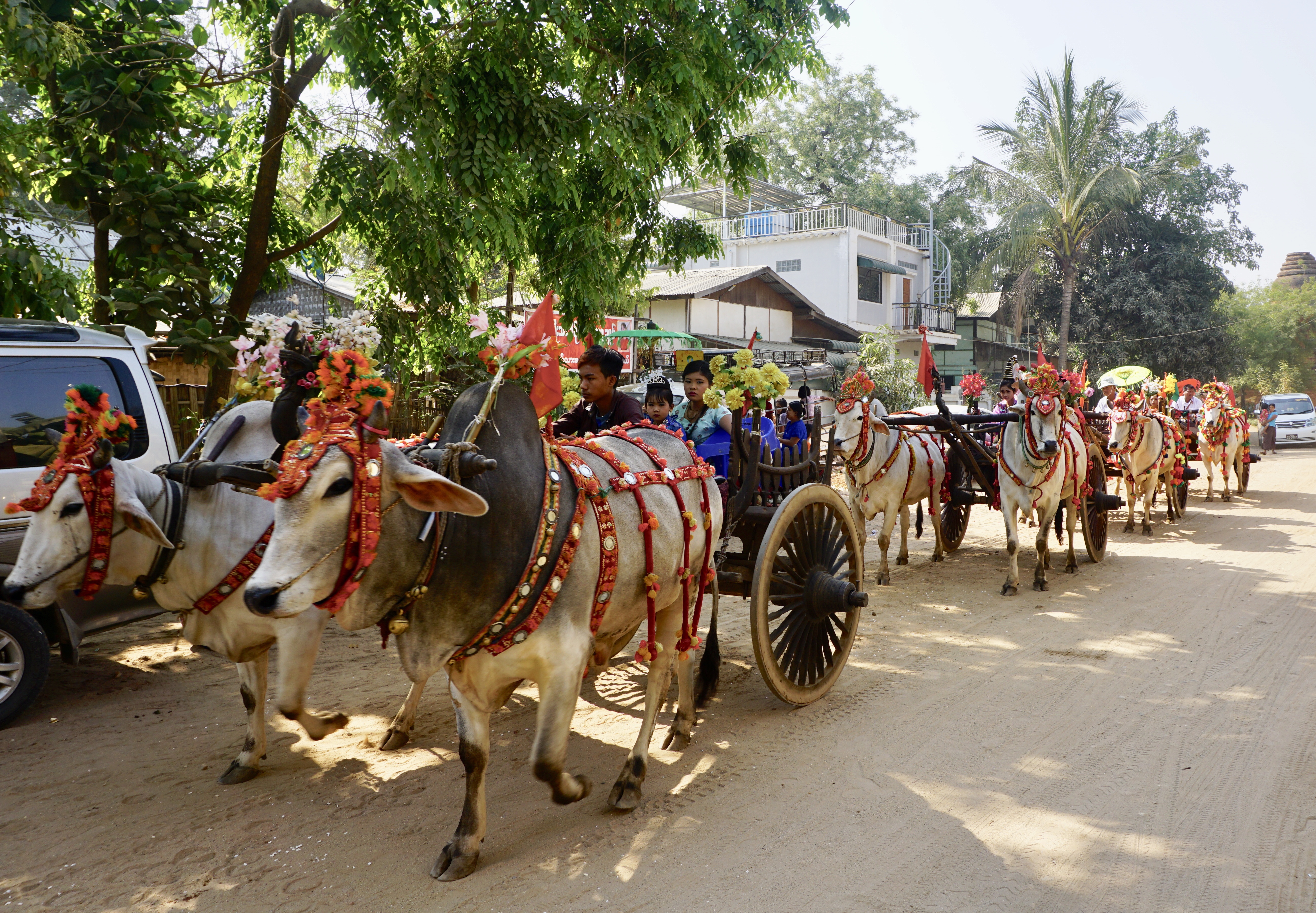
 While we visit holy ruins, we also stay at amazing hotels, visit villages where families continue their traditional businesses, and see another Novitiation ritual. Mya Mo tells us he knows of a ceremony in Taungbi village, “Do you want to go, it may mean skipping something in the itinerary”. We can’t believe our luck, “How do you know about it?” He answers in his soft drawl, ” I am from Ba-gaaahn, I was born here, this is my village”, and he smiles. I love the joy, family, pomp and ceremony and ecstatic to witness another one.
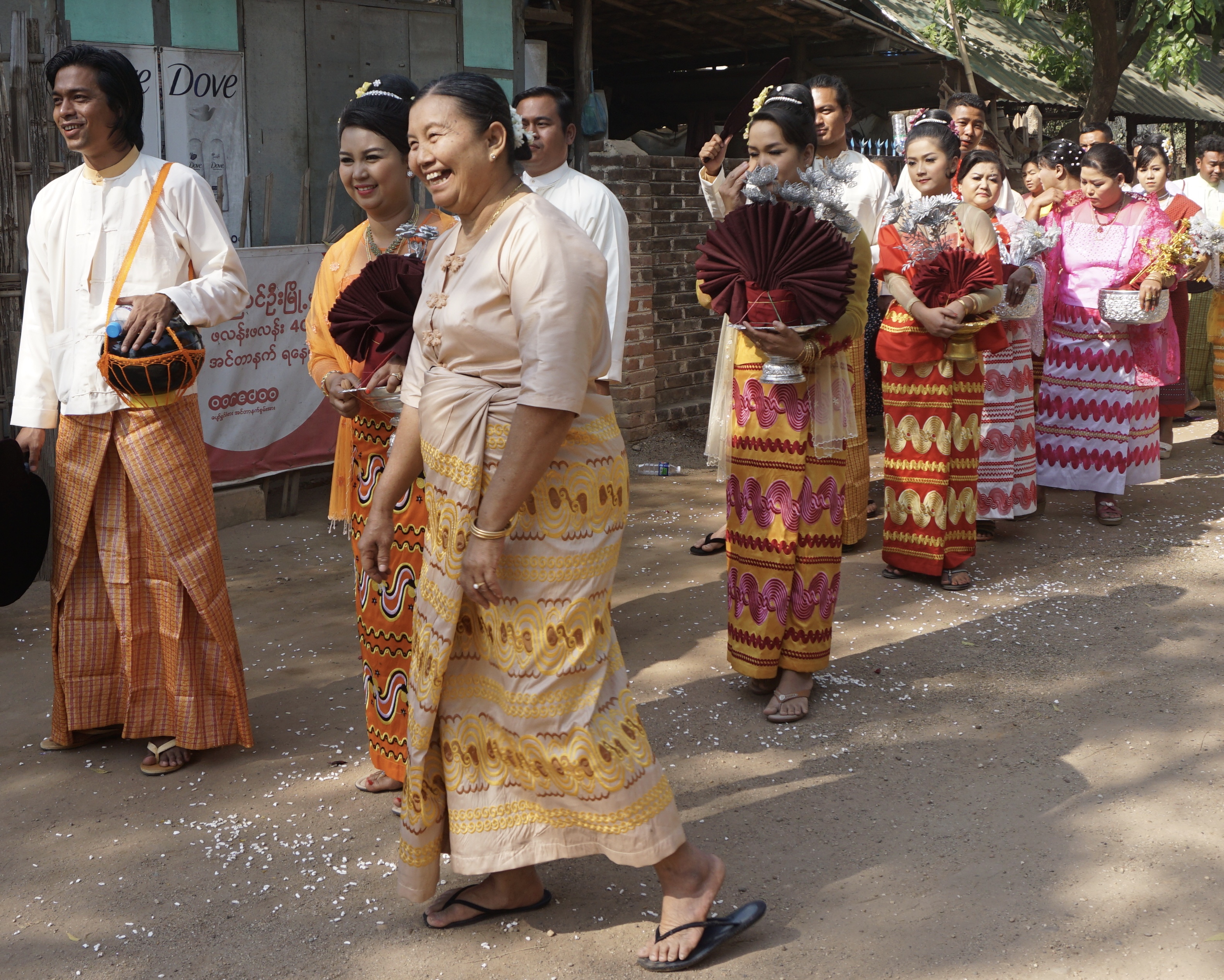 Procession: grandparents first, sponsoring parents then village parents of novices, then novices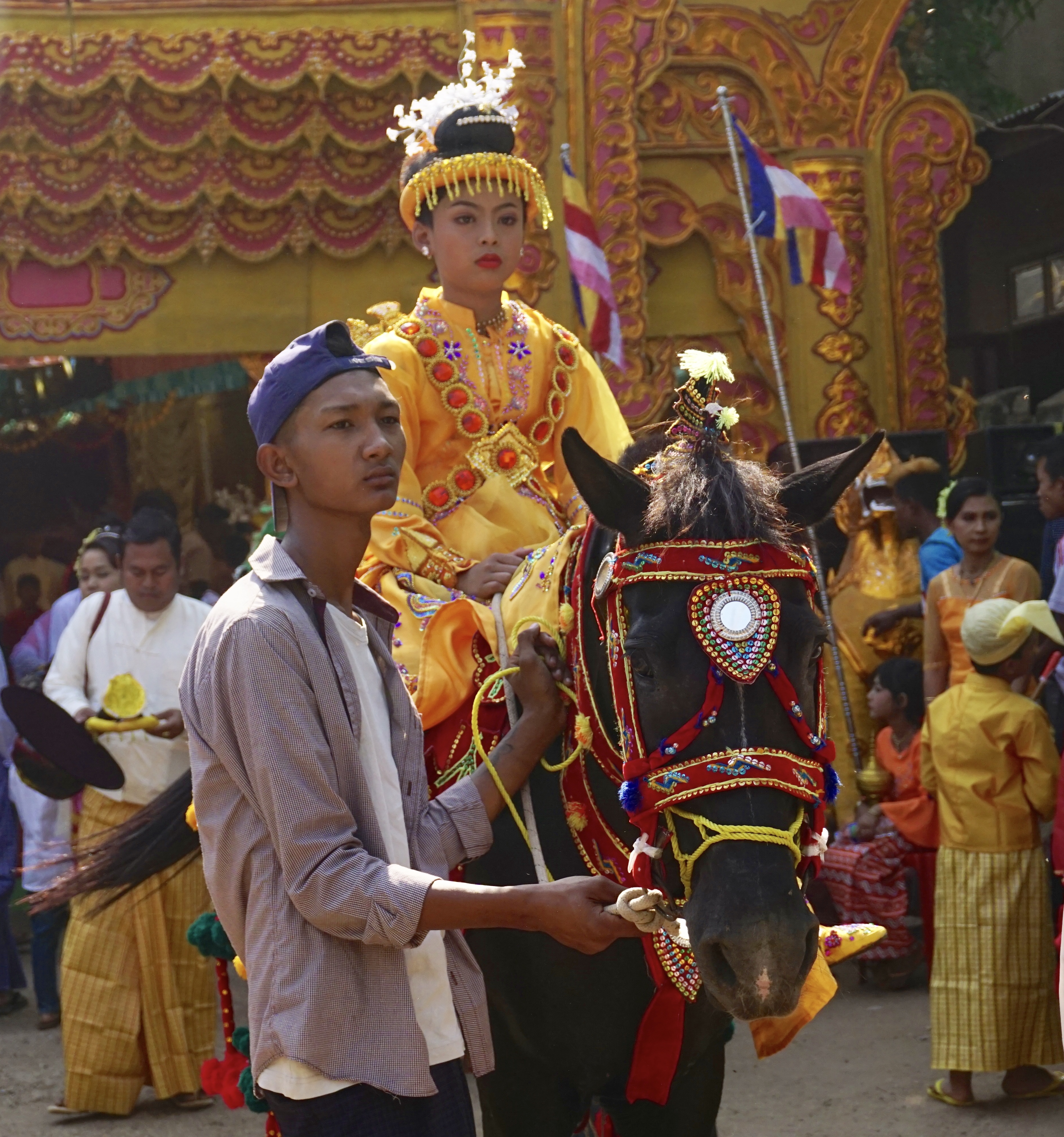

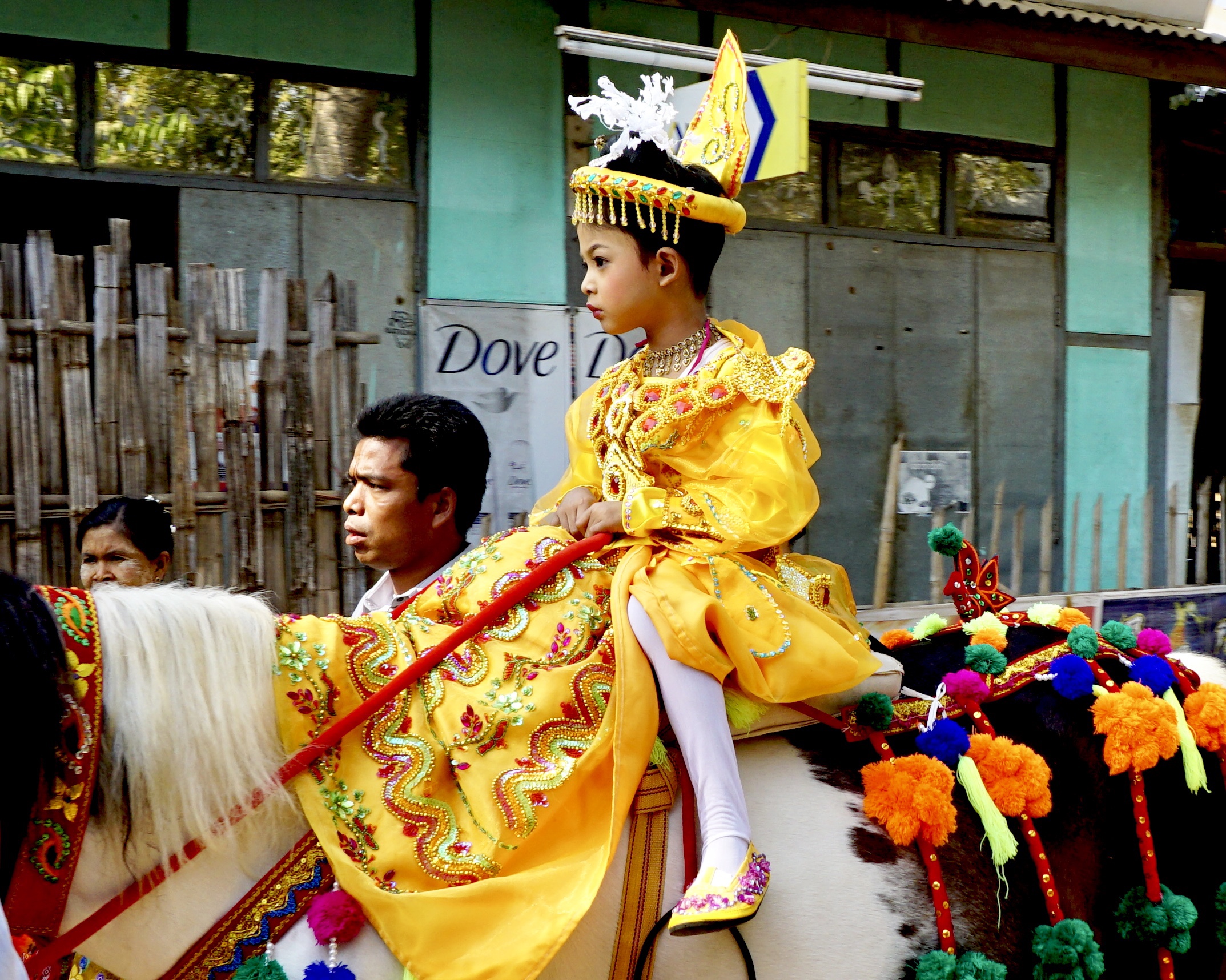
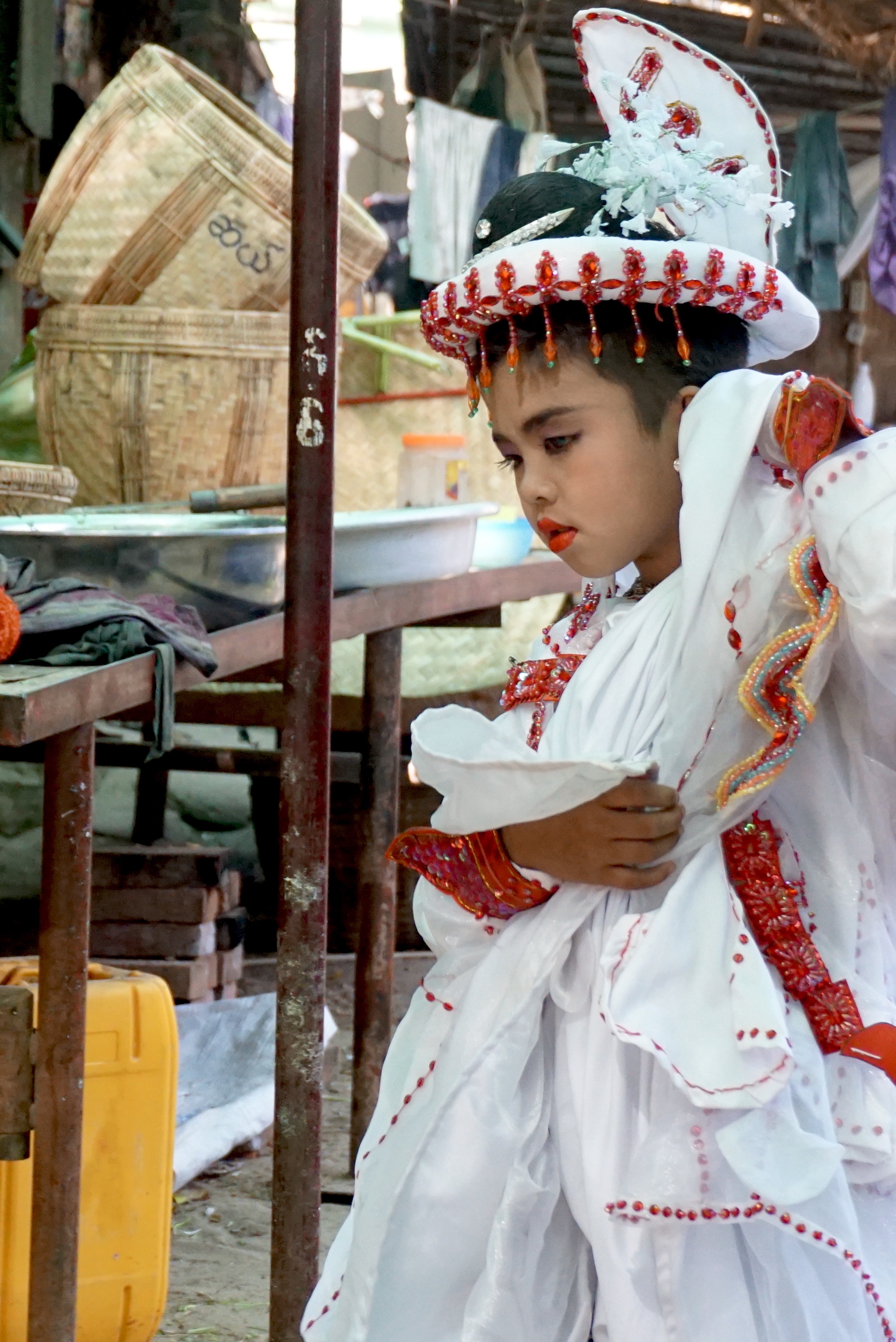

 The youngest of the sponsoring family with 2 year old twins
 marian wilder